£18.90 – £29.95Price range: £18.90 through £29.95

£18.90 – £29.95Price range: £18.90 through £29.95

BUY 2, SAVE 5%
£18.90 £17.96 / ITEM

BUY 3, SAVE 10%
£18.90 £17.01 / ITEM

BUY 4, SAVE 15%
£18.90 £16.07 / ITEM
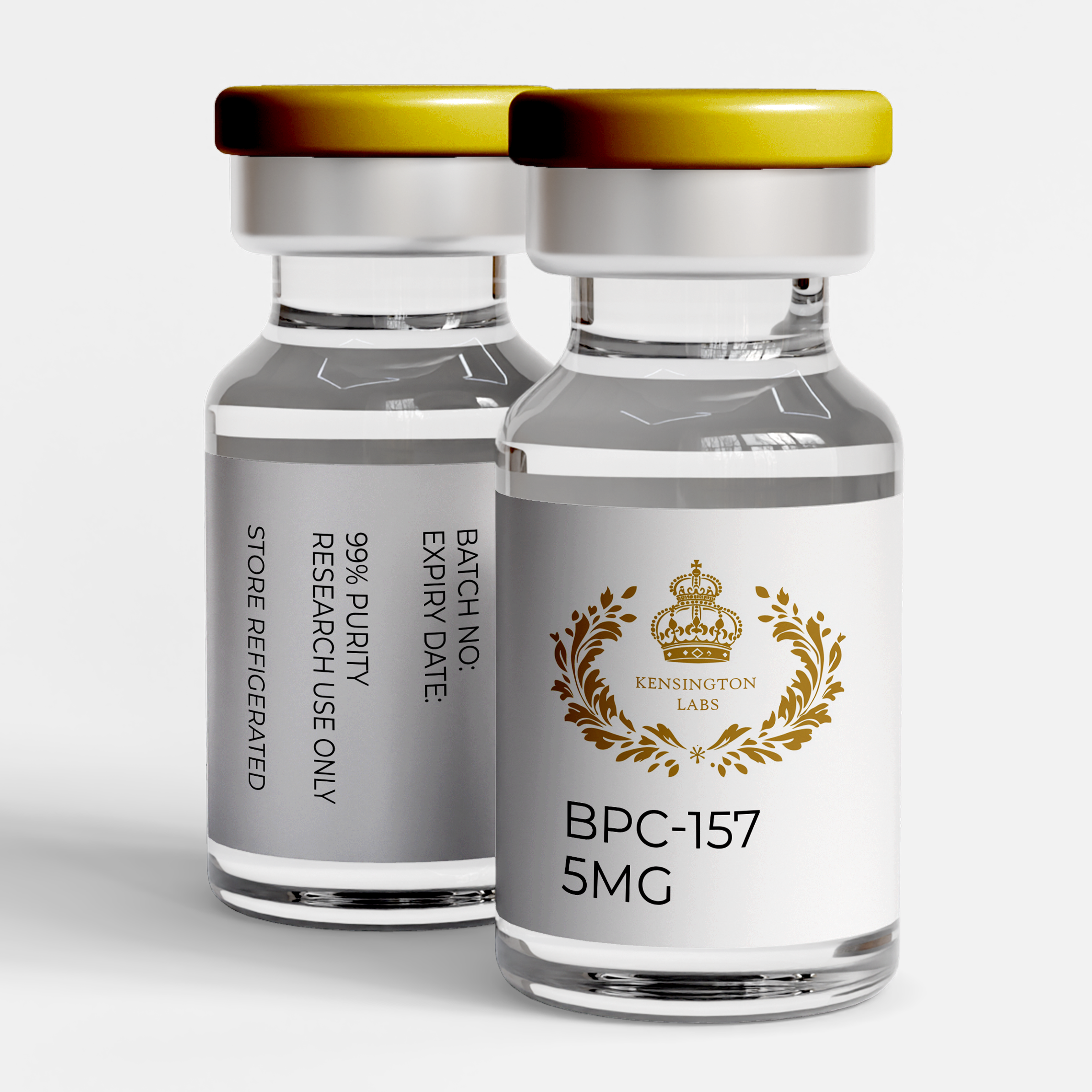
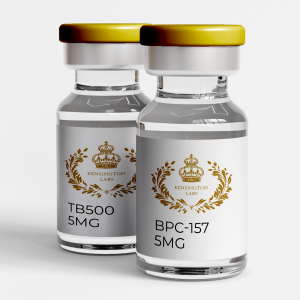
BPC-157, or Body Protection Compound 157 is a synthetic peptide consisting of 15 amino acids. It is derived from a peptide sequence which is related to the protective compounds studied in gastric tissue.
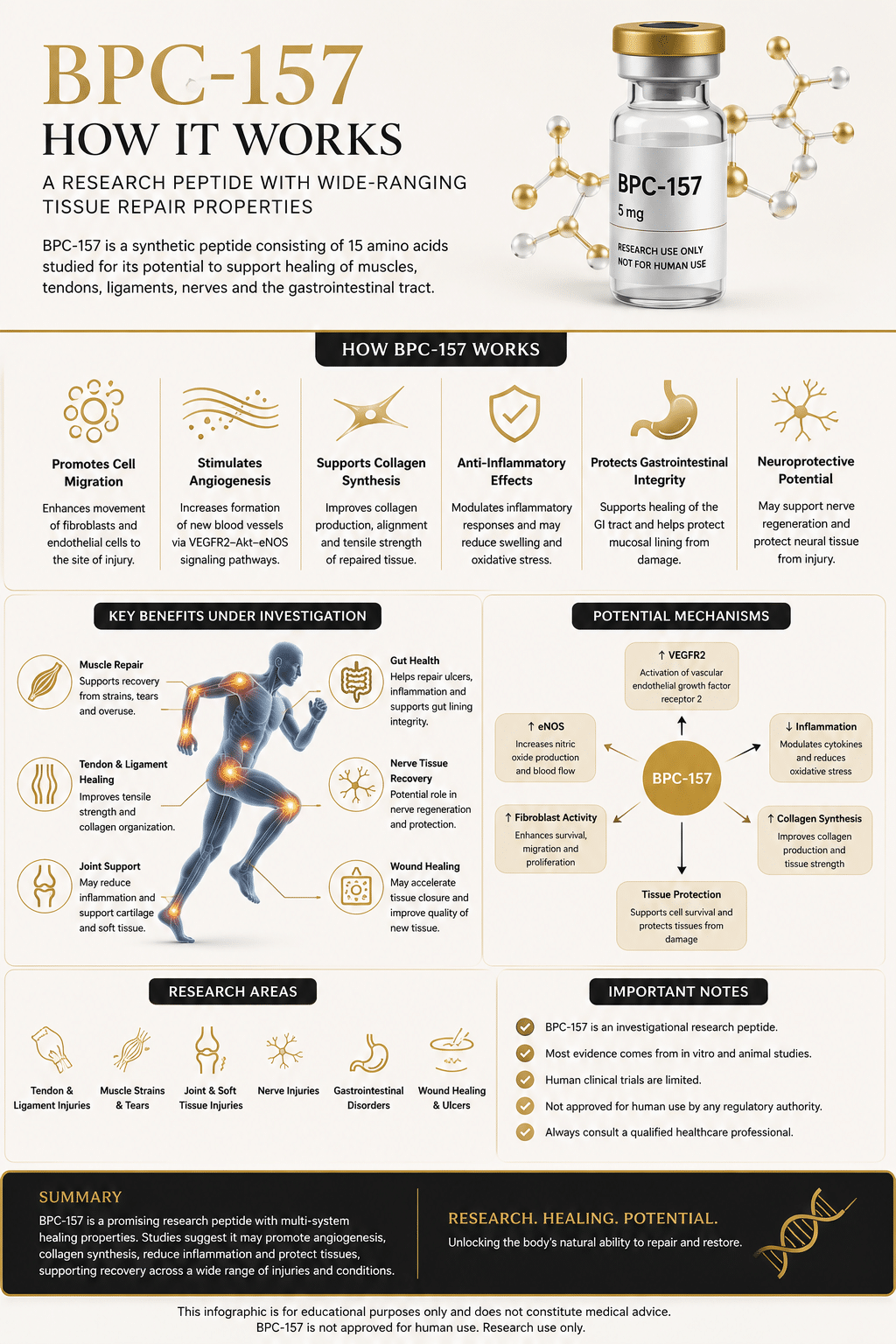
BPC-157 is of particular scientific interest for its role in tissue repair, inflammatory signalling, blood vessel regulation and gastrointestinal protection. Its effects have been studied in preclinical studies in models of tendons, ligaments, muscles, skin, bone and the digestive tract.
Effects on fibroblast activity, collagen organisation, angiogenic signalling and nitric-oxide pathways have been reported in animal and laboratory studies . But most of the evidence that has been published comes from rodents or laboratory models and the findings still need to be confirmed in large, robust clinical trials in human beings.
This product is supplied for laboratory research purposes only and is supplied as lyophilised powder containing 5mg BPC-157. It is not licenced as a drug and is not intended for human consumption.
There is currently no established medical or regulatory-approved human dosing protocol for BPC-157. Published experiments have used different routes, concentrations and periods of treatment, depending on the animal model and the tissue investigated.
Therefore, a laboratory research protocol should be built on:
Here is a typical research protocol for BPC 157
| Tier | Dosage | Frequency | Notes |
|---|---|---|---|
| Weeks 1-2 | 200mcg | Once Daily | - |
| Weeks 3-4 | 400mcg | Once Daily | - |
| Weeks 5-8+ | 600mcg | Once Daily | - |
BPC-157 is under investigation for possible effects such as the following:
Tendon and ligament repair
Muscle recuperation
Fibroblast motility and activity
Collagen production and arrangement
Blood vessel and angiogenic signalling
Protection of gastrointestinal mucosa
Wound repair
Inflammatory signalling
Modulation of the nitric oxide pathway
bone-to-tendon healing
Recovery after experimental tissue injury
BPC-157 has been shown to improve healing of transected Achilles tendons and surgically injured ligaments in rodent studies. Laboratory work has also reported increased tendon cell outgrowth and migration. These are experimental results, not clinically proven human benefits.
BPC-157 is being studied for its potential effects on various biological pathways involved in tissue protection and repair. The exact mechanism of action is not fully known. Most of the data supporting its use are from laboratory and animal studies and not from controlled clinical studies in humans.
Studies indicate that BPC-157 may affect the activity and motility of fibroblasts, the cells that produce collagen and rebuild connective tissue. In laboratory tendon models, BPC-157 increased fibroblast migration, spreading and survival during stress. The researchers associated these effects with activation of the FAK–paxillin signalling pathway, which is important in cell attachment and movement.
Other potential effects of BPC-157 include:
One of the mechanisms proposed is through the VEGFR2-Akt-eNOS pathway. Experimental studies have shown that BPC-157 increased VEGFR2 expression and activation, and promoted endothelial tube formation and blood-flow recovery in a rat model of hind-limb ischaemia. These findings indicate a potential effect on angiogenesis (new blood vessel formation) but this has not been shown to be beneficial in humans.
Improved collagen organisation, biomechanical strength and functional recovery following experimentally induced Achilles-tendon injury have also been demonstrated in animal studies. These are promising findings, but we cannot assume they will have the same effect in humans.
In brief, BPC-157 is believed to act through a mixture of cellular migration, vascular signalling, nitric-oxide regulation and tissue-protective mechanisms. However, the exact pharmacology, effective human dose and long-term safety profile are unknown.
The adverse effect profile of BPC-157 in humans has not been sufficiently established. Lack of adverse effects in small or preclinical studies should not be considered as evidence for safety.
Some potential concerns include:
The way you live your life and the rehab you do can make a huge difference to your recovery from tendon, ligament, muscle and gastrointestinal injuries. These factors should be taken into account when assessing any research that examines BPC-157, as they can influence the outcomes of studies and make it challenging to determine which changes are attributable to the peptide itself.
Progressive rehabilitation is one of the most important factors in recovery from musculoskeletal injury. Too long a period of complete rest can diminish strength and tissue capacity, while too early a resumption of heavy activity can exacerbate an injury.
A structured programme could include:
Rehabilitation should be appropriate to the type and severity of the injury and guided by a qualified health care or rehabilitation professional where necessary.
Normal tissue maintenance and repair are supported by adequate caloric and protein intake. Low energy intake can hinder recovery, especially in combination with heavy training or physical work.
A sound diet should supply sufficient:
Supplements are no substitute for a poor overall diet and individual vitamins or minerals in excess can be harmful.
Sleep aids normal immune function, hormonal regulation, and recovery from physical activity. Training performance may be impaired, pain sensitivity increased and rehabilitation interfered with by poor or inconsistent sleep.
A regular sleep schedule and sufficient recovery time between hard training sessions can help provide consistent research or rehab conditions.
Further overloading of an injured structure could retard recovery irrespective of the compound under investigation. Therefore training volume, intensity and frequency should be adapted to symptoms and function.
Researchers need to record any changes in levels of exercise and activity, otherwise improvements may be wrongly attributed to the intervention.
Smoking can impair blood flow and has been associated with poorer healing of tissue. Heavy alcohol consumption can also negatively affect sleep, nutrition, inflammation and recovery behaviours.
Reducing these factors may help support general health and more reliable study conditions.
Things that affect recovery are hydration, circulation, metabolic health and pre-existing medical conditions. Conditions such as diabetes, vascular disease, and chronic inflammatory disorders can interfere with normal tissue-healing processes.
BPC-157 should not be considered a replacement for diagnosis, rehabilitation, proper nutrition, or medical treatment.
Looking for Weight Loss Peptides?
Explore Weight Loss Peptides with our trusted partner
If you can't find the product you're looking for here, visit Biovanta Research a premium range of weight loss research peptides.