



Tirzepatide: mechanism, clinical data, safety profile, and what to know
Tirzepatide is a once-weekly injectable medicine studied and authorised in regulated markets for specific clinical uses. This page is for educational and research-based information only, with a focus on mechanism, trial data, safety considerations, and how to assess reputable medical providers.
What is tirzepatide?
Tirzepatide is a dual GIP and GLP-1 receptor agonist designed to influence glucose control, appetite regulation, and metabolic signaling.
Why is it talked about so much?
It has drawn attention because clinical trials reported substantial effects on body weight and glycaemic markers in selected patient populations under medical supervision.
Best use of this page
Use this page to understand the science, the evidence base, and the questions worth asking before speaking with a qualified medical provider.
Disclosure & disclaimer
This page is provided strictly for informational purposes. Kensington Labs is not paid by brands to publish favourable editorial coverage, and opinions presented here are intended to reflect the publicly available evidence base at the time of writing.
In some cases, we may receive a commission if a reader clicks through to a third-party provider and completes a purchase or consultation. That potential commission does not alter our position that prescription-only medicines should only be obtained through lawful, regulated, clinically appropriate channels.
We do not endorse casual, cosmetic, experimental, unsupervised, or medically inappropriate use. Nothing on this page should be interpreted as personal medical advice, diagnosis, or a substitute for consultation with a doctor, pharmacist, or licensed prescriber.
Drug class
Tirzepatide is known as a dual incretin agonist because it activates both GIP and GLP-1 receptors.
Administration
It is administered by subcutaneous injection and is used on a once-weekly schedule in approved products.
Core themes in studies
Clinical research has mainly focused on type 2 diabetes, obesity, body weight reduction, and metabolic outcomes.
What tirzepatide is and how it works
Tirzepatide is a long-acting peptide engineered to activate both the GIP receptor and the GLP-1 receptor, two pathways involved in glucose handling, insulin secretion, appetite, and energy balance.
Dual receptor activity
Unlike older single-pathway GLP-1 medicines, tirzepatide was designed to engage both incretin systems. In practice, this matters because incretin signaling can affect insulin secretion in a glucose-dependent manner, glucagon regulation, gastric emptying, satiety, and food intake.
The dual-action concept is one reason the molecule has attracted so much clinical and scientific interest.
Why this may influence weight and metabolism
From a physiological standpoint, the main interest lies in the way tirzepatide may reduce appetite and caloric intake while also improving glycaemic control. These combined effects may contribute to the level of weight loss seen in selected trial populations.

How tirzepatide works in the body
Tirzepatide is known for acting on both GIP and GLP-1 receptors. That dual incretin activity is one of the main reasons it has attracted so much attention in metabolic research and clinical medicine.
These pathways are involved in glucose regulation, appetite signalling, satiety, and gastric emptying. That is why discussions around tirzepatide often focus on both blood sugar control and body weight outcomes.
What the clinical trials showed
The most widely discussed tirzepatide data come from the SURPASS programme in type 2 diabetes and the SURMOUNT programme in obesity and overweight management.
SURPASS studies
In type 2 diabetes research, tirzepatide demonstrated strong reductions in HbA1c and meaningful body weight reductions compared with comparators in several studies. This helped establish its role as a major metabolic therapy within regulated clinical settings.
- Improved glycaemic control in adults with type 2 diabetes
- Weight reduction alongside glucose-lowering outcomes
- Comparison data against other active therapies in selected trials
SURMOUNT studies
In obesity-focused trials, tirzepatide was associated with substantial average body weight reductions when combined with diet and lifestyle intervention in eligible adults. These outcomes were a major reason it became a headline topic in weight-management discussions.
- Studied in adults with obesity or overweight with specific criteria
- Used alongside lifestyle measures rather than as a standalone shortcut
- Safety and tolerability remained important considerations throughout treatment
Context matters
Trial results should always be read in context. Outcomes are averages from selected populations under controlled conditions, not guarantees for every person. Dose titration, side effects, adherence, concurrent health conditions, and clinician oversight all influence real-world experience.
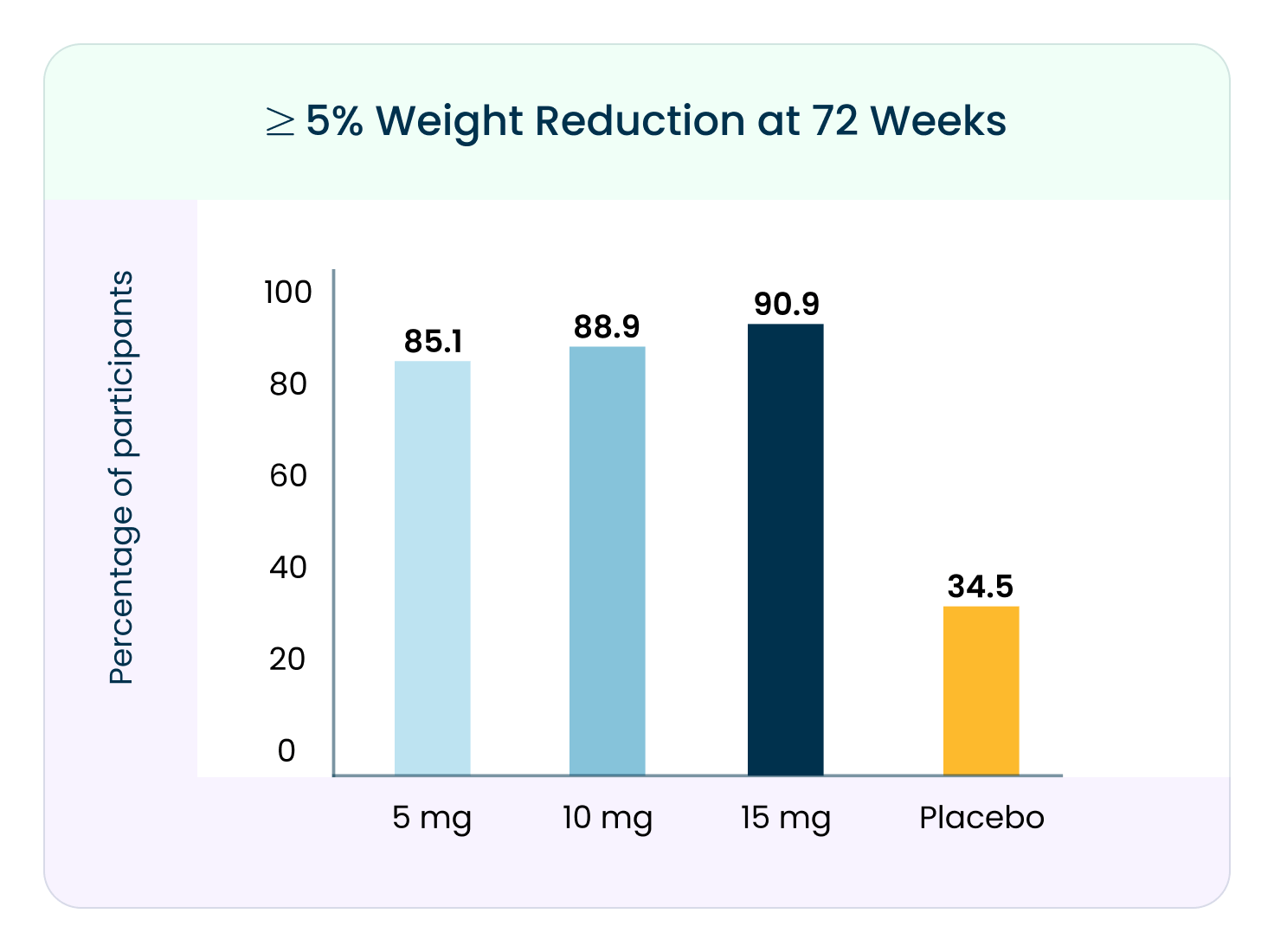
Why the trial data drew so much attention
Much of the interest around tirzepatide comes from the SURPASS and SURMOUNT clinical programmes, where researchers evaluated outcomes relating to glycaemic control and body weight reduction in selected adult populations.
A visual chart works well here because it breaks up the text and helps readers quickly understand why tirzepatide stands out in conversations about newer metabolic therapies.
- Dark premium chart background works well
- Gold accent bars or lines fit the Kensington style
- Keep numbers minimal and the layout clean
Potential benefits discussed in the evidence base
- Reduction in HbA1c in type 2 diabetes
- Reduction in body weight in studied populations
- Possible appetite suppression and reduced food intake
- Metabolic improvements that may matter in high-risk individuals under medical care
Commonly discussed adverse effects
- Nausea
- Vomiting
- Diarrhoea
- Constipation
- Reduced appetite
- Dose-escalation tolerability issues in some patients

How the effects are usually explained
A body-system infographic can make this page feel much more authoritative. Instead of another long block of text, it gives readers a visual explanation of where tirzepatide is commonly discussed in relation to appetite, digestion, glucose handling, and metabolic regulation.
This is useful for readers who want a scientific feel without needing to read every detail from the clinical literature.
Safety considerations
As with other medicines in this category, prescribers consider contraindications, patient history, coexisting illness, interaction risk, tolerability, and whether treatment is clinically appropriate in the first place.
Product labelling and official guidance highlight important safety issues, including gastrointestinal adverse effects and a boxed warning in US labelling regarding thyroid C-cell tumours observed in rats. Patients should rely on official patient information leaflets and clinical advice for risk assessment.
Who should speak to a clinician first?
Anyone with significant gastrointestinal symptoms, pancreatitis history, endocrine concerns, medication interactions, pregnancy-related questions, or uncertainty about whether they meet appropriate treatment criteria should consult a licensed prescriber before considering therapy.
How to assess a provider or pharmacy
If you are researching legitimate access pathways, focus on clinical standards rather than hype. A reputable route should involve identity checks, medical screening, clear prescribing criteria, proper product information, and pharmacy regulation where applicable.
- Uses a licensed prescriber and regulated dispensing route
- Requires a genuine medical assessment rather than instant checkout
- Provides official patient information and dosing instructions
- Offers realistic risk disclosure, not miracle-style marketing claims
- Does not encourage inappropriate or off-label self-directed use

What serious buyers tend to look for
Readers researching tirzepatide often want more than just claims. They usually look for quality signals, transparency, testing documentation, and whether the overall presentation feels credible rather than rushed or exaggerated.
Visually, this section works best with a premium laboratory image: a vial, neat packaging, analytical paperwork, or a sterile environment that suggests process and care.
Independent Source Reference
As part of our own research, Kensington Labs has reviewed this external source based on publicly available information and internal due diligence standards.

Why this source was selected
- Availability of third-party testing documentation
- Focus on high-purity research-grade compounds
- Clear product and batch transparency
- Fast and reliable UK delivery options
Research & official references
These external links are useful starting points for readers who want the primary literature, official product information, and UK regulatory context.
Official / regulatory
Editorial note: Kensington Labs aims to present balanced, evidence-led educational material. Clinical appropriateness depends on the individual, their health background, and professional medical assessment.
Affiliate note: We may receive commission from selected third-party referrals. We are not paid to claim that any treatment is right for everyone, and we do not support unlawful or medically inappropriate supply channels.
Medical note: Always review the official patient leaflet, contraindications, and prescriber advice before making decisions about prescription-only medicines.