
£54.95 – £74.95Price range: £54.95 through £74.95

£54.95 – £74.95Price range: £54.95 through £74.95
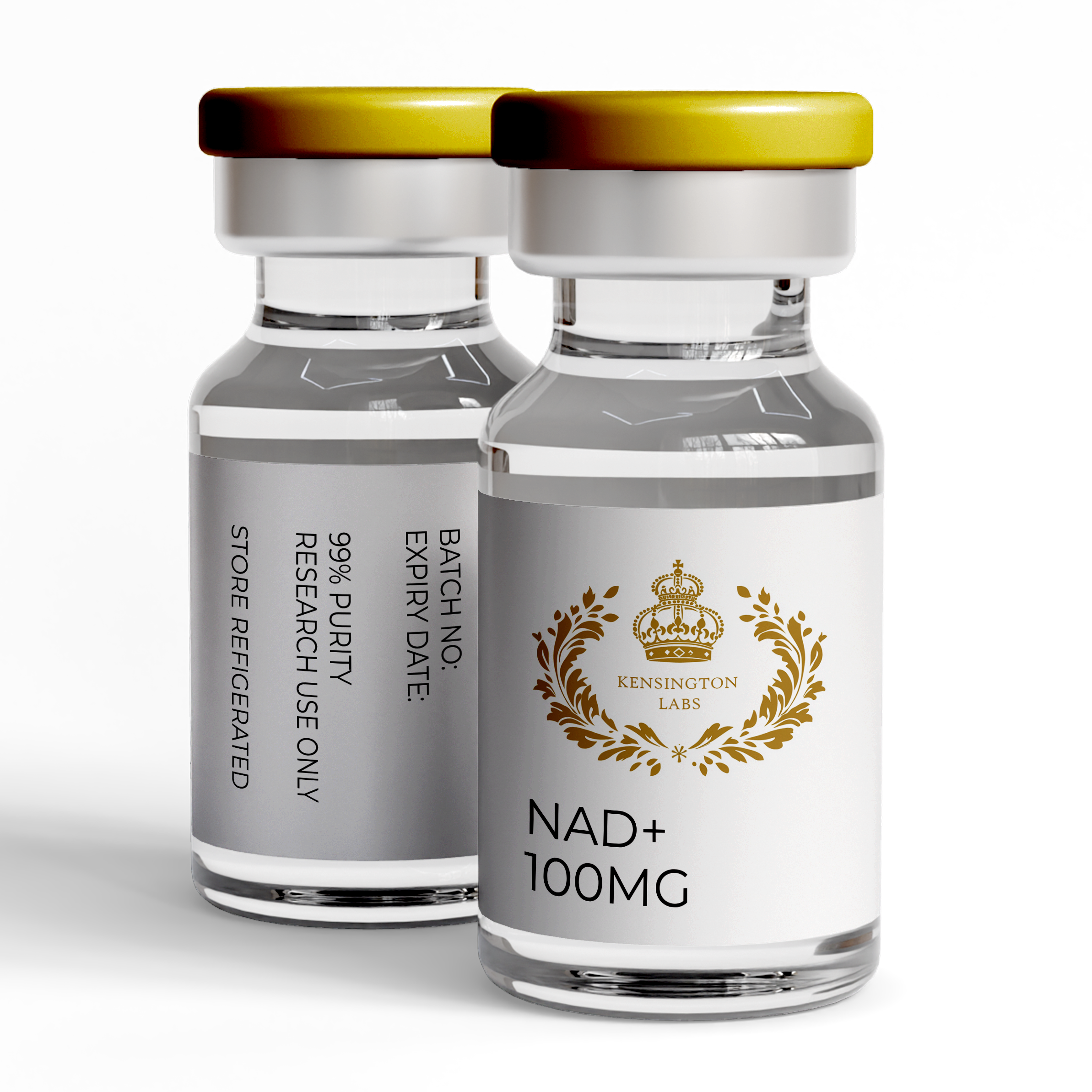
Enhances energy production, supports cellular health, and promotes longevity. Lyophilised powder form, requires Bacteriostatic water for reconstitution

BUY 2, SAVE 5%
£54.95 £52.20 / ITEM

BUY 3, SAVE 10%
£54.95 £49.46 / ITEM

BUY 4, SAVE 15%
£54.95 £46.71 / ITEM
NAD+ (Nicotinamide Adenine Dinucleotide) is one of the most important molecules in the human body. It is found in nearly all living cells and is an essential coenzyme for hundreds of biochemical reactions, including those that generate cellular energy, preserve DNA integrity, and regulate healthy ageing.
NAD+ is a natural molecule, an essential part of cellular metabolism, unlike hormones or signalling peptides. It assists in electron transfer as energy is produced so that the cell’s energy-generating structures, the mitochondria, can make adenosine triphosphate (ATP), the body’s main energy currency.
Cells need NAD+ to efficiently convert nutrients into usable energy, and it is essential for the proper functioning of organs that require a lot of energy, including the brain, heart, liver and skeletal muscles.
Interest in the molecule has grown as natural NAD+ levels drop as we get older. Lower levels of NAD+ have been linked to poor mitochondrial function, reduced cell repair capacity and metabolic changes associated with ageing, leading scientists to question whether restoring NAD+ levels might promote healthy ageing and improve the durability of cells.
NAD+ is now one of the most studied molecules in longevity science, and research is ongoing into its possible role in:
Unlike dietary supplements like vitamins, NAD+ is directly involved in biochemical reactions. During metabolism, it continually oscillates between two forms:
This conversion allows cells to transfer electrons through the mitochondrial electron transport chain, which eventually results in the production of ATP. Since this process takes place all over the body, NAD+ is thought to be vital for healthy cellular activity.
Another area of great scientific interest is the role of NAD+ in the activation of enzymes called sirtuins. Sirtuins control a range of biological processes involved in healthy ageing, including DNA repair, inflammation, mitochondrial activity and cellular stress resistance. Because sirtuins require NAD+ to function, a reduction in NAD+ levels may lead to a decline in their activity with time.
NAD+ is also a substrate for DNA repair enzymes, such as poly (ADP-ribose) polymerases (PARPs). These enzymes are involved in sensing and repairing DNA damage from normal metabolism, ultraviolet radiation and oxidative stress. NAD+ is utilised during DNA repair, and chronic cellular stress might contribute to declining NAD+ levels with increasing age.
Research has also shown that NAD+ plays a role in keeping the mitochondria functioning properly. Mitochondria need sufficient NAD+ to efficiently produce ATP, regulate oxidative stress, and maintain normal cellular metabolism. Hence, diminished NAD+ levels have become a focus of investigation in diseases related to mitochondrial dysfunction.
Research into compounds known as NAD+ precursors, including: has caused a huge increase in interest in NAD+.
These molecules can be transformed into NAD+ through natural metabolic pathways and have been widely investigated in the fields of ageing and metabolic research.
Experimental preparations have also been investigated with direct NAD+ administration. However, the best route of administration, bioavailability and long-term clinical significance remain active areas of investigation.
Laboratory and early clinical studies have been promising; however, note that NAD+ is not an approved anti-ageing therapy. Normal levels of NAD+ are required for normal cellular function, but further large-scale human clinical trials are needed to establish whether raising NAD+ beyond normal physiological levels has meaningful health benefits in the long term.
The areas of scientific investigation at present are:
The published work on NAD+ has employed diverse experimental protocols, and there is significant variability across studies in terms of treatment duration, mode of administration, and levels of exposure. Thus, no universally accepted or regulator-approved research protocol exists at present.
Some laboratory protocols employ a gradual titration period, starting with lower levels of exposure and then achieving a consistent maintenance phase. This method is often employed in research to allow investigators to gauge tolerability and minimise the risk of adverse effects as the study compound is introduced.
A sample laboratory protocol might follow the schedule below:
| Tier | Dosage | Frequency | Notes |
|---|---|---|---|
| Week 1 | 50mg | Once Daily | - |
| Week 2 | 75mg | Once Daily | - |
| Weeks 3-16 | 100mg | Once Daily | - |
NAD+ is one of the most studied molecules in cellular biology due to its critical role in energy production, DNA repair and healthy cellular function. Unlike many experimental drugs that target a single biological pathway, NAD+ is involved in hundreds of enzymatic reactions throughout the body, and is critical for normal metabolism and cell survival.
Since NAD+ levels decline naturally with age, scientists have investigated whether maintaining or restoring NAD+ levels can help support mitochondrial function and resilience to age-related cellular changes.
While many of the findings are encouraging, it is important to note that NAD+ is not an approved anti-aging therapy, and many proposed uses are still being investigated.
Present research areas include:
In biological systems, one of the most important functions of NAD+ is to support the production of adenosine triphosphate ( ATP ), the major source of energy in cells .
NAD+ is an electron carrier in cellular respiration that allows the mitochondria to efficiently convert carbohydrates, fats and proteins into usable energy.
Healthy levels of NAD+ are essential for the proper functioning of high energy demanding tissues such as:
Because ATP production is so reliant on NAD+, some researchers have investigated the possibility that decreased levels of NAD+ may play a role in age-related decreases in energy metabolism.
Mitochondria require NAD+ for oxidative phosphorylation, which is responsible for generating most of the body’s ATP.
Experimental studies suggest that adequate availability of NAD+ may help support:
Healthy mitochondrial function is thought to be important for overall cellular health and has become a major focus of longevity research.
DNA is exposed to damage every day by: In human cells:
NAD+ is a critical substrate for a family of enzymes known as poly(ADP-ribose) polymerases (PARPs), which detect and repair DNA damage.
Increased NAD+ levels may help support normal DNA repair processes, but more research is needed to determine if increasing NAD+ above normal physiological levels offers additional clinical benefit.
One of the main reasons NAD+ has been linked to longevity studies is its natural decrease with age.
Several studies reported that NAD+ levels decrease with age which may contribute to:
Researchers are investigating whether replenishing levels of NAD+ could help to preserve healthier cell function during ageing, but there is currently no regulatory body that recognises NAD+ as an approved anti-ageing treatment.
Sirtuins are a class of enzymes that require NAD+ for their activity.
Sirtuins regulate numerous biological functions including:
When we get older , NAD + availability declines . Without NAD + , sirtuins cannot do their job well , so this will likely reduce sirtuin activity .
This relationship has become one of the major areas of modern longevity research.
The research indicates that NAD+ plays an important role in the maintenance of normal metabolic function.
Potential effects have been studied for:
Much of this proof currently comes from lab research, and studies of NAD+ precursor compounds like NMN and nicotinamide riboside (NR).
Additional human clinical trials should be conducted to determine the therapeutic relevance of these findings.
The brain is one of the most energy-demanding organs.
Research into NAD+ has focused on its ability to bolster neurones, which are highly dependent on mitochondrial ATP production:
Preclinical data are promising, but there is little evidence for cognitive benefits in healthy humans.
Exercise greatly increases the body’s demand for energy.
NAD+ is central to ATP production, so researchers have been investigating whether keeping healthy levels of NAD+ can help:
Current evidence indicates that NAD+ has a role in normal exercise physiology, but additional research is needed to determine whether supplementation confers significant performance benefits in healthy individuals.
Cells are continuously exposed to metabolic and oxidative stress.
Research indicates that NAD+ may help to support normal cellular responses by contributing to:
These protective mechanisms are thought to be essential for long-term cell health.
Normal heart muscle functions at a very high energy level.
Researchers have looked at whether NAD+ affects:
Preliminary results are promising, but additional clinical studies are necessary to confirm therapeutic applications.
Laboratory investigations have explored the potential for NAD+ to promote neuronal survival during periods of metabolic stress.
Research has examined possible effects on:
This remains an active area of investigation in neurodegenerative disease research.
NAD+ is one of the most important molecules for healthy cellular function based on current evidence.
Research suggests possible roles in:
Unlike many compounds that act through a single receptor or signalling pathway, NAD+ is a coenzyme that is involved directly in hundreds of essential biochemical reactions throughout the body. It is central to energy production at the cellular level, DNA repair, mitochondrial function and regulation of enzymes involved in healthy ageing.
NAD+ is a core molecule that enables cells to function effectively, not just a trigger for one biological effect. An adequate supply of NAD+ is required for normal cellular activity in every organ including the brain, heart, liver and skeletal muscles.
NAD+ levels decline naturally with age and researchers have studied the effect of reduced availability on mitochondrial health, metabolic function and cellular repair mechanisms.
One of the major functions of NAD+ is to assist in the production of adenosine triphosphate ( ATP ) . ATP is the primary source of energy in cells of the body .
Carbohydrates, fats and proteins are broken down to release electrons within each cell’s nutrients. These electrons are accepted by NAD+ which is reduced to NADH.
These electrons are transferred to the mitochondrial electron transport chain by NADH and are used to produce ATP by oxidative phosphorylation.
This continuous cycle of NAD+ and NADH occurs billions of times a day and is critical for life.
Cells are less efficient at generating energy without enough NAD+.
NAD+ is continually oscillating between two forms:
During metabolism, NAD+ accepts electrons and is reduced to NADH .
NADH then takes the electrons to the mitochondria where they are used to make ATP and are transformed back into NAD+ .
This recycling process allows the same NAD+ molecule to be used repeatedly in energy production.
A healthy balance between NAD+ and NADH is crucial for effective cellular metabolism.
Mitochondria generate approximately 90 percent of the body’s ATP.
NAD+ takes part in a lot of mitochondrial processes like:
Mitochondrial function is essential for tissues with high energy requirements, including:
Researchers suspect that age-related declines in mitochondrial efficiency are due to falling levels of NAD+.
One of the most important discoveries in longevity research is the link between NAD+ and sirtuins.
Sirtuins are enzymes that regulate a host of biological processes essential for cellular maintenance.
These are:
Unlike many enzymes, sirtuins need NAD+ to work.
With lower NAD+ levels , sirtuin activity might also decrease , diminishing the cell’s capacity to react to stress and fix damage .
The relationship has emerged as a major focus of research on ageing.
Every cell experiences DNA damage during normal metabolism.
DNA damage can be caused by:
NAD+ is the fuel for the enzymes known as poly (ADP-ribose) polymerases (PARPs).
PARPs are always looking for damage in DNA and then triggering repair.
But NAD+ is used up by DNA repair.
Increased cellular stress can lead to a significant increase in NAD+ usage by PARP activity, potentially limiting availability for other critical cellular functions.
Cells are continually adapting to alterations in their surroundings.
These are:
NAD+ helps coordinate these adaptive responses by supporting enzymes involved in cellular maintenance and repair.
Researchers believe that keeping NAD+ levels high enough may help cells better resist metabolic stress, while maintaining normal function.
NAD+ is a co-factor in a great many metabolic pathways that turn nutrients into usable energy.
Research shows it affects:
Because these pathways run in parallel, NAD+ is a central regulator of whole-body metabolism rather than affecting a single organ or tissue.
Reactive oxygen species (ROS), also known as free radicals, are produced as a normal part of metabolism.
ROS in excessive quantities can damage:
Although NAD+ is not itself an antioxidant, it supports several enzyme systems that help maintain the cell’s antioxidant defences.
It may also protect cells from oxidative damage indirectly, by helping to preserve mitochondrial function and cellular repair mechanisms.
Natural NAD+ levels decrease gradually throughout adulthood.
Researchers believe that this reduction could be responsible for a series of biological changes associated with ageing, including:
These observations have made the maintenance of healthy NAD+ levels one of the most studied areas of longevity science.
But while replenishing declining NAD+ levels is biologically plausible, there is currently no conclusive evidence that boosting NAD+ beyond normal physiological levels slows or reverses human ageing.
NAD+ is not only a metabolic molecule but also an important signalling molecule.
It helps regulate the communication between:
This coordination enables cells to respond to changing energy demands while maintaining normal biological function.
Current evidence suggests that NAD+ is a central regulator of cellular metabolism that supports virtually all aspects of normal cellular function.
Its main biological functions are:
Unlike many investigational compounds which target a single receptor or pathway, NAD+ works by enabling the fundamental biochemical processes that allow cells to produce energy, repair damage and respond to metabolic stress.
NAD+ is a naturally occurring molecule in all living cells, but the safety profile of exogenously administered NAD+ is still being investigated. NAD+ is essential for normal cellular function. However, injecting NAD+ is not the same as the body’s natural production and recycling of the molecule.
Published human studies of NAD+ administration in controlled clinical studies have generally reported a favourable safety profile. However, larger long term studies are still required to establish optimal dosing strategies, long term safety and possible therapeutic applications.
Local reactions may occur at the sites of NAD+ injection.
Possible reactions are:
Many injectable compounds cause these effects, which are usually related to injection technique rather than NAD+ itself.
One of the differentiating characteristics of NAD+ compared to many injectable compounds is that some people experience a temporary burning or stinging sensation during administration.
Intensity may also differ depending on:
For this reason some research protocols examine gradual rather than rapid delivery.
Gastrointestinal symptoms have been reported intermittently in some studies (while they are less common with injectable administration than with some oral NAD+ precursors), including:
These signs are usually temporary and have been noted most often with higher levels of exposure or following rapid administration.
Some participants in clinical trials have reported transient headaches following administration of NAD+.
The exact mechanism is not known but could involve:
Headaches are usually reported as mild and self-limited.
NAD+ is being researched for its role in energy production in cells, but some people report feeling a bit tired or fatigued for a short period of time after taking it.
Researchers think these symptoms may represent short-term metabolic adaptation instead of a direct suppressive effect of NAD+ itself.
Further research is needed to better understand these observations.
There have been occasional reports of transient flushing or a sensation of warmth during administration of NAD+.
Possible symptoms may include:
These effects are usually transient and resolve without treatment.
Allergic reactions are possible with any injectable compound, although uncommon.
Possible symptoms may include:
Researchers should also consider the potential for a reaction to:
instead of NAD+ itself.”
As with any injectable product, improper handling of the product may increase the risk of infection.
The possible causes are:
Symptoms that require immediate medical attention may include:
Proper lab handling procedures are still needed.
NAD+ is a naturally occurring molecule that has been well-studied, but long-term studies of repeated exogenous administration are still limited.
Still being investigated are the following questions:
These questions require further large scale clinical trials.
The quality of any research chemical is important for overall safety.
Risks when using low-quality products:
Researchers should prioritise products that have:
These measures add transparency, but do not replace regulatory approval.
There is as yet little published evidence looking at interactions between injectable NAD+ and prescription drugs.
Researchers should carefully record concurrent use of:
This helps to improve interpretation of research findings and to identify possible interactions.
There is no evidence currently available to support the safety of exogenous NAD+ administration during pregnancy or lactation.
Its effects on:
unknown.
The populations have not been studied enough.
Lifestyle plays a fundamental role in maintaining healthy NAD+ levels and overall cellular function. While NAD+ is essential for energy production, DNA repair and mitochondrial health, its concentration within the body is influenced by a variety of factors including age, diet, exercise, sleep and metabolic health.
Researchers investigating NAD+ should carefully consider these variables, as they may significantly influence study outcomes independently of any experimental intervention.
Physical activity is one of the most effective natural ways to support healthy mitochondrial function.
Research has shown that regular exercise promotes:
Exercise also stimulates several of the same cellular pathways associated with NAD+, including AMPK and sirtuin signalling.
Researchers should document:
Changes in physical activity during a study may significantly influence metabolic outcomes.
A balanced diet provides the nutrients required for normal NAD+ metabolism and cellular energy production.
Particular attention should be paid to adequate intake of:
Vitamin B3 is especially important, as it serves as a natural precursor for NAD+ production through the body’s salvage pathway.
A diet rich in whole foods, lean protein, fruit, vegetables and healthy fats helps support normal mitochondrial function.
Sleep is one of the body’s most important recovery processes.
Poor sleep has been associated with:
Consistent, high-quality sleep supports healthy NAD+ metabolism and should be considered an essential component of any longevity or metabolic research programme.
Excess body fat, particularly visceral fat, has been associated with:
Maintaining a healthy body composition through appropriate nutrition and exercise supports normal metabolic function and may influence endogenous NAD+ availability.
Chronic psychological stress increases the production of stress hormones such as cortisol, which can negatively affect metabolic health.
Long-term stress may contribute to:
Managing stress through healthy lifestyle habits may help support overall cellular resilience.
Adequate hydration is essential for normal cellular function.
Maintaining proper hydration supports:
While hydration does not directly increase NAD+ levels, it helps maintain the physiological processes that depend upon efficient cellular metabolism.
Excessive alcohol intake may negatively affect:
Heavy alcohol consumption has also been associated with increased oxidative stress, which may place greater demands on cellular repair mechanisms.
Moderating alcohol intake supports healthier metabolic function.
Smoking increases oxidative stress throughout the body and has been associated with:
Avoiding smoking supports healthier cellular function and reduces unnecessary metabolic stress.
One of the most consistent findings in NAD+ research is that natural NAD+ levels decline with age.
This reduction has been associated with:
Although age cannot be modified, maintaining healthy lifestyle habits may help support normal cellular function throughout life.
Research has shown that excessive calorie intake and long-term overnutrition may negatively influence mitochondrial health and metabolic function.
Conversely, maintaining a healthy calorie balance alongside regular physical activity supports:
Researchers should account for dietary habits when evaluating metabolic outcomes.
Although NAD+ is essential for life and plays a central role in cellular energy production, no compound can replace the foundations of good health.
Optimal cellular function continues to depend upon:
Looking for Weight Loss Peptides?
Explore Weight Loss Peptides with our trusted partner
If you can't find the product you're looking for here, visit Biovanta Research a premium range of weight loss research peptides.