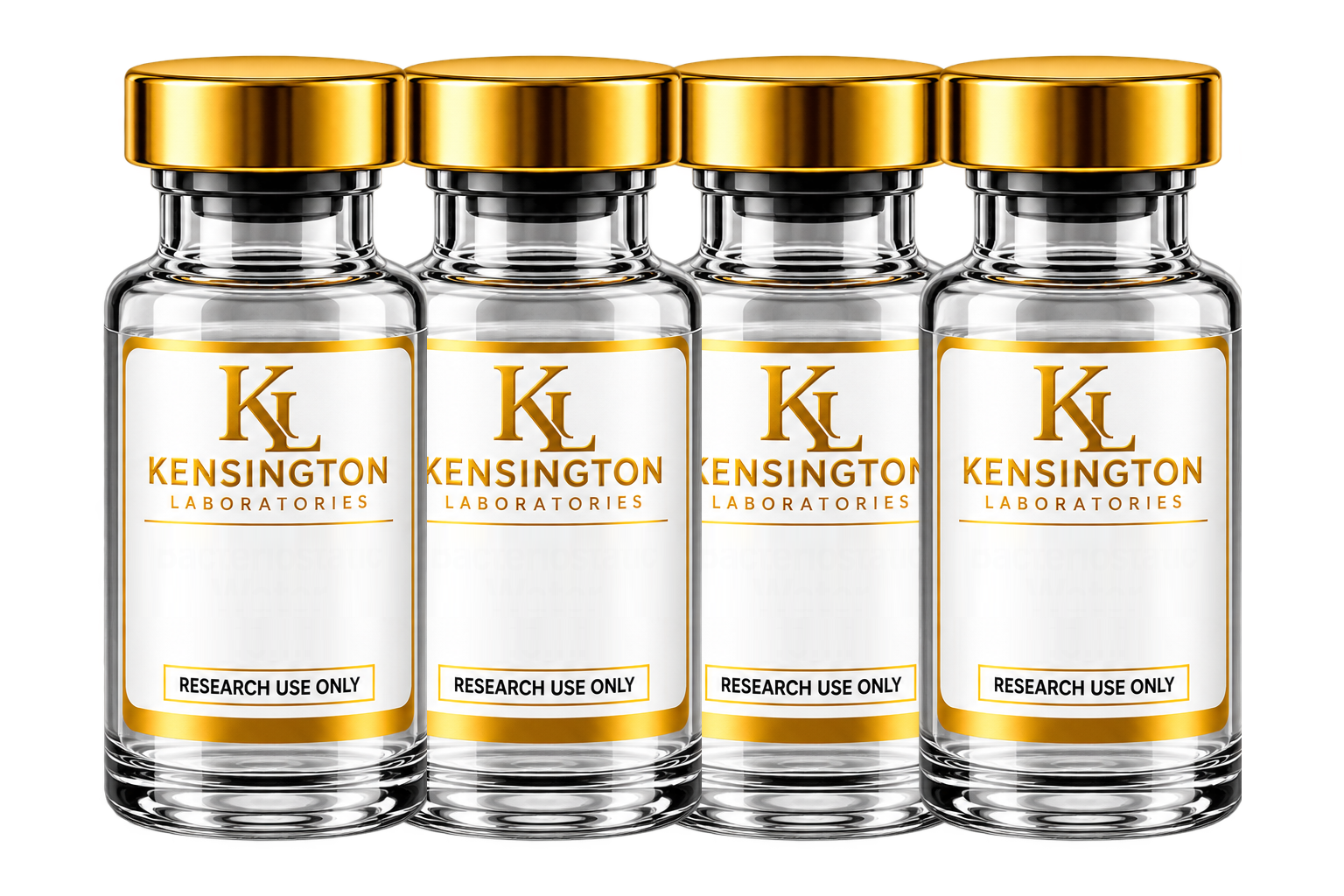
Other products in this category are here Cellular Research
Epitalon (Epithalon) Research Peptide: Scientific Overview & UK Research Information
Explore the AEDG tetrapeptide, its molecular structure, published telomerase studies, cellular ageing research and the limitations of current human evidence.
Epitalon, also known as Epithalon, is a synthetic tetrapeptide investigated for its relationship with cellular ageing, telomere biology and neuroendocrine signalling. The Epitalon peptide has attracted scientific interest because laboratory studies have reported changes in telomerase-related activity and other biological processes associated with cellular maintenance.
This Kensington Labs guide explains what Epitalon is, how Epitalon and Epithalon relate, what published studies actually show, and why laboratory findings should not be interpreted as established human benefits.
Epitalon Research Peptide: Quick Facts
| Compound | Epitalon (also spelled Epithalon or Epithalone) |
|---|---|
| Classification | Synthetic tetrapeptide |
| Amino acid sequence | Alanine–glutamic acid–aspartic acid–glycine (Ala-Glu-Asp-Gly) |
| Sequence abbreviation | AEDG |
| Molecular formula | C14H22N4O9 |
| Molecular weight | Approximately 390.35 g/mol |
| Investigated areas | Telomerase signalling, telomere biology, cellular ageing and neuroendocrine regulation |
| Clinical status | Investigational; human therapeutic efficacy has not been established |
What Is Epitalon?
Epitalon is a synthetic peptide made from four amino acids: alanine, glutamic acid, aspartic acid and glycine. Its sequence is abbreviated AEDG. It emerged from investigations into pineal-associated peptides and biological regulation.
Epitalon was studied as a chemically defined peptide related to earlier research involving Epithalamin, a pineal-derived polypeptide preparation. These materials are not identical: Epitalon has one defined four-amino-acid sequence, while Epithalamin is a heterogeneous preparation. Findings from Epithalamin research should not automatically be presented as findings about Epitalon.
Epitalon vs Epithalon: Is There a Difference?
Epitalon and Epithalon are alternative spellings commonly used for the same AEDG tetrapeptide. The spelling alone does not indicate a different compound. Researchers should confirm the identity of any supplied material using its chemical specification, sequence and batch documentation.
How Does Epitalon Work in Laboratory Research?
Several biological mechanisms have been investigated. Their significance depends on the experimental model, the measurements used and whether independent research has reproduced the findings.
Telomerase & telomeres
Laboratory investigations have reported changes in telomerase-associated activity and telomere measurements in some cultured cells.
Cellular ageing
Studies have examined age-associated molecular markers, gene regulation and cellular stress responses.
Pineal & circadian biology
Research has explored neuroendocrine signalling and selected melatonin-related measurements.
1. Epitalon and Telomerase Activity
Telomeres are protective structures at chromosome ends. In many somatic cells, telomeres shorten during repeated division. Telomerase is an enzyme complex involved in telomere maintenance.
Early experimental work reported that Epitalon influenced telomerase activity and telomere length in cultured human cells. These findings are mechanistic observations; they do not demonstrate that Epitalon reverses human ageing or extends human lifespan.
Telomerase pathways are also relevant to cancer biology. An observed increase in telomerase-related activity cannot automatically be classified as beneficial or safe.
2. Epitalon and Cellular Ageing Research
Researchers have investigated Epitalon in models examining age-associated cellular changes, including selected gene-expression and oxidative-stress markers. A change in a laboratory biomarker is not the same as a demonstrated clinical benefit.
3. Epitalon and Pineal Gland Research
Because the compound emerged from pineal peptide research, some studies have considered neuroendocrine and circadian-associated processes. Preliminary findings involving melatonin-related measurements do not establish Epitalon as a treatment for insomnia or any other sleep disorder.
4. Epitalon and Oxidative Stress
Experimental investigations have examined oxidative-stress-associated pathways under selected conditions. Findings differ by biological model and measured endpoint, and require careful replication before firm conclusions can be drawn.
Epitalon Benefits: What Does the Research Actually Show?
Searches for Epitalon benefits and Epitalon peptide benefits often concern ageing, telomeres and sleep. In the research literature, these should be described as investigated effects, not proven outcomes for people.
| Research area | Investigated observation | What remains unproven |
|---|---|---|
| Telomerase | Changes in telomerase-related activity in cell models | Human anti-ageing benefit |
| Telomeres | Changes in telomere-associated measurements | Safe, meaningful telomere extension in humans |
| Cellular ageing | Effects on selected molecular markers | Improved human health or longevity |
| Circadian regulation | Selected neuroendocrine and melatonin-related biomarkers | Effectiveness for sleep disorders |
| Oxidative stress | Changes in experimental stress-response endpoints | Clinical protection from disease |
Epitalon Studies and Published Scientific Evidence
The Epitalon evidence base includes cell studies, animal experiments and a smaller body of human research. Much of the historical work originated from a limited number of research groups, so independent confirmation is particularly important.
Early Telomerase Research
A frequently cited 2003 publication by Khavinson and colleagues examined Epithalon in cultured human somatic cells and reported effects on telomerase activity and telomere length. It was not a clinical trial establishing improved health or slower ageing in humans.
Subsequent Laboratory Investigations
Later studies have investigated Epitalon in additional cellular systems, including models relevant to telomere maintenance. Findings in normal or malignant cell lines require careful interpretation, particularly where telomerase signalling is involved.
What About Human Clinical Trials?
Published human research involving synthetic Epitalon remains limited. Some reports have investigated physiological biomarkers or specific clinical settings, but the available studies do not establish broad therapeutic efficacy. Evidence involving Epithalamin should be evaluated separately because it is not the same material.
Epitalon Peptide UK: Research and Regulatory Information
People searching for Epitalon peptide UK, Epitalon UK or Epithalon UK should distinguish research-material availability from authorisation for medical use.
Epitalon is not a licensed UK medicine for ageing, sleep disorders or other medical conditions. Applicable requirements depend on how a material is supplied, presented and used; a “research use only” label does not, by itself, settle every regulatory question.
Researchers evaluating Epitalon material should review its identity, declared quantity, batch-specific analytical information and relevant handling documentation.
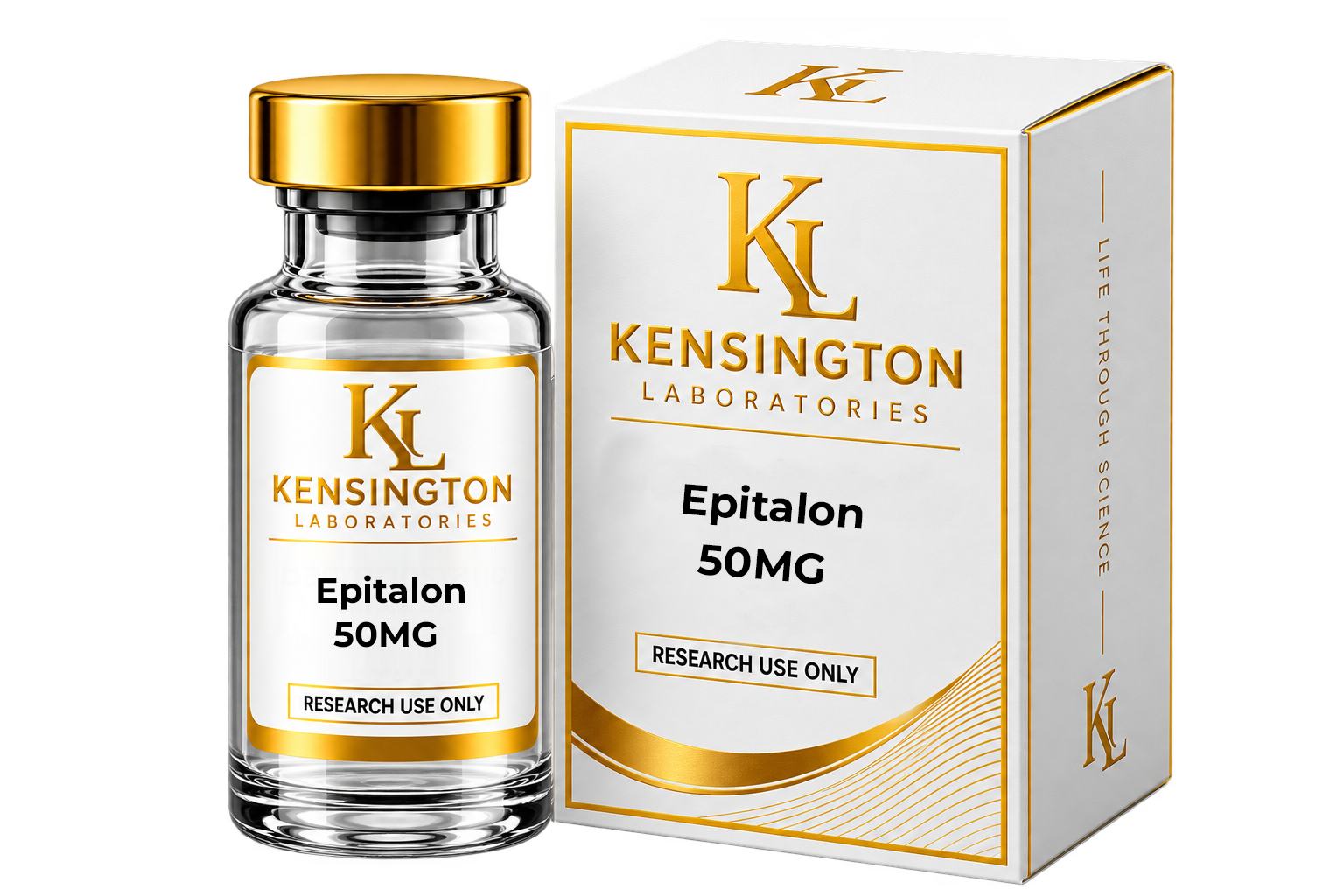
Epitalon 10mg and Epitalon 50mg: Understanding Product Quantities
Terms such as Epitalon 10mg and Epitalon 50mg describe nominal product quantities, not recommended administration amounts. They do not imply different molecular structures or establish human dosing guidance.
When comparing research materials, check the peptide sequence, declared content, purity method, batch information and any excipients. The visible amount of powder is not a reliable measurement of peptide content.
For the actual available strengths, prices and certificates of analysis, refer to the verified product information elsewhere on this page.
Epitalon Dosage: What Has Been Established?
Searches for Epitalon dosage, Epithalon dosage and Epitalon peptide dosage are common. However, the published evidence does not establish a validated, safe and effective human dosing regimen.
Experimental studies use different models and exposure conditions. Cell-culture or animal-study quantities cannot be converted directly into safe human administration instructions. Kensington Labs does not provide human injection schedules, self-administration protocols or dosage charts for investigational peptides.
Epitalon Side Effects and Safety Research
The human safety profile of Epitalon has not been adequately established. Small or preliminary studies cannot reliably identify uncommon adverse effects or long-term risks.
Open questions include the consequences of changes in telomerase-related pathways, long-term toxicology, pharmacokinetics, immunogenicity, reproductive safety and formulation-specific impurities.
The absence of reported problems in a small study should not be interpreted as proof of safety.
Epitalon vs Epithalamin
| Characteristic | Epitalon / Epithalon | Epithalamin |
|---|---|---|
| Composition | Defined synthetic tetrapeptide | Heterogeneous pineal-derived polypeptide preparation |
| Sequence | Ala-Glu-Asp-Gly (AEDG) | Mixture, not one defined sequence |
| Evidence | Requires Epitalon-specific interpretation | Cannot automatically establish Epitalon effects |
Frequently Asked Questions About Epitalon
What is Epitalon peptide?
Epitalon is a synthetic four-amino-acid peptide with the sequence Ala-Glu-Asp-Gly. It has been investigated in laboratory studies of telomerase, cellular ageing and neuroendocrine signalling.
Are Epitalon and Epithalon the same?
Yes. They are common alternative spellings for the AEDG tetrapeptide. Epithalamin, however, is a different mixed polypeptide preparation.
What does Epitalon do?
Some laboratory studies report changes in telomerase-associated activity and selected cellular pathways. Whether those findings translate into meaningful human health outcomes remains unproven.
What are the benefits of Epitalon?
Researchers have investigated telomere biology, cellular ageing markers and circadian-related processes. These are research areas rather than established clinical benefits.
Is Epitalon available for research in the UK?
Epitalon may be supplied as a research material subject to applicable requirements. It is not an approved UK medicine for human treatment.
Is Epitalon 50mg different from Epitalon 10mg?
The numbers refer to different nominal quantities of the same peptide. Neither amount represents a recommended human dose.
Does Epitalon increase telomere length?
Selected cell studies have reported telomere-related changes. There is no established clinical evidence that Epitalon safely extends telomeres or reverses ageing in humans.
What are the side effects of Epitalon?
Human safety evidence is too limited to define a reliable adverse-effect profile. Long-term risks and the implications of telomerase-related activity remain under investigation.
Is there an established Epitalon dosage protocol?
No validated human dosing regimen has been established by adequate clinical trials. Experimental exposure conditions are not human administration instructions.
What is the difference between Epitalon and Epitalon peptide?
There is no difference in the compound. “Epitalon peptide” is a descriptive name for the AEDG tetrapeptide.
Epitalon Research: Current Conclusions
Epitalon, also called Epithalon, remains an investigational peptide of interest in telomere biology, cellular ageing and neuroendocrine research. The available findings are primarily mechanistic or preclinical; robust human efficacy and long-term safety evidence remain insufficient.
Future research needs independent replication, appropriate pharmacological characterisation, comprehensive safety studies and well-designed human trials before therapeutic claims can be supported.
Scientific References
- Khavinson V. et al. (2003). Epithalon Peptide Induces Telomerase Activity and Telomere Elongation in Human Somatic Cells. Bulletin of Experimental Biology and Medicine. View publication.
- Araj A. et al. (2025). Overview of Epitalon—Highly Bioactive Pineal Tetrapeptide with Promising Properties. International Journal of Molecular Sciences, 26(6), 2691. View review.
- Epitalon and Epithalamin: A Narrative Review of Mechanistic, Preclinical, and Clinical Evidence. International Journal of Molecular Sciences (2026), 27(19), 8922. View review.
Kensington Labs — Research information. This article is educational and does not establish safety or effectiveness for human use. Research use only; not intended for human consumption or administration.