Other products in this category are here Neuroactive Research
KENSINGTON LABS | RESEARCH LIBRARY
Oxytocin Peptide
Hormone Function, Molecular Biology and Scientific Research
Explore the oxytocin hormone, its molecular characteristics, natural production, receptor signalling and role in reproductive physiology, neuroscience and social behaviour.
HORMONE BIOLOGY
RECEPTOR SIGNALLING
Oxytocin is a naturally occurring peptide hormone and neuropeptide involved in reproductive physiology, social behaviour and communication between the nervous and endocrine systems.
The oxytocin peptide consists of nine amino acids and is produced primarily in the hypothalamus. The oxytocin hormone is involved in childbirth, breastfeeding, social bonding and several other biological processes.
Frequently described as the oxytocin love hormone or bonding hormone, oxytocin has attracted considerable scientific interest because of its complex relationship with social interactions, emotional responses and physiological regulation.
Understanding oxytocin function requires a distinction between naturally produced oxytocin, authorised pharmaceutical preparations and isolated research peptides.
This article provides scientific education about oxytocin. Research-grade oxytocin is not equivalent to an authorised medicinal product and must not be used for human administration, pregnancy management or veterinary treatment.
Oxytocin Peptide at a Glance
What Is Oxytocin?
A naturally occurring nine-amino-acid peptide hormone and neuropeptide.
Where Is Oxytocin Produced?
Primarily within specialised neurons of the hypothalamus.
What Does Oxytocin Do?
Participates in uterine contractions, milk ejection and context-dependent social signalling.
Oxytocin Molecule
A nonapeptide containing an intramolecular disulfide bond.
Oxytocin and Dopamine
Distinct signalling systems that interact within certain social and reward-related neural circuits.
Oxytocin Side Effects
Depend on the preparation, exposure route and physiological circumstances.
01. What Is Oxytocin?
Oxytocin is a peptide hormone produced naturally by the body. It functions as an endocrine signalling molecule and also participates in communication within the central nervous system.
Oxytocin Meaning and Definition
The oxytocin definition describes a nine-amino-acid peptide involved in reproductive physiology and neurological signalling. The meaning of oxytocin originates from Greek terminology associated with rapid childbirth.
To define oxytocin scientifically, it is necessary to consider both its peripheral hormonal activity and its central neuropeptide activity.
What Is Oxytocin Peptide?
The oxytocin peptide is a nonapeptide containing nine amino acid residues. The terminology peptide oxytocin and oxytocin peptides is commonly encountered in biochemical and endocrine research.
Is Oxytocin a Hormone?
Yes. Oxytocin is a hormone with established roles in uterine contractions and milk ejection.
Is Oxytocin a Neurotransmitter?
Oxytocin also acts as a neuropeptide and neuromodulator within the nervous system. Its signalling characteristics differ from those of classical small-molecule neurotransmitters.
Is Oxytocin a Peptide?
Yes. Its molecular structure consists of nine amino acids linked through peptide bonds, with a disulfide bridge contributing to its characteristic cyclic structure.
02. Oxytocin Chemical Structure and Molecular Formula
The oxytocin chemical structure contains nine amino acid residues. The oxytocin molecule incorporates a disulfide bond between cysteine residues at positions one and six.
OXYTOCIN MOLECULAR SEQUENCE
Tyr
Ile
Gln
Asn
Cys
Pro
Leu
Gly
CYIQNCPLG-NH2
Disulfide bridge: Cys1–Cys6
| Characteristic | Scientific Description |
|---|---|
| Compound | Oxytocin |
| CAS number | 50-56-6 |
| Oxytocin molecular formula | C43H66N12O12S2 |
| Molecular weight | Approximately 1007.19 g/mol |
| Amino acid count | 9 |
| Classification | Cyclic nonapeptide hormone |
| Primary receptor | Oxytocin receptor (OXTR) |
The oxytocin formula and molecular weight above refer to the peptide itself. Salt forms and associated counterions may affect the analytical characteristics of a particular material.
Oxytocin Acetate Peptide
Oxytocin acetate refers to an acetate-associated form of the peptide. The oxytocin acetate peptide retains the underlying peptide sequence, although the material’s composition and measured mass may reflect associated counterions and other components.
03. Oxytocin Production and Release
What Produces Oxytocin?
Oxytocin production occurs primarily within specialised neurons of the hypothalamus, particularly those associated with the paraventricular and supraoptic nuclei.
Where Is Oxytocin Released From?
Oxytocin is transported along neuronal projections to the posterior pituitary gland, from which it can be released into the bloodstream. Oxytocin release also occurs within the central nervous system.
Primary site of oxytocin synthesis
Storage and peripheral hormone release
Tissue-specific biological responses
Simplified illustration of peripheral oxytocin hormone signalling.
When Is Oxytocin Released?
Oxytocin release occurs in response to several physiological and sensory signals. Established examples include breastfeeding and cervical stimulation during childbirth.
Research also examines oxytocin responses during social interactions, physical contact and sexual activity. These responses vary between individuals and circumstances.
04. What Is the Function of Oxytocin?
The function of oxytocin depends on the location of hormone release, receptor distribution and physiological context.
The role of oxytocin extends beyond reproductive physiology to experimental investigations of social behaviour, stress regulation and neural communication.
Reproductive Physiology
Established involvement in uterine contractions and milk ejection.
Social Behaviour
Context-dependent modulation of social information and interactions.
Neural Signalling
Interactions with several central nervous system pathways.
Stress Research
Investigations involving stress responses and endocrine regulation.
Oxytocin Positive Feedback
Oxytocin positive feedback is a recognised physiological mechanism during childbirth. Cervical stretching can stimulate oxytocin release, which contributes to uterine contractions and further cervical stimulation.
This mechanism is an example of positive feedback rather than the negative feedback commonly associated with endocrine regulation.
05. Oxytocin Receptor Signalling
The oxytocin receptor, commonly abbreviated as OXTR, belongs to the G protein-coupled receptor family.
Receptor activation can involve Gq/11-associated signalling, phospholipase C activation and changes in intracellular calcium signalling.
Oxytocin Receptor Pathway
Simplified example of a recognised receptor signalling pathway.
Oxytocin Receptor Antibody Research
An oxytocin receptor antibody may be used in experimental investigations of receptor expression and tissue distribution. Antibody specificity and analytical validation are important considerations.
Oxytocin Upregulation
Oxytocin upregulation may refer to changes in peptide production, receptor expression or signalling responsiveness. These are distinct biological processes and should not be treated as interchangeable measurements.
06. How to Increase Oxytocin Naturally: What Does Research Show?
Questions about how to increase oxytocin, how to release oxytocin and how to boost oxytocin commonly relate to everyday social experiences and natural hormone regulation.
Natural oxytocin production is controlled by complex neurological and physiological mechanisms. No single everyday activity reliably produces a predictable increase in every individual.
What Releases Oxytocin?
Established physiological triggers include suckling during breastfeeding and reproductive processes. Experimental studies also examine social contact, affectionate interactions and human-animal relationships.
What Activities Release Oxytocin?
Does Hugging Release Oxytocin?
Affectionate physical contact has been investigated in relation to oxytocin responses, although findings vary.
Does Cuddling Release Oxytocin?
Oxytocin cuddling research examines associations between affectionate contact and social signalling.
Does Kissing Release Oxytocin?
Hormonal responses during affectionate interactions may depend on context and individual differences.
Does Physical Touch Release Oxytocin?
Physical contact is an area of oxytocin research, particularly within supportive social relationships.
Natural Ways to Increase Oxytocin
Research into ways to increase oxytocin, ways to release oxytocin and ways to boost oxytocin frequently considers positive social experiences and interpersonal relationships.
However, activities described as oxytocin boosting activities should not be regarded as validated treatments for hormonal disorders.
What Increases Oxytocin Naturally?
Things that increase oxytocin in one experimental setting may not produce the same response in another. Factors include baseline physiology, relationship context, measurement methods and individual variability.
How to Increase Oxytocin Levels
Research examining how to raise oxytocin levels must distinguish between peripheral hormone measurements and activity within the brain. Blood or saliva measurements do not necessarily reflect central nervous system signalling.
What Releases the Most Oxytocin?
There is no reliable universal ranking of everyday activities according to the amount of oxytocin they release. Physiological responses depend on the individual, circumstances and measurement technique.
07. Oxytocin Food Sources and Nutrition Research
Searches for oxytocin food, oxytocin foods and oxytocin natural sources frequently reflect interest in the relationship between nutrition and hormone production.
However, ordinary foods are not established sources of pharmacologically effective oxytocin.
Oxytocin in Food
Research concerning oxytocin in food should distinguish between nutritional influences on general physiology and the direct consumption of an active peptide hormone.
Oxytocin Chocolate Research
Chocolate oxytocin discussions often concern the emotional and sensory experience of eating chocolate. Evidence does not establish chocolate with oxytocin as a reliable means of controlling hormone levels.
L Reuteri Oxytocin Research
Experimental studies involving Limosilactobacillus reuteri have examined relationships between the microbiome, social behaviour and oxytocin-associated signalling, particularly in animal models.
These findings do not establish a validated probiotic treatment for oxytocin deficiency or other human hormonal conditions.
No food has been established as a reliable and safe substitute for medically supervised labour induction. Pregnancy-related concerns should be discussed with a midwife or obstetric clinician.
08. Oxytocin Peptide Benefits and Biological Effects
Discussions of oxytocin peptide benefits frequently include social bonding, reproductive physiology and emotional regulation.
However, the established biological functions of natural oxytocin should not be interpreted as evidence that administering an isolated peptide provides equivalent benefits.
| Research Area | Evidence Consideration |
|---|---|
| Uterine contractions | Established physiological function. |
| Milk ejection | Established physiological function. |
| Social bonding | Context-dependent experimental evidence. |
| Stress responses | Variable findings across studies. |
| Sleep | Insufficient evidence for a general treatment application. |
| Pain perception | Ongoing experimental investigation. |
| Bone metabolism | Experimental evidence requiring clinical validation. |
Does Oxytocin Increase Bone Mass?
Research has examined oxytocin signalling in bone metabolism and bone-forming cells. These findings do not establish oxytocin administration as a safe or effective treatment for osteoporosis.
Oxytocin Pain Relief Research
Oxytocin pain relief research investigates possible interactions between oxytocin signalling and pain-processing pathways. Experimental observations do not establish a general-purpose analgesic treatment.
09. Oxytocin Love Hormone and Social Bonding
Oxytocin is frequently called the love hormone, cuddle hormone or bonding hormone because of research examining its relationship with social attachment and interpersonal behaviour.
Is Oxytocin the Love Hormone?
The phrase love hormone oxytocin is a popular description rather than a complete scientific classification. Oxytocin does not independently create love, trust or emotional attachment.
Oxytocin Bonding in Relationships
Research into oxytocin in relationships examines associations between hormone signalling, social recognition, attachment and interpersonal interactions.
Oxytocin effects on bonding and social behavior depend on the social environment, previous experiences and individual characteristics.
Oxytocin as Social Salience Hormone
The oxytocin social salience hormone hypothesis proposes that oxytocin may influence the importance assigned to social information rather than consistently producing positive social behaviour.
Why Is Oxytocin Called Bonding Hormone Misleading?
Oxytocin can influence different social responses depending on context. Describing it solely as a bonding hormone overlooks findings involving social vigilance, defensive behaviour and group-related preferences.
Oxytocin In-Group Bias and Parochial Altruism
Oxytocin in-group bias and oxytocin parochial altruism are research topics examining how hormone signalling may interact with group membership and social decision-making.
These findings illustrate why oxytocin social bonding should not be interpreted as a universally positive or predictable behavioural effect.
10. Oxytocin in Men
Oxytocin in men is involved in neurological signalling, reproductive physiology and social behaviour. Oxytocin is not exclusively a female hormone.
Do Men Have Oxytocin?
Yes. Men naturally produce oxytocin within the hypothalamus.
Do Men Produce Oxytocin and Release It?
Yes. Oxytocin production and release occur in males as well as females. The hormone participates in several shared physiological processes.
What Does Oxytocin Do for Men?
Oxytocin effects on men have been investigated in relation to social recognition, paternal behaviour, sexual physiology and stress-related responses.
Research involving oxytocin for men or oxytocin peptide for men does not establish that external peptide administration improves these functions.
How to Release Oxytocin in a Man
Natural oxytocin release in men may occur during physiological and social experiences. There is no reliable method of controlling another person’s emotional responses through oxytocin.
Oxytocin Side Effects Male Research
Safety findings involving externally administered oxytocin depend on the formulation, clinical circumstances and exposure route. Natural hormone activity does not establish the safety of external administration.
11. Oxytocin in Women
The oxytocin hormone in female physiology has established roles in childbirth and breastfeeding, alongside broader neurological functions shared with males.
What Does Oxytocin Do for Women?
Oxytocin participates in uterine contractions, milk ejection and central nervous system signalling. Its biological activity depends on receptor expression and physiological circumstances.
When Is Oxytocin Released in Females?
Oxytocin release occurs during several physiological processes, including breastfeeding and childbirth. Research also examines hormone responses during sexual activity and social contact.
What Releases Oxytocin in Women?
Oxytocin release can be influenced by physiological stimulation and social circumstances. Responses are variable and cannot reliably be predicted from individual activities.
How to Increase Oxytocin in Women
Questions concerning how to release oxytocin in women or how to boost oxytocin in women should distinguish natural physiological responses from external hormone administration.
Claims about words that trigger oxytocin in females are not supported as reliable methods of producing predictable hormonal or emotional responses.
Oxytocin Perimenopause Research
Researchers have examined interactions between reproductive hormones, oxytocin signalling and age-related endocrine changes. Oxytocin is not an established general treatment for perimenopausal symptoms.
Oxytocin in Males vs Females
Both males and females produce oxytocin. Differences in hormone activity can reflect reproductive physiology, receptor distribution, other hormones and individual variation.
12. Oxytocin in Pregnancy and Childbirth
Oxytocin in pregnancy is an important area of reproductive physiology. Changes in uterine sensitivity and oxytocin receptor expression contribute to the physiological processes associated with childbirth.
When Does Oxytocin Increase in Pregnancy?
Oxytocin levels during pregnancy and childbirth vary between individuals and measurement methods. Increasing uterine sensitivity to oxytocin near term is an important component of labour physiology.
Oxytocin and Pregnancy Safety
Externally administered oxytocin can cause powerful uterine contractions. Its use during pregnancy requires appropriate clinical assessment and monitoring.
Questions about how to increase oxytocin for labour, how to release oxytocin for labor or how to boost oxytocin for labour should be discussed with a maternity professional. Unsupervised attempts to induce labour may be unsafe.
13. Oxytocin in Labour and Clinical Medicine
Oxytocin in labour has both a natural physiological role and a recognised pharmaceutical application.
Authorised synthetic oxytocin preparations may be used by healthcare professionals for specific obstetric indications, including labour induction, augmentation and management of postpartum bleeding.
What Is Oxytocin Used For?
The established medical uses of oxytocin depend on the authorised preparation and clinical circumstances. These uses differ from experimental investigations involving isolated research peptides.
Oxytocin Drip in Labour
An oxytocin drip is a medically controlled intravenous infusion used in appropriate obstetric circumstances. Oxytocin drip induction requires monitoring of uterine activity and fetal wellbeing.
How Long Does Oxytocin Drip Take to Work?
The response to an oxytocin infusion varies according to individual physiology and clinical management. There is no universal oxytocin drip labour time that applies to every pregnancy.
Does Oxytocin Induce Labor?
Authorised pharmaceutical oxytocin can be used for medically supervised labour induction when clinically appropriate. Research-grade oxytocin must not be used for this purpose.
Oxytocin Drip in Labour Side Effects
Potential complications include excessive uterine contractions, fetal distress, cardiovascular effects and fluid-balance disturbances. Clinical monitoring is essential.
Oxytocin Injection After Birth
Authorised oxytocin preparations may be used after childbirth to support uterine contraction and reduce postpartum bleeding risk, according to clinical assessment and applicable guidance.
14. Oxytocin Breastfeeding and Milk Ejection
Oxytocin breastfeeding physiology involves hormone release in response to suckling. This stimulates contraction of myoepithelial cells surrounding milk-producing structures.
Oxytocin Milk Ejection Reflex
The oxytocin milk ejection reflex facilitates the movement of milk towards the nipple. It is commonly described as the let-down reflex.
Oxytocin and Prolactin
Does Breast Milk Contain Oxytocin?
Oxytocin has been investigated in human milk. However, the presence of a hormone in milk does not establish that it remains biologically active following digestion or produces a predictable systemic effect.
15. Dopamine, Serotonin, Oxytocin and Endorphins
Dopamine, serotonin, oxytocin and endorphins are frequently grouped together in popular discussions of emotional wellbeing. However, they represent distinct signalling systems with different molecular characteristics and biological functions.
| Signalling Molecule | Classification | Selected Functions |
|---|---|---|
| Oxytocin | Neuropeptide hormone | Reproduction and social signalling |
| Dopamine | Monoamine neurotransmitter | Movement, motivation and learning |
| Serotonin | Monoamine signalling molecule | Mood, sleep and gastrointestinal regulation |
| Endorphins | Endogenous opioid peptides | Pain modulation and other physiological responses |
Dopamine vs Oxytocin
Dopamine and oxytocin differ in molecular structure, receptor systems and biological activity. Nevertheless, oxytocin and dopamine may interact within certain neural circuits involved in social behaviour and reward processing.
Oxytocin vs Serotonin
Serotonin and oxytocin are chemically distinct signalling molecules. Serotonin is a monoamine, whereas oxytocin is a peptide containing nine amino acids.
Serotonin vs Dopamine vs Oxytocin
Comparing dopamine vs serotonin vs oxytocin requires consideration of their individual receptor systems and overlapping physiological functions.
Endorphins and Oxytocin
Endorphins and oxytocin are peptide signalling molecules, but they belong to different biological systems and interact with different receptor families.
16. Oxytocin Stress, Cortisol and Sleep Research
Does Oxytocin Reduce Cortisol?
Some experimental studies report that oxytocin lowers cortisol under particular conditions. However, the relationship depends on experimental design, individual characteristics and the nature of the stressor.
The statement that oxytocin reduces cortisol should therefore not be treated as a universal biological outcome.
Does Oxytocin Make You Sleepy?
Oxytocin has been investigated in relation to relaxation, social behaviour and sleep-associated processes. Evidence does not establish that natural or externally administered oxytocin consistently produces sleepiness.
Does Oxytocin Help You Sleep?
Oxytocin is not an established general treatment for insomnia. Further research is necessary to clarify its relationship with sleep regulation.
Does Oxytocin Make You Happy?
Oxytocin may influence social and emotional processing, but happiness cannot be attributed to a single hormone.
What Does Oxytocin Feel Like?
There is no unique subjective sensation that reliably identifies oxytocin release. Feelings of closeness, relaxation or emotional attachment involve multiple biological and psychological processes.
Is Oxytocin Addictive?
Oxytocin addiction is not an established diagnosis associated with normal endogenous hormone production. Evidence concerning external administration and oxytocin withdrawal should be evaluated separately.
17. Oxytocin Drug and Pharmaceutical Formulations
The oxytocin drug used in clinical medicine is a pharmaceutical preparation manufactured and regulated for specific medical indications.
Synthetic Oxytocin
Synthetic oxytocin reproduces the amino acid sequence of the naturally occurring hormone. Pharmaceutical quality, formulation and regulatory authorisation remain essential considerations.
Oxytocin Injection
Authorised injectable formulations have specific clinical indications and require professional administration.
Oxytocin Tablets
Conventional oral peptide delivery is complicated by digestive degradation and absorption limitations.
Oxytocin Pills
An oxytocin pill description does not establish pharmaceutical approval or reliable systemic delivery.
Oxytocin Cream
Topical preparations require independent evidence concerning stability, absorption and safety.
Pitocin vs Oxytocin
Pitocin is a brand name associated with pharmaceutical synthetic oxytocin. It is not a separate naturally occurring hormone.
Syntocinon vs Oxytocin
Syntocinon is another brand name associated with pharmaceutical oxytocin preparations.
Carbetocin vs Oxytocin
Carbetocin is a synthetic oxytocin analogue with different pharmacological characteristics. It is not interchangeable with oxytocin without appropriate clinical assessment.
Oxytocin Drug Class
Pharmaceutical oxytocin is classified as a uterotonic medicine because of its ability to stimulate uterine contractions.
18. Oxytocin Nasal Spray and Intranasal Research
Intranasal oxytocin has been investigated in experimental neuroscience and behavioural studies. The oxytocin nasal spray route has attracted scientific interest because of questions concerning peptide delivery and central nervous system activity.
However, nasal oxytocin research does not establish that every oxytocin spray produces equivalent biological effects.
Oxytocin Nasal Spray for Men and Women
Research involving oxytocin nasal spray for men and oxytocin nasal spray for women examines a variety of behavioural and physiological endpoints.
These studies do not establish general effectiveness for improving relationships, sexual function or emotional wellbeing.
Oxytocin Peptide Nasal Spray
An oxytocin peptide nasal spray requires formulation-specific evidence concerning pharmaceutical quality, stability, delivery and safety.
Oxytocin Supplement Spray
Descriptions such as oxytocin supplement spray or oxytocin hormone supplement do not establish that a preparation is an authorised medicinal product.
Oxytocin Nasal Spray Experience
Individual experiences reported online cannot establish the effectiveness or safety of an intranasal formulation. Controlled studies and appropriate clinical assessments provide stronger evidence.
19. Oxytocin Peptide Dosage and Side Effects
Oxytocin administration requires an appropriate authorised formulation and clinical indication. Research peptide quantities must not be interpreted as human doses.
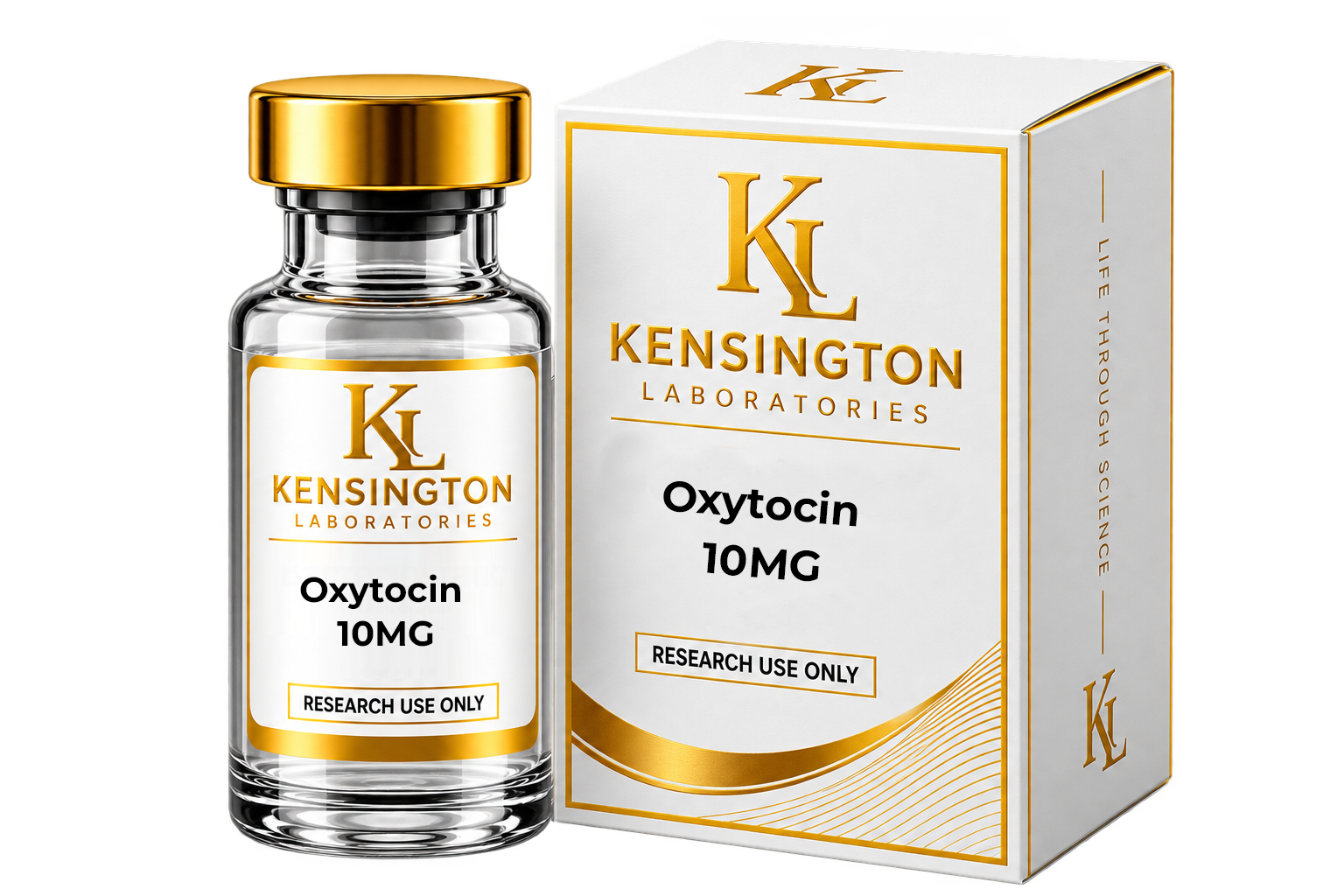
Oxytocin 10mg and Molecular Material Quantity
Descriptions such as oxytocin 10mg or 10mg oxytocin refer to a stated material quantity. They do not establish pharmaceutical potency, sterility or suitability for administration.
Oxytocin Peptide Dosage Chart
An informal oxytocin peptide dosage chart cannot replace authorised prescribing information and professional medical assessment.
An oxytocin peptide dosage protocol must not be inferred from the quantity of material contained within a research vial.
Oxytocin Dosage Bodybuilding
Oxytocin is not an established bodybuilding treatment. Evidence does not support a validated administration regimen for this purpose.
Side Effects of Oxytocin
Oxytocin side effects associated with pharmaceutical administration may include nausea, cardiovascular disturbances, excessive uterine contractions and disturbances in fluid balance.
Oxytocin Injection Side Effects
Potential risks associated with oxytocin injection depend on the clinical indication, formulation and individual circumstances. Medical supervision is essential.
Oxytocin Peptide Side Effects
The safety of isolated research materials cannot be inferred from authorised pharmaceutical products. Purity alone does not establish sterility, clinical suitability or safety.
20. Oxytocin Levels and Deficiency Research
Oxytocin levels fluctuate according to physiological circumstances, hormone release patterns and measurement methods.
Low Oxytocin Symptoms
There is no universally accepted symptom checklist that reliably identifies low oxytocin in otherwise healthy individuals.
Symptoms of Low Oxytocin in Females
Emotional difficulties, relationship concerns or changes in mood cannot independently establish oxytocin deficiency.
Symptoms of High Oxytocin in Females
There is no general symptom checklist that can reliably diagnose elevated endogenous oxytocin levels. Adverse effects from administered pharmaceutical oxytocin are a separate clinical consideration.
Oxytocin Deficiency Symptoms
Assessment of suspected endocrine dysfunction requires appropriate clinical investigation rather than interpretation of general emotional or behavioural symptoms.
Oxytocin Supplements and Boosters
Products described as oxytocin supplements, oxytocin boosters or the best oxytocin supplement require evidence supporting their composition, safety and claimed effects.
There is no established general-purpose supplement regimen for correcting presumed low oxytocin levels.
21. Oxytocin Autism, ADHD and Neuroscience Research
Oxytocin and Autism
Oxytocin autism research has examined whether oxytocin-associated signalling influences aspects of social communication and behaviour.
Clinical findings have been mixed, and intranasal oxytocin is not established as a general treatment for autism.
ADHD Oxytocin Research
Experimental investigations have considered possible relationships between oxytocin signalling and attention, emotional processing and social behaviour. Evidence does not establish oxytocin as an effective ADHD treatment.
Oxytocin and PT-141
Oxytocin and PT-141 are structurally and pharmacologically different peptides. PT-141, also known as bremelanotide, acts through melanocortin receptor systems.
Oxytocin PT-141 comparisons should distinguish their individual receptor mechanisms and evidence bases. Research involving either compound does not establish the safety or effectiveness of combining them.
22. Oxytocin Animal Research
Animal studies have contributed to understanding oxytocin receptor signalling, parental behaviour and social attachment.
Dog Oxytocin and Human-Animal Bonding
Dog oxytocin research has examined associations between human-animal interactions, mutual gaze and hormone responses.
Cat and Owner Oxytocin Link
Research involving the cat and owner oxytocin link explores possible relationships between companion animal interactions and endocrine responses. Findings may vary according to species and individual behaviour.
Oxytocin for Dogs and Horses
Veterinary oxytocin has specific clinical applications in certain species. Oxytocin for dogs, oxytocin for horses and oxytocin injection for dogs require veterinary assessment.
Human pharmaceutical instructions and research peptide quantities must not be used to determine veterinary administration.
Differences Between Oxytocin and Lutalyse in Pigs
Oxytocin and dinoprost, associated with the Lutalyse brand, are pharmacologically different substances. Their veterinary indications and biological mechanisms differ.
23. Oxytocin UK Research and Regulatory Considerations
Oxytocin UK research discussions should distinguish authorised medicines from isolated laboratory research materials.
The description oxytocin peptide UK does not establish pharmaceutical authorisation or suitability for human administration.
Oxytocin Prescription and BNF Information
Oxytocin prescription information for clinical practice should be obtained from authorised product information and recognised professional resources.
The oxytocin BNF monograph provides professional prescribing information concerning medicinal oxytocin. BNF oxytocin guidance does not apply to isolated research-grade materials.
Oxytocin Nasal Spray UK
Claims concerning oxytocin nasal spray UK, oxytocin spray UK or oxytocin supplement UK should be assessed against the regulatory status of the specific formulation.
Online availability does not establish medicinal authorisation, clinical effectiveness or suitability for personal administration.
SCIENTIFIC LITERATURE DATABASE
24. Oxytocin Scientific Research and Further Reading
The following resources provide starting points for examining published scientific literature and recognised clinical information.
PubMed — Oxytocin receptor signalling ↗
PubMed — Oxytocin and social salience ↗
PubMed — Intranasal oxytocin research ↗
PubMed — Oxytocin, dopamine and social bonding ↗
PubMed — Oxytocin and stress physiology ↗
25. Frequently Asked Questions About Oxytocin
Common questions concerning oxytocin biology, peptide research and physiological functions.
What is oxytocin hormone?
What does oxytocin mean?
How to get oxytocin naturally?
What triggers oxytocin?
Do hugs release oxytocin?
Do men release oxytocin?
Do women release oxytocin during sex?
What is oxytocin release during orgasm?
Does masturbation release oxytocin?
Does crying release oxytocin?
Is oxytocin the happy hormone?
How does oxytocin make you feel?
Is Pitocin oxytocin?
How long does oxytocin take to work?
Can you take oxytocin?
What boosts oxytocin?
What are the benefits of oxytocin?
Can oxytocin make you sleepy?
What is the difference between natural oxytocin and synthetic oxytocin?
What stimulates oxytocin?
RESEARCH CONTENT
Kensington Labs Research Team
Educational content covering peptide chemistry, endocrinology, receptor signalling and experimental neuroscience.
Scientific Research Disclaimer
Oxytocin is a biologically active peptide hormone with established physiological functions and specific authorised pharmaceutical applications.
Isolated research-grade peptide materials are not equivalent to authorised medicinal products.
This article is intended for scientific education only and does not provide medical advice, human dosing schedules, veterinary dosing, labour induction instructions or personal administration guidance.
KENSINGTON LABS • SCIENTIFIC RESEARCH LIBRARY