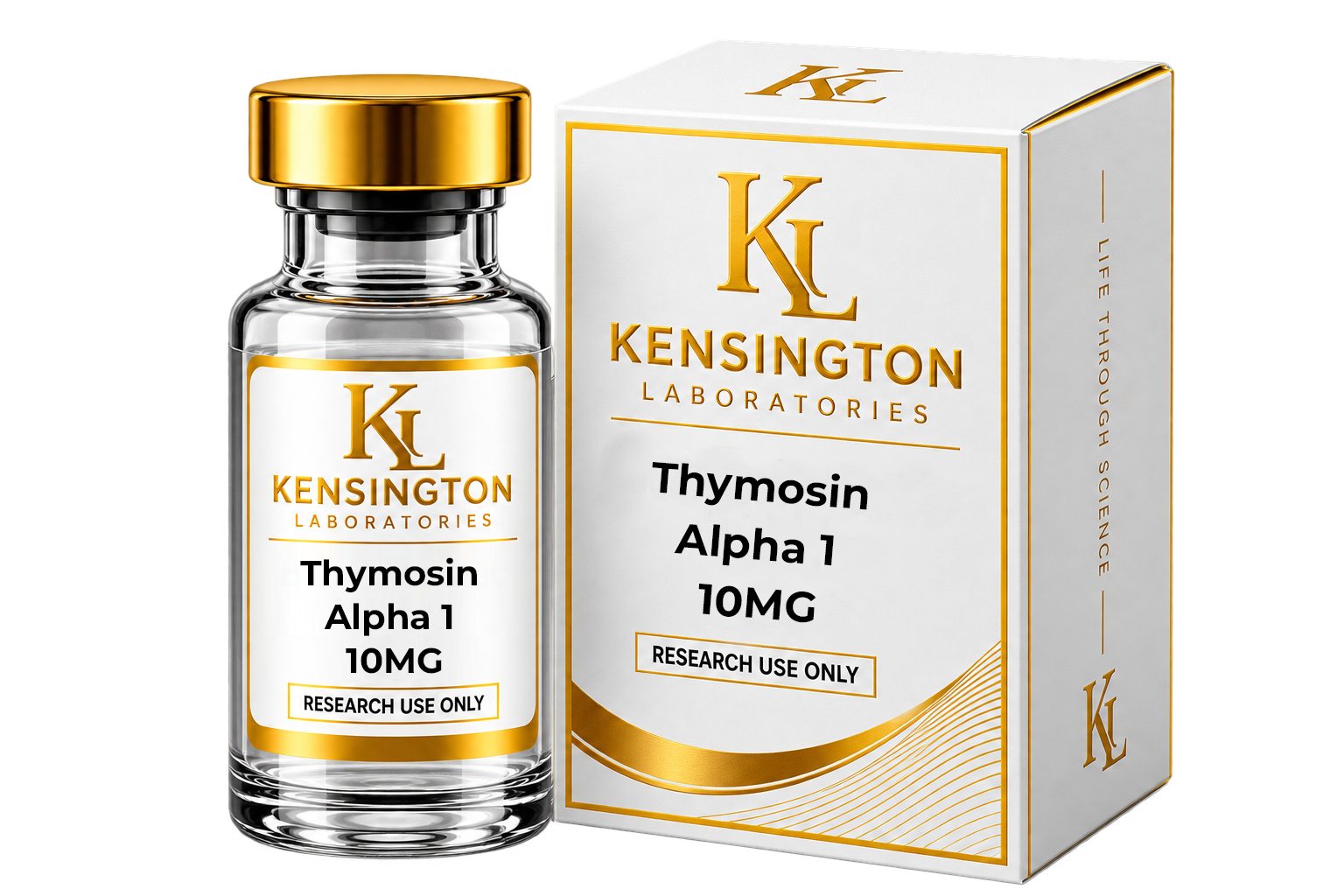
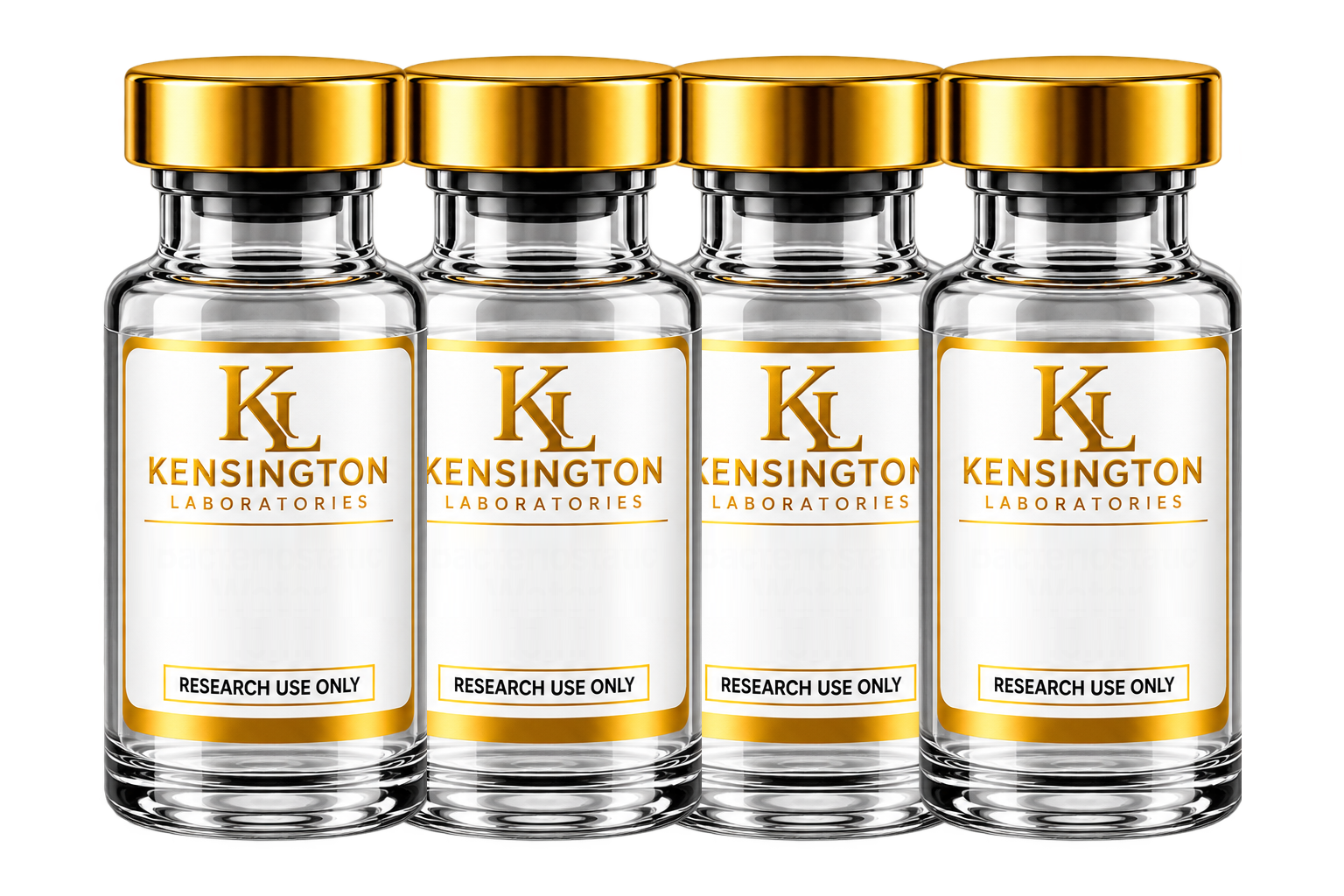
Thymosin Alpha-1 – 5mg & 10mg Research Peptide
Thymosin alpha 1 (also written as thymosin alpha-1, TA1 or Tα1) is a defined peptide comprising 28 amino acids. It is studied in laboratory immunology for its relationship with immune cell signalling and regulation. The synthetic counterpart of the naturally occurring peptide is known as thymalfasin.
This description covers the molecular identity of the thymosin alpha-1 peptide, the distinction between the two vial strengths and the analytical information relevant to characterising research materials. Both strengths refer to the same peptide sequence, rather than different molecular variants.
Thymosin Alpha-1 at a Glance
Product Specifications
| Specification | Details |
|---|---|
| Compound | Thymosin alpha-1 |
| Alternative names | Thymosin alpha 1, TA1, Tα1, thymalfasin (synthetic counterpart) |
| Nominal vial strengths | 5mg and 10mg |
| CAS number | 62304-98-7 |
| Molecular formula | C129H215N33O55 |
| Molecular weight | Approximately 3,108.3 Da |
| Sequence length | 28 amino acids |
| Structural feature | N-terminal acetylation |
| Research classification | Immunomodulatory peptide |
| Intended use | Laboratory research only |
The molecular formula and mass refer to the peptide itself, rather than the complete contents of a formulated vial. Counterions, moisture and excipients may contribute to the total material mass.
Thymosin Alpha-1 5mg and 10mg Vial Comparison
| Characteristic | 5mg | 10mg |
|---|---|---|
| Nominal peptide mass | 5mg | 10mg |
| Peptide sequence | 28 amino acids | 28 amino acids |
| Molecular identity | TA1 | TA1 |
| Purity and identity evidence | Batch-specific documentation | Batch-specific documentation |
The distinction between thymosin alpha-1 5mg and thymosin alpha-1 10mg is nominal peptide mass. The larger figure does not indicate a different molecular structure, greater purity or increased intrinsic biological activity. Vial mass must also be distinguished from concentration, which describes the amount of material in a defined volume.
Understanding vial labels
Nominal mass, total powder mass, chromatographic purity and biological potency are different measurements. None should be substituted for another.
Molecular Structure and Characteristics
Thymosin alpha-1 corresponds to the N-terminal region of prothymosin alpha. Its defined amino-acid sequence and N-terminal acetylation distinguish it from the longer precursor protein and other thymic peptides. Molecular identity is important because even closely related peptide names may describe materials with substantially different structures.
Thymalfasin describes the synthetic counterpart of this peptide. The shared molecular name does not establish that a research-labelled material is equivalent to a regulated pharmaceutical preparation.
Research Applications
TA1 research encompasses several aspects of immune cell communication. The following table summarises scientific areas of investigation without implying established therapeutic benefits.
| Research area | Investigated endpoints |
|---|---|
| Innate immunity | Pattern-recognition signalling and immune cell activation |
| Adaptive immunity | T-cell responses and antigen presentation |
| Inflammatory signalling | Cytokine profiles and regulatory pathways |
| Clinical immunology | Outcomes in defined populations using specific pharmaceutical preparations |
Scientific Research Overview
Published investigations include cell culture, animal models and clinical studies. Findings depend on the experimental model, preparation, controls and endpoints. Evidence concerning a pharmaceutical formulation cannot independently establish the safety, identity or effectiveness of a research-labelled vial.
Detailed questions concerning mechanisms, potential benefits, adverse effects and clinical evidence belong in dedicated scientific reviews rather than being treated as product performance claims.
Certificate of Analysis and Analytical Quality
A certificate of analysis (COA) records the results of specified analytical tests on a particular sample or batch. Mass spectrometry can support molecular identity assessment, while chromatography can characterise purity under defined test conditions. These methods address different questions.
| Analytical property | What it describes |
|---|---|
| Identity | Whether analytical evidence supports the stated molecular identity. |
| Chromatographic purity | The relative chromatographic signal associated with the target compound under the reported method. |
| Peptide content | The quantity of peptide determined by an appropriate quantitative method. |
| Batch traceability | The relationship between the tested sample and the identified production batch. |
Purity alone does not establish sterility, absolute peptide content or suitability for human administration. Any reported result should be interpreted alongside its method, batch identifier and scope.
Storage and Stability
Peptide stability depends on formulation, temperature, moisture and handling history. Product-specific storage conditions and shelf life should be supported by documented stability information. A molecular formula or nominal vial mass alone cannot establish either property.
Frequently Asked Questions
Are thymosin alpha 1 and thymosin alpha-1 the same compound?
Yes. They are spelling variants of the same peptide name. TA1 and Tα1 are common abbreviations.
Does thymosin alpha-1 10mg have a different sequence from 5mg?
No. The two nominal strengths refer to different masses of the same 28-amino-acid peptide.
Does vial strength indicate peptide purity?
No. Nominal mass and analytical purity are separate characteristics.
Is thymalfasin the same molecular peptide as TA1?
Thymalfasin is the synthetic counterpart of thymosin alpha-1. This does not establish equivalence between different formulations or quality standards.
Is thymosin alpha-1 the same as thymosin beta-4?
No. They are distinct peptides with different amino-acid sequences and research contexts.
Does a certificate of analysis establish suitability for human use?
No. A COA reports specified analytical results and is not a medicinal product authorisation or proof of clinical safety.
Scientific Literature
Further reading is available through these scientific database searches:
- PubMed: TA1 and immune modulation
- PubMed: TA1 and dendritic cells
- PubMed: thymalfasin clinical studies
Research use disclaimer
This information is provided for scientific education. Research-labelled materials are not intended for human or veterinary administration. Nothing in this description constitutes medical advice, a dosing recommendation or a claim of therapeutic effectiveness.