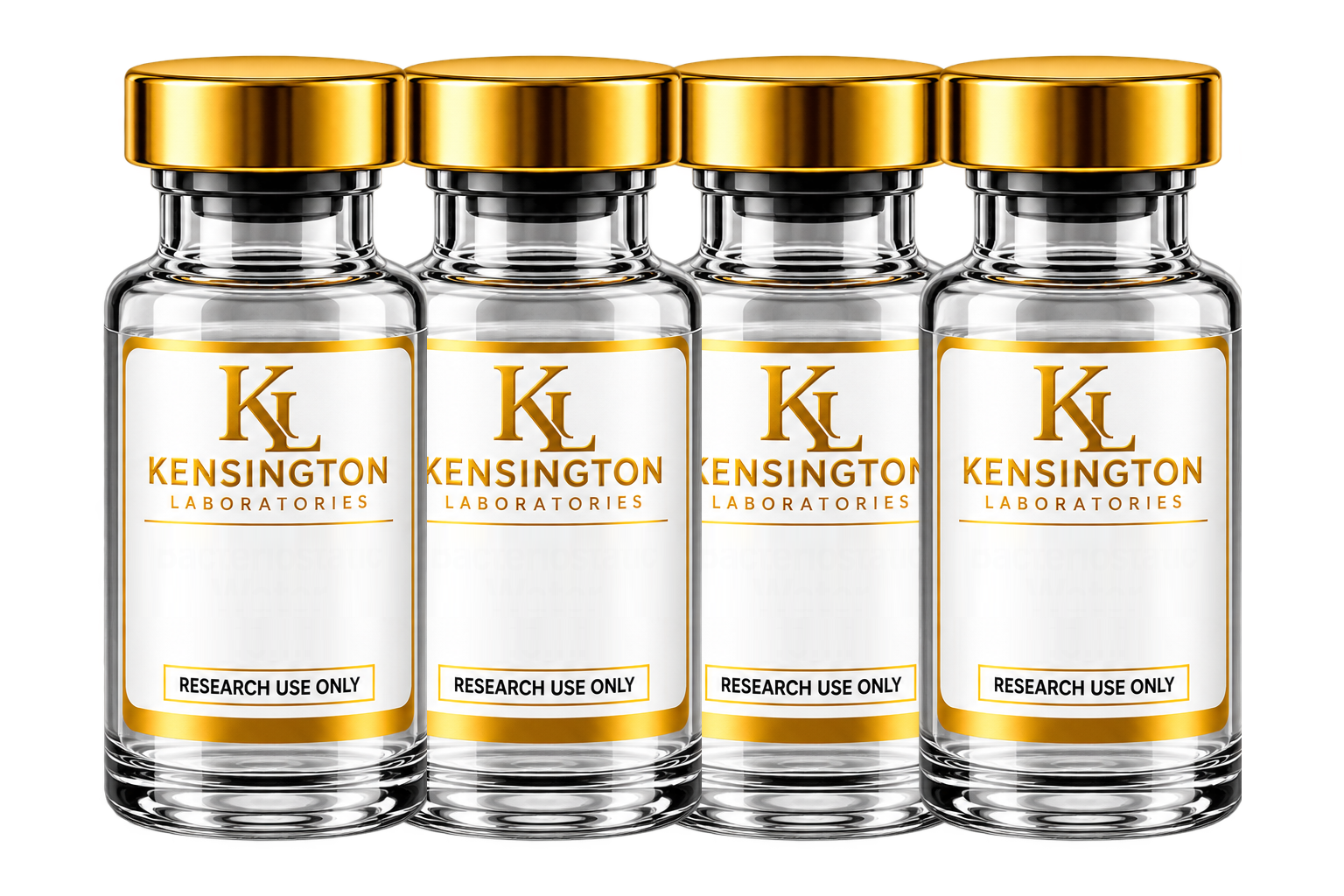
Other products in this category are here Regeneration Research
BPC-157 Research Peptide: Science, Benefits, Safety & UK Guide
A comprehensive, evidence-aware guide to BPC-157 peptide research, tendon and ligament models, gut biology, BPC-157 vs TB-500, laboratory quality and frequently asked questions.
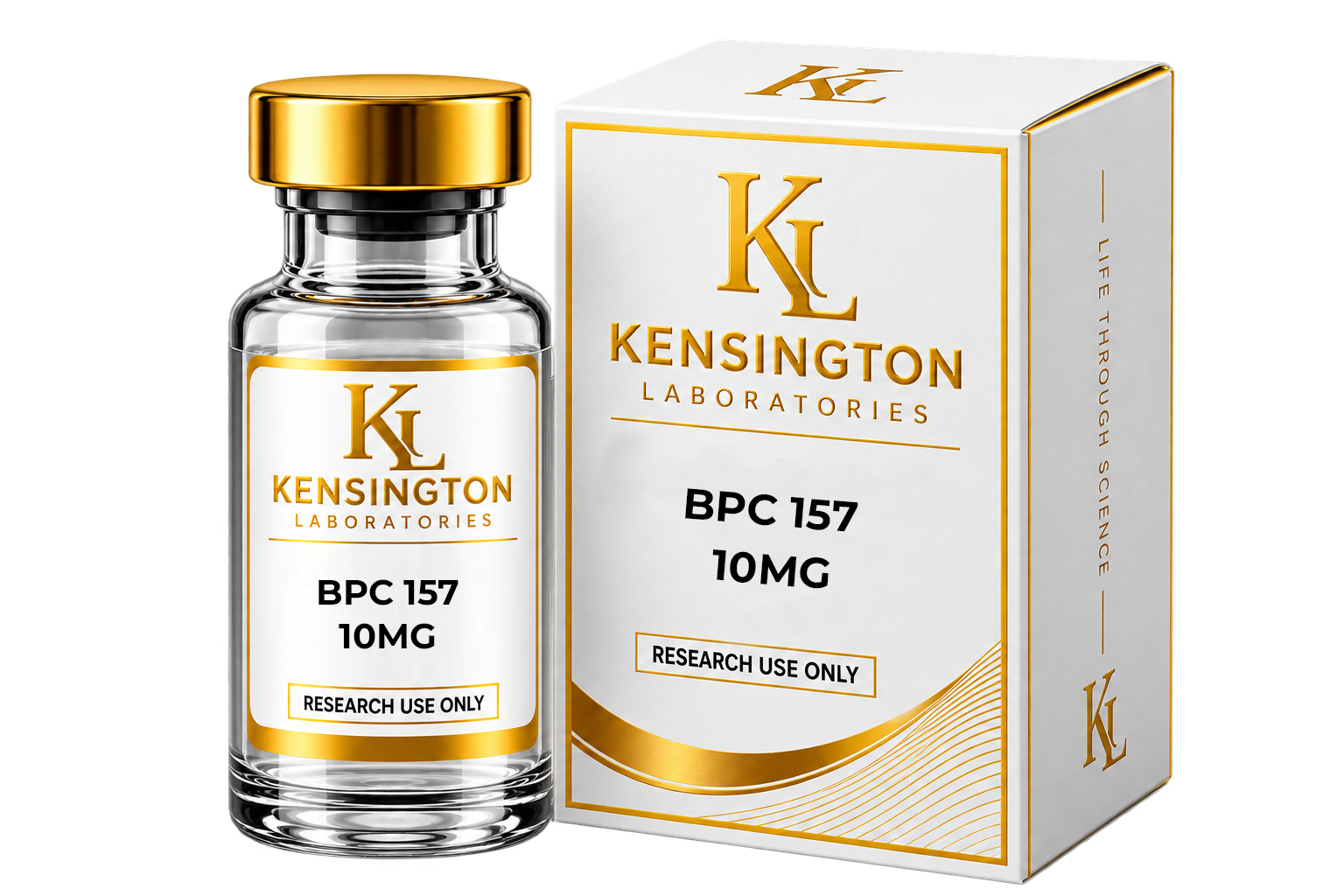
BPC-157 (Body Protection Compound-157) is a synthetic 15-amino-acid peptide studied mainly in laboratory and animal models of tissue injury, gastrointestinal protection, inflammation and vascular signalling. Researchers have investigated its effects on fibroblast migration, tendon repair, angiogenesis and nitric-oxide pathways. These findings are preclinical; they do not establish that BPC-157 heals injuries or treats disease in humans.
This Kensington Labs page covers the BPC 157 peptide in the UK research context, including the scientific evidence, product characteristics and common questions. For related compounds, explore our TB-500 research peptide, GHK-Cu and KPV research peptide.
Research-only notice
Kensington Labs BPC-157 is supplied for laboratory research only. It is not an approved medicine and is not intended for human or veterinary consumption, injection, self-administration or treatment. No human dose, cycle or injection instructions are provided.
BPC-157: Quick Research Answers
What is BPC-157?
What does BPC-157 do?
Does BPC-157 work?
Is BPC-157 safe?
BPC-157 vs TB-500
Is BPC-157 FDA approved?
BPC-157 Research Peptide: Product Specifications
| Product name | BPC-157 (Body Protection Compound-157) |
|---|---|
| Peptide type | Synthetic 15-amino-acid peptide (pentadecapeptide) |
| Molecular formula | C62H98N16O22 |
| Approximate molecular weight | 1,479.6 g/mol |
| Amino-acid sequence | Gly-Glu-Pro-Pro-Pro-Gly-Lys-Pro-Ala-Asp-Asp-Ala-Gly-Leu-Val |
| Physical form | Lyophilised powder |
| Listed product strength | 5mg in the supplied source description; confirm the selected variation and current label before publication |
| Purity | Source copy states 99%; publish a numerical purity claim only where supported by the current batch COA |
| Research area | Tissue repair, gastrointestinal biology, cellular migration, vascular signalling |
| Intended use | Laboratory research only |
BPC-157 5mg, BPC-157 10mg and BPC-157 20mg are common search terms, but they describe different labelled quantities, not clinical doses. Only display vial strengths that are actually available on your product listing. The visible powder mass may also include stabilising excipients and should not be equated with peptide content.
What Is BPC-157 Peptide? Structure, Origin and Research Interest
What is BPC 157? BPC-157 is a laboratory-synthesised peptide consisting of 15 amino acids. It is often described as a gastric-derived or gastric-associated peptide because the research literature links its development to investigations of protective compounds in gastric tissue. It is not simply a supplement extracted from the stomach.
The phrase Body Protection Compound-157 reflects its research history rather than an established therapeutic indication. Investigators have explored BPC-157 in experimental models involving tendons, ligaments, muscles, gastrointestinal tissue and vascular injury. The biological pathways are complex, and a single definitive mechanism of action has not been established.
BPC-157 Structure and Molecular Characteristics
The peptide sequence is Gly-Glu-Pro-Pro-Pro-Gly-Lys-Pro-Ala-Asp-Asp-Ala-Gly-Leu-Val. Its molecular structure and formulation can affect analytical identity, degradation and stability. BPC-157 arginate or BPC-157 arginate salt describes a different salt or formulation designation; research findings for one formulation should not automatically be applied to another.
Does BPC-157 Work? What the Research Actually Shows
Searches for BPC-157 benefits, BPC-157 results and how long does BPC-157 take to work often mix laboratory findings with personal testimonials. These are not equivalent forms of evidence. In vitro work can show cell-level responses; animal studies can measure tissue healing; human clinical trials are needed to determine whether those effects are safe and clinically useful in people.
| Cell and tissue experiments | Signals involving fibroblast migration, adhesion and endothelial responses have been reported; they do not establish clinical benefit. |
|---|---|
| Animal tendon and ligament studies | Some models report changes in healing and biomechanical outcomes; translation to human injuries is uncertain. |
| Gastrointestinal models | Preclinical findings have investigated mucosal protection and experimental inflammation; human treatment efficacy remains unproven. |
| Human clinical trials | Publicly available, robust evidence is insufficient to establish a safe and effective therapeutic use for BPC-157. |
| Before-and-after reviews | Anecdotes are affected by placebo effects, natural healing, concurrent rehabilitation and selection bias. |
How long for BPC-157 to work? There is no clinically validated time to benefit in humans. Experimental measurements vary by model and endpoint; a change in a laboratory marker is not a prediction of injury-recovery time.
BPC-157 Mechanism of Action: FAK–Paxillin, VEGFR2 and Nitric Oxide
The BPC-157 mechanism of action remains under investigation. Several pathways have been proposed from preclinical research, including fibroblast motility, cell adhesion, angiogenic signalling and nitric-oxide regulation.
FAK–paxillin signalling
VEGFR2–Akt–eNOS signalling
Collagen and extracellular matrix
Inflammatory mediators
Because angiogenesis and cell growth are biologically complex, the same pathways that interest regeneration researchers also require careful safety evaluation. These findings do not support describing BPC-157 as a proven healing treatment.
BPC-157 for Tendon Repair, Ligaments and Achilles Tendon Research
BPC-157 for tendon repair is one of the most studied themes in the preclinical literature. Rodent models of Achilles tendon injury and ligament damage have reported changes in fibroblast migration, collagen arrangement and tissue strength. The studies are mechanistically interesting, but they do not demonstrate that BPC-157 treats Achilles tendonitis, tennis elbow, rotator cuff injuries, plantar fasciitis or meniscus damage in humans.
Achilles Tendon, Tennis Elbow and Rotator Cuff
Searches for BPC-157 Achilles tendon, BPC-157 for tennis elbow and BPC-157 rotator cuff often arise from real injury concerns. For a scientific interpretation, researchers should separate the injury model, tissue examined, control group and measured endpoint. A surgically induced animal injury is not interchangeable with chronic human tendinopathy.
Explore the related TB-500 peptide for a separate line of experimental tissue-repair research.
BPC-157 for Muscle Growth, Bone Healing and Joint Research
The questions does BPC-157 build muscle and does BPC-157 help muscle growth are distinct from whether a peptide affects healing markers after experimental injury. There is no convincing clinical evidence that BPC-157 increases human muscle mass or improves bodybuilding outcomes.
BPC-157 bone healing, cartilage repair, arthritis, knee pain, shoulder pain and back pain are further research-related search themes. The existing preclinical literature cannot establish that the peptide treats osteoarthritis, rheumatoid arthritis, joint damage, slipped discs or sciatica. These conditions have different causes and require different evidence.
BPC-157 Gut Health: Gastric Mucosa, IBS, Crohn’s and Colitis
BPC-157 gut health research is connected to its gastric-associated scientific history. Experimental work has investigated mucosal integrity, inflammatory responses and gastrointestinal injury models. These findings have prompted interest in BPC-157 gut healing and gastrointestinal protection, but they do not establish efficacy for human gut disorders.
BPC-157 for IBS, Crohn’s Disease and Ulcerative Colitis
Search terms such as BPC-157 for Crohn’s disease, BPC-157 ulcerative colitis, BPC-157 for IBS, gastritis and acid reflux describe potential applications rather than established treatments. There are insufficient controlled human data to recommend BPC-157 for these conditions. The research-only product is not a substitute for diagnosis or evidence-based medical care.
BPC-157 Anti-Inflammatory Effects, Angiogenesis and Cancer Questions
Experimental reports have investigated BPC-157 anti-inflammatory effects, cytokine signalling and vascular responses. However, claims that BPC-157 reliably reduces TNF-α or IL-6 in people, lowers blood pressure or repairs blood vessels go beyond established clinical evidence.
BPC-157 cancer risk is a reasonable safety research question because vascular growth and tissue signalling are involved in complex disease processes. Existing evidence is insufficient to determine whether BPC-157 increases, decreases or has no effect on cancer risk in humans. It should not be promoted as a cancer treatment or as proven cancer-safe.
BPC-157 vs TB-500: What Is the Difference?
BPC-157 and TB-500 are frequently mentioned together in regeneration research, sometimes under names such as the “Wolverine stack” or BPC-157 TB-500 blend. They are not the same peptide. BPC-157 is a synthetic pentadecapeptide with a research history in gastrointestinal and injury models. TB-500 is commonly marketed in connection with thymosin beta-4-related research, but product identity and peptide sequence should be checked carefully.
| BPC-157 | 15-amino-acid peptide; preclinical work involving gastric protection, tendon models, cell migration and vascular signalling. |
|---|---|
| TB-500 | A separate peptide marketed in relation to thymosin beta-4-associated pathways; precise identity and evidence depend on the formulation. |
| BPC-157 + TB-500 blend | Combining compounds does not prove synergistic benefit, safety or an appropriate human dose. |
| Which is better? | There are no adequate head-to-head clinical trials establishing superiority for human injury recovery. |
For separate product information, see TB-500 research peptide. Related matrix and tissue research can also be explored through GHK-Cu, while KPV is studied in inflammatory signalling models.
Can You Mix BPC-157 and TB-500?
Laboratory co-formulation requires documented identity, solvent compatibility, stability and validated analytical methods. A blend listing, including a 10mg or 20mg blend, does not establish suitability for human use. There is no validated human BPC-157 and TB-500 dosage chart, dosage calculator or injection protocol.
BPC-157 Capsules, Tablets, Pens, Creams and Injection Research
Searches for BPC-157 capsules, BPC-157 tablets, oral BPC-157, nasal spray, cream, BPC-157 pen and BPC-157 injection reflect different delivery concepts. These formulations cannot be assumed to have the same chemical stability, absorption, exposure or biological effects.
| Lyophilised BPC-157 vial | Dry research material for controlled laboratory investigation; not inherently sterile or suitable for injection. |
|---|---|
| BPC-157 capsules and tablets | Oral product forms may differ in salt, excipients and stability; human oral efficacy is not established. |
| BPC-157 pen or pre-mixed pen | A delivery device or ready-mixed presentation does not establish regulatory approval or safety. |
| BPC-157 cream or topical formulation | Topical exposure and tissue penetration require formulation-specific testing. |
| BPC-157 nasal spray | Intranasal delivery introduces distinct absorption and safety questions; human effectiveness is unproven. |
BPC-157 oral vs injection: there is no high-quality human evidence establishing a superior route for clinical outcomes. Kensington Labs supplies its research peptide for laboratory use only, not administration.
BPC-157 Dosage, Dosage Charts, Calculators and Cycle Length
Common searches include BPC-157 dosage, BPC-157 dosage chart, BPC-157 dosage calculator, BPC-157 dosage in ml, BPC-157 dose by weight, how much BPC-157 to take and BPC-157 cycle length. There is no clinically validated or regulatory-approved human dosing schedule for this research-grade material.
Online dose charts, including BPC-157 500mcg daily or “beginner” schedules, should not be mistaken for evidence-based medical guidance. Likewise, a BPC-157 and TB-500 dosage calculator cannot determine a safe human dose from vial content or body weight.
BPC-157 5mg and 10mg Reconstitution: Research Context
Questions about how to reconstitute BPC-157, how much bacteriostatic water for 5mg BPC-157 and how to mix BPC-157 10mg concern preparation of laboratory material. Appropriate solvents, concentrations, pH and storage conditions depend on the intended analytical method and formulation. A universal BAC-water ratio is not scientifically justified; follow validated laboratory procedures and batch-specific documentation.
The product is not supplied for injection. Accordingly, this guide does not provide injection sites, needle sizes, subcutaneous or intramuscular instructions, or personal dose conversions.
BPC-157 Side Effects, Drug Interactions and Long-Term Risks
BPC-157 side effects in humans have not been adequately characterised. Small or preclinical studies cannot establish the absence of risk. Important uncertainties include immune responses, contamination, peptide degradation, effects on vascular signalling, interactions with medicines and unknown consequences of repeated exposure.
Human safety evidence
Injection-related risks
Women and men
Drug interactions
Searches for BPC-157 side effects kidney, BPC-157 blood pressure, BPC-157 and testosterone, BPC-157 fatigue and BPC-157 anhedonia reflect unresolved questions. Available evidence does not support confident clinical claims in these areas.
Is BPC-157 Legal in the UK? FDA, MHRA and WADA Status
Is BPC-157 legal in the UK? The answer depends on the product, its presentation, intended use and applicable medicines and product regulations. Research-only labelling is not a blanket exemption from UK law. A product marketed or supplied for treating human disease may engage medicines regulation; check current MHRA guidance for the relevant circumstances.
Is BPC-157 FDA approved? No. BPC-157 is not FDA-approved for human therapeutic use. FDA materials also identify safety concerns associated with BPC-157 in the compounding context; consult the FDA human drug compounding resources for current official information.
Is BPC-157 WADA banned? BPC-157 is prohibited under the World Anti-Doping Agency’s S0 non-approved substances category. Athletes should consult the current WADA Prohibited List and their sport’s rules.
BPC-157 Storage, Half-Life and Laboratory Stability
Does BPC-157 need to be refrigerated? Storage conditions depend on formulation, packaging, moisture and the manufacturer’s stability data. Lyophilisation may improve storage stability, but it does not make a peptide indefinitely stable. Follow the current batch-specific instructions rather than relying on a universal temperature or shelf-life claim.
BPC-157 half-life and how long BPC-157 stays in the system are often searched together. A single validated human elimination half-life for every marketed formulation is not established. In-vial stability, solution stability and biological elimination are different concepts and should not be conflated.
BPC-157 Purity, Third-Party Testing and Certificate of Analysis
Kensington Labs product copy lists BPC-157 as lyophilised research powder and describes a 99% purity level. A specific purity claim should be displayed only when the current batch’s Certificate of Analysis (COA) supports it. Identity, purity, peptide content and sterility are different measurements.
| Identity | Whether the tested material corresponds to the intended peptide sequence. |
|---|---|
| Purity | Proportion of the analysed material detected as the target peak under a specified method; not automatically the peptide mass per vial. |
| Assay / content | Quantitative measurement of peptide amount, if actually performed. |
| Batch number | Traceability between the COA, tested sample and supplied batch. |
| Sterility / endotoxin | Not established by a standard HPLC purity test; do not infer injectable suitability. |
When comparing a BPC-157 supplier in the UK, prioritise verifiable batch documentation, clear peptide identity, transparent labelling and consistent research-only claims over unsupported statements about healing speed or “best BPC-157” rankings.
BPC-157 Frequently Asked Questions
What is BPC-157 used for in research?
It is studied in preclinical models of tissue repair, gastrointestinal protection, cell migration, vascular signalling and inflammation. Human treatment benefits remain unproven.
What are the benefits of BPC-157 peptide?
Animal and cell studies report effects on some healing-related markers. These are potential research findings, not established human health benefits.
Does BPC-157 work for tendonitis or Achilles injuries?
Some rodent tendon studies are encouraging, but adequate human trials have not established efficacy for tendonitis or Achilles injuries.
Does BPC-157 help with knee pain or arthritis?
No reliable clinical evidence establishes BPC-157 as a treatment for knee pain, osteoarthritis or rheumatoid arthritis.
Does BPC-157 help with gut health?
Preclinical gastrointestinal models have been studied, but effectiveness for IBS, Crohn’s disease, colitis or other human gut disorders is unproven.
Does BPC-157 build muscle or help with weight loss?
There is no convincing clinical evidence that BPC-157 increases human muscle mass or causes weight loss.
How long does BPC-157 take to work?
There is no clinically validated human results timeline. Animal-study endpoints cannot be translated into a promised recovery time.
Is BPC-157 safe for women and men?
Long-term human safety is not adequately established for either sex, and sex-specific risks remain uncertain.
What are BPC-157 side effects?
A reliable human adverse-event profile is unavailable. Risks may include formulation-related contamination, immune reactions and poorly understood biological effects.
What is BPC-157 vs TB-500?
They are distinct peptides with different research histories. There are no adequate human head-to-head trials showing that either is superior for injury recovery.
Can you take BPC-157 and TB-500 together?
The safety and effectiveness of human co-administration are not established. Laboratory combination work requires validated methods.
Is there a BPC-157 and TB-500 dosage calculator?
Calculators may perform arithmetic, but they cannot establish a safe or clinically validated human dose or cycle.
How much BPC-157 should I take?
There is no approved or clinically validated human dosing protocol for this research-grade product.
Where do you inject BPC-157 for knee or shoulder pain?
Kensington Labs BPC-157 is not intended for injection or human administration; no injection-site guidance is provided.
Can BPC-157 be taken orally?
Oral forms are marketed, but clinical efficacy, bioavailability and safety cannot be assumed from animal studies or product format.
Do BPC-157 capsules and tablets work?
Robust human clinical evidence is insufficient to establish effectiveness of oral BPC-157 capsules or tablets.
What is BPC-157 arginate?
It is a formulation or salt designation. Its identity and properties should be verified rather than assumed equivalent to other BPC-157 preparations.
Is BPC-157 legal in the UK?
Legal treatment depends on the product and intended use. Research-only marketing does not automatically exempt a product from medicines rules.
Is BPC-157 FDA approved for human use?
No. BPC-157 is not an FDA-approved human medicine.
Is BPC-157 banned by WADA?
Yes. BPC-157 is prohibited under the S0 non-approved substances category; check the current WADA list.
Does BPC-157 need to be refrigerated?
Use batch-specific storage instructions. Stability depends on the material, formulation and whether it has been prepared as a solution.
What is the BPC-157 half-life?
There is no single well-established human half-life applicable to all commercial BPC-157 formulations.
Does BPC-157 cause cancer or affect blood pressure?
Human evidence is insufficient to establish the cancer risk or a reliable blood-pressure effect. Both are legitimate research safety questions.
Where can I buy BPC-157 in the UK for research?
Kensington Labs lists BPC-157 as a research peptide. Confirm current availability, product strength and batch documentation on the product listing; it is not supplied for human use.
Are BPC-157 before and after reviews reliable evidence?
No. Testimonials cannot separate peptide effects from natural recovery, rehabilitation, other treatments or selection bias.
Can BPC-157 be combined with GHK-Cu or KPV?
These compounds have different research backgrounds. Safety, compatibility and clinical benefit of combining them are not established.
Related Regeneration Research Peptides at Kensington Labs
Scientific Context and Further Reading
For source evaluation, prioritise original studies indexed in PubMed’s BPC-157 literature search and distinguish cell, animal and human study designs. Regulatory guidance can be checked through the FDA, MHRA and WADA. These are research and regulatory entry points, not endorsements of the product.
Explore BPC-157 and Related Research
Review product specifications and batch documentation, or explore related peptides for comparison of experimental mechanisms.
Research and editorial disclaimer
This article is an educational overview of published and proposed BPC-157 research. Most findings are preclinical. Kensington Labs products are supplied for laboratory research only, not for human or veterinary administration. This page does not provide medical advice, treatment recommendations, human dosing instructions or guarantees of outcomes.