£29.95 – £44.95Price range: £29.95 through £44.95

£29.95 – £44.95Price range: £29.95 through £44.95

BUY 2, SAVE 5%
£29.95 £28.45 / ITEM

BUY 3, SAVE 10%
£29.95 £26.96 / ITEM

BUY 4, SAVE 15%
£29.95 £25.46 / ITEM
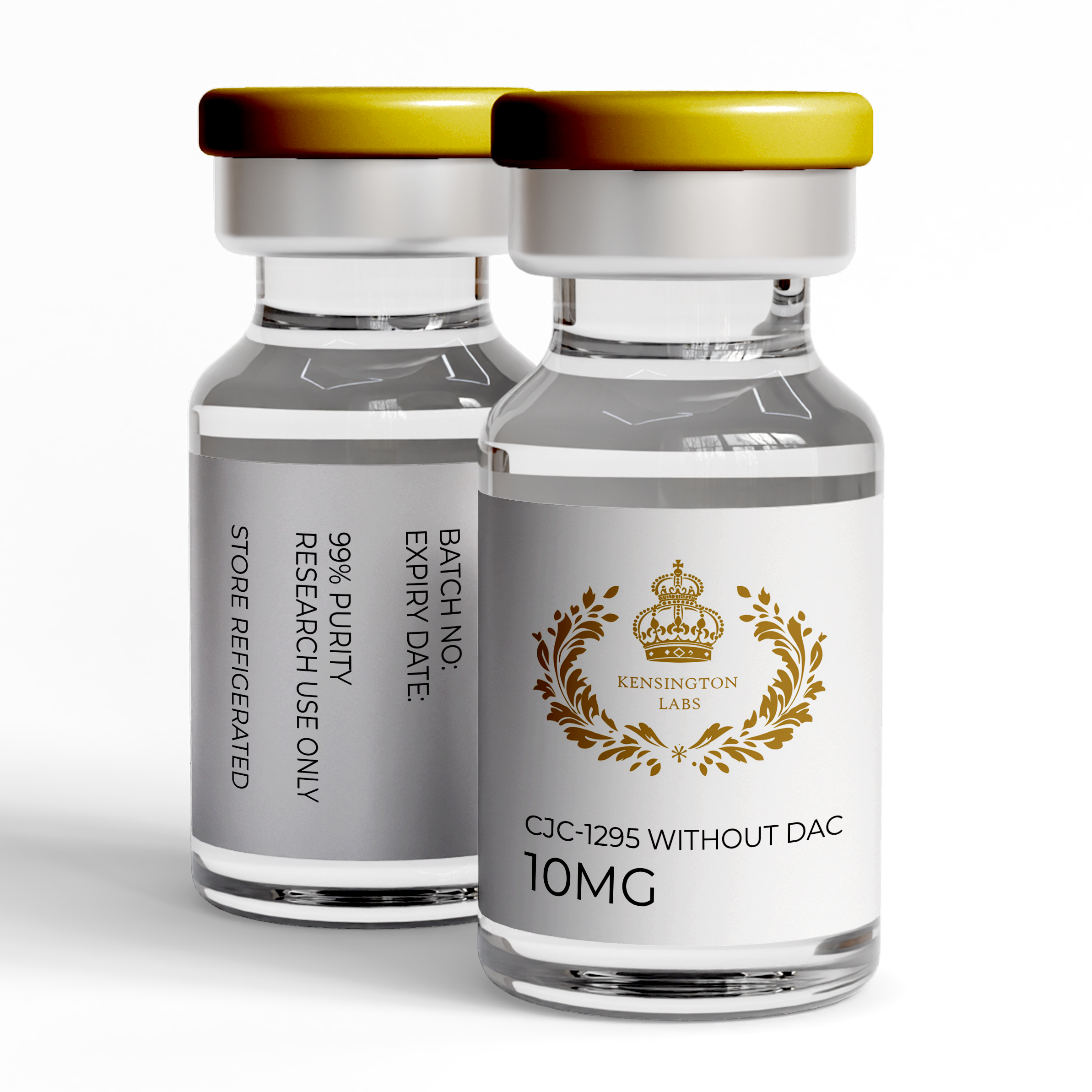
CJC-1295 is a synthetic Growth Hormone Releasing Hormone (GHRH) analogue developed for research into growth hormone regulation, endocrine physiology and healthy ageing. Rather than supplying growth hormone directly, CJC-1295 stimulates the pituitary gland to release the body’s own endogenous growth hormone by activating Growth Hormone Releasing Hormone (GHRH) receptors.
Unlike growth hormone secretagogues such as Ipamorelin, which stimulate the ghrelin (GHS-R1a) receptor, CJC-1295 works through an entirely different signalling pathway. Because these pathways complement one another, CJC-1295 is frequently investigated alongside Ipamorelin in research exploring physiological growth hormone release.
One important distinction when discussing CJC-1295 is that it exists in two different forms:
Although both compounds activate the same GHRH receptor, they differ significantly in how long they remain active within the body and the pattern of growth hormone release they produce.
The key difference between the two versions is the presence of the Drug Affinity Complex (DAC).
The DAC is a small molecular addition that allows CJC-1295 to bind to circulating albumin in the bloodstream. This dramatically extends the peptide’s half-life from approximately 30 minutes for the No DAC version to around 5–8 days for the DAC version.
As a result:
Because of these differences, the two peptides should not be considered interchangeable, even though they share a similar amino acid sequence and mechanism of action.
The No DAC version has become particularly popular in research because its short duration of action more closely resembles normal human growth hormone physiology.
Growth hormone is naturally released in pulses throughout the day, particularly during deep sleep and following exercise. By producing a short-lived increase in growth hormone release, CJC-1295 No DAC allows researchers to investigate these natural pulsatile patterns rather than maintaining continuously elevated hormone levels.
For this reason, many experimental protocols pair CJC-1295 No DAC with Ipamorelin, as each peptide activates a different receptor involved in physiological growth hormone secretion.
CJC-1295 binds to Growth Hormone Releasing Hormone (GHRH) receptors located on cells within the anterior pituitary gland.
Activation of these receptors stimulates the release of endogenous growth hormone into the bloodstream.
Once released, growth hormone acts on numerous tissues throughout the body and stimulates production of Insulin-like Growth Factor-1 (IGF-1), primarily within the liver.
Growth hormone and IGF-1 are involved in a wide range of biological processes including:
Unlike recombinant human growth hormone (HGH), CJC-1295 encourages the body to utilise its own endocrine system rather than supplying growth hormone directly.
One of the most common combinations investigated in growth hormone research is CJC-1295 No DAC with Ipamorelin.
This is because the two peptides stimulate growth hormone release through different mechanisms:
Together, these complementary pathways may produce a larger physiological growth hormone pulse than either peptide alone, making the combination one of the most extensively researched protocols within this peptide class.
Researchers have investigated CJC-1295 in relation to:
The majority of published evidence relates to changes in growth hormone and IGF-1 concentrations, while research into longer-term clinical applications remains ongoing.
There is no regulator-approved human dosing protocol for CJC-1295, and the peptide remains an investigational research compound. Published studies have investigated a range of administration schedules depending on whether the DAC or No DAC formulation was used.
Because the two formulations have significantly different half-lives, research protocols differ accordingly.
The DAC (Drug Affinity Complex) formulation remains active in the body for several days, allowing research protocols to investigate less frequent administration compared with the No DAC version.
Some laboratory protocols utilise a gradual titration schedule, beginning with lower exposure levels before progressing to a maintenance phase.
The gradual increase allows researchers to assess biological responses while maintaining a structured experimental protocol.
Unlike the DAC formulation, CJC-1295 No DAC has a much shorter half-life of approximately 30 minutes. As a result, research protocols typically investigate daily administration to produce repeated physiological pulses of growth hormone.
An example laboratory protocol is shown below for both variations:
| Tier | Dosage | Frequency | Notes |
|---|---|---|---|
| With DAC - Weeks 1-2 | 300mcg | Twice Weekly | The extended 6–8-day half-life from the DAC modification supports less frequent dosing compared to non-DAC GHRH analogs |
| With DAC - Weeks 3-4 | 500mcg | Twice Weekly | The extended 6–8-day half-life from the DAC modification supports less frequent dosing compared to non-DAC GHRH analogs |
| With DAC - Weeks 5-6 | 750mcg | Twice Weekly | The extended 6–8-day half-life from the DAC modification supports less frequent dosing compared to non-DAC GHRH analogs |
| With DAC - Weeks 7-12 | 1mg | Twice Weekly | The extended 6–8-day half-life from the DAC modification supports less frequent dosing compared to non-DAC GHRH analogs |
| - | - | - | - |
| Without DAC - Weeks 1-2 | 100mcg | Once Daily | Inject once daily subcutaneously, typically at bedtime to align with natural nocturnal GH pulsatility |
| Without DAC - Weeks 3-4 | 150mcg | Once Daily | Inject once daily subcutaneously, typically at bedtime to align with natural nocturnal GH pulsatility |
| Without DAC - Weeks 5-6 | 200mcg | Once Daily | Inject once daily subcutaneously, typically at bedtime to align with natural nocturnal GH pulsatility |
| Without DAC - Weeks 7-12 | 250-300mcg | Once Daily | Inject once daily subcutaneously, typically at bedtime to align with natural nocturnal GH pulsatility |
CJC-1295 is one of the most extensively researched Growth Hormone Releasing Hormone (GHRH) analogues. Rather than supplying growth hormone directly, it stimulates the pituitary gland to release the body’s own endogenous growth hormone, which subsequently increases circulating Insulin-like Growth Factor-1 (IGF-1).
The peptide is available in two formulations—CJC-1295 with DAC and CJC-1295 without DAC (Modified GRF 1-29). While both activate the same GHRH receptor, they differ in their duration of action and the pattern of growth hormone release they produce.
Although research findings are encouraging, CJC-1295 remains an investigational peptide, and further clinical studies are required to establish its long-term safety and therapeutic applications.
Current areas of scientific investigation include:
The primary action of CJC-1295 is stimulation of the Growth Hormone Releasing Hormone (GHRH) receptor located within the anterior pituitary gland.
Activation of this receptor encourages the body to release its own endogenous growth hormone in a physiological manner rather than relying on externally administered growth hormone.
This remains one of the peptide’s best-established biological effects.
Following growth hormone release, the liver and other tissues increase production of Insulin-like Growth Factor-1 (IGF-1).
IGF-1 is involved in numerous biological processes, including:
Researchers frequently monitor IGF-1 concentrations as a key marker when evaluating CJC-1295 activity.
Growth hormone and IGF-1 are essential regulators of muscle protein turnover.
Research has investigated whether CJC-1295-induced increases in endogenous growth hormone may support:
Any improvements remain dependent upon appropriate resistance training, nutrition and overall lifestyle.
Growth hormone plays an important role in regulating fat metabolism.
Experimental studies have explored whether CJC-1295 may influence:
These effects are believed to occur through increased endogenous growth hormone rather than any direct action of the peptide on fat tissue.
Growth hormone contributes to normal tissue maintenance and repair.
Researchers have investigated whether CJC-1295 may support:
Current evidence remains limited, and further human clinical studies are required.
Natural growth hormone secretion is greatest during deep slow-wave sleep.
Because CJC-1295 stimulates endogenous growth hormone release, researchers have investigated its relationship with normal sleep-related endocrine activity and overnight growth hormone pulses.
Sleep physiology remains an active area of research.
Growth hormone and IGF-1 play important roles in maintaining healthy bone metabolism.
Experimental research has investigated possible effects on:
These remain ongoing areas of investigation, particularly in relation to age-associated bone loss.
Growth hormone signalling contributes to normal tissue maintenance throughout the body.
Researchers have investigated whether increased endogenous growth hormone and IGF-1 may influence:
Most evidence currently comes from laboratory and preclinical studies.
Natural growth hormone production declines progressively with age.
Researchers have investigated whether selective stimulation of endogenous growth hormone through GHRH analogues may help maintain healthier endocrine function during ageing.
However, CJC-1295 has not been shown to slow, prevent or reverse human ageing, and should not be regarded as an approved anti-ageing treatment.
One of the most researched aspects of CJC-1295 No DAC is its use alongside Ipamorelin.
The two peptides stimulate growth hormone release through different receptors:
Because these pathways complement one another, experimental studies suggest the combination may produce a greater physiological growth hormone pulse than either peptide alone.
This complementary mechanism has made the CJC-1295 No DAC and Ipamorelin combination one of the most widely researched peptide protocols.
Current evidence suggests CJC-1295 may support numerous biological processes associated with physiological growth hormone release, including:
CJC-1295 works by stimulating the body’s natural production of growth hormone (GH) rather than supplying growth hormone directly. It belongs to a class of peptides known as Growth Hormone Releasing Hormone (GHRH) analogues, which activate GHRH receptors on cells within the anterior pituitary gland.
When these receptors are activated, the pituitary releases endogenous growth hormone into the bloodstream. This growth hormone then stimulates the production of Insulin-like Growth Factor-1 (IGF-1), a key hormone involved in muscle maintenance, tissue repair, bone metabolism and normal growth processes.
While both CJC-1295 with DAC and CJC-1295 without DAC (Modified GRF 1-29) work through the same receptor, the presence or absence of the Drug Affinity Complex (DAC) dramatically changes how long the peptide remains active and how growth hormone is released.
The body’s natural production of growth hormone is controlled by the hypothalamus through the release of Growth Hormone Releasing Hormone (GHRH).
CJC-1295 has been designed to mimic the action of this naturally occurring hormone by binding to GHRH receptors located on somatotroph cells within the anterior pituitary gland.
Activation of these receptors signals the pituitary to release a pulse of endogenous growth hormone into circulation.
Unlike recombinant human growth hormone (HGH), CJC-1295 does not introduce growth hormone into the body. Instead, it encourages the pituitary gland to utilise its own physiological hormone production mechanisms.
Following growth hormone release, the liver and several peripheral tissues increase production of Insulin-like Growth Factor-1 (IGF-1).
IGF-1 is responsible for many of the downstream biological effects associated with growth hormone and contributes to:
Researchers commonly monitor both growth hormone and IGF-1 concentrations when investigating the biological activity of CJC-1295.
The No DAC formulation closely resembles the body’s natural GHRH signalling.
Because it has a relatively short half-life of approximately 30 minutes, it produces a brief physiological pulse of growth hormone before being rapidly cleared from circulation.
Researchers often favour CJC-1295 No DAC because:
For these reasons, CJC-1295 No DAC has become one of the most widely researched GHRH analogues.
The DAC (Drug Affinity Complex) formulation has been modified by attaching a Drug Affinity Complex to the peptide.
This additional structure allows CJC-1295 to bind to serum albumin, the most abundant protein circulating in the bloodstream.
Albumin acts as a carrier protein, protecting the peptide from rapid breakdown and dramatically extending its half-life to approximately 5–8 days.
Instead of producing short physiological pulses, CJC-1295 with DAC provides prolonged stimulation of the GHRH receptor, leading to more sustained elevations in growth hormone and IGF-1 concentrations.
This prolonged activity allows researchers to investigate less frequent administration schedules compared with the No DAC formulation.
One advantage of CJC-1295 is that it relies upon the body’s own endocrine system.
Growth hormone secretion remains regulated through normal physiological feedback mechanisms involving:
As IGF-1 concentrations rise, negative feedback reduces further growth hormone release, helping maintain endocrine balance.
This physiological regulation differs from administering recombinant growth hormone, which bypasses normal pituitary control.
One of the most extensively studied aspects of CJC-1295 No DAC is its interaction with Ipamorelin.
Although both peptides increase endogenous growth hormone release, they activate different receptors.
CJC-1295 stimulates:
Ipamorelin stimulates:
Because these signalling pathways naturally work together, researchers have demonstrated that activating both simultaneously produces a larger physiological growth hormone pulse than either pathway alone.
This complementary mechanism explains why CJC-1295 No DAC and Ipamorelin are among the most commonly investigated peptide combinations in growth hormone research.
Growth hormone and IGF-1 influence numerous biological processes involved in tissue maintenance.
Experimental research has investigated effects on:
These downstream effects occur primarily through increased endogenous growth hormone and IGF-1 rather than direct actions of CJC-1295 itself.
Growth hormone plays an important role in regulating energy metabolism.
Research suggests increased endogenous growth hormone may contribute to:
These metabolic effects are secondary to growth hormone signalling rather than a direct pharmacological action of CJC-1295.
Natural growth hormone secretion reaches its highest levels during deep slow-wave sleep.
Researchers have investigated whether stimulating physiological growth hormone release through CJC-1295 No DAC may complement this natural endocrine rhythm.
Understanding this relationship has influenced many experimental protocols investigating growth hormone peptides, particularly those involving evening administration.
Current evidence suggests CJC-1295 functions by stimulating the body’s natural growth hormone axis through activation of the Growth Hormone Releasing Hormone (GHRH) receptor.
Its proposed biological actions include:
Although CJC-1295 has demonstrated a favourable safety profile in early research, both CJC-1295 with DAC and CJC-1295 No DAC remain investigational peptides, and long-term safety has not yet been established through large-scale human clinical trials.
Both formulations stimulate the body’s natural growth hormone axis, increasing endogenous growth hormone and Insulin-like Growth Factor-1 (IGF-1). Because the DAC formulation remains active for significantly longer, researchers should recognise that prolonged receptor stimulation may produce a different physiological profile compared with the shorter-acting No DAC version.
Where CJC-1295 is administered by injection, local reactions may occur.
Potential reactions include:
These effects are common with injectable peptides and are often influenced by injection technique rather than the peptide itself.
Some individuals participating in research have reported mild headaches following administration of growth hormone-releasing peptides.
Possible contributing factors include:
These symptoms are generally temporary and self-limiting.
Growth hormone influences fluid regulation throughout the body.
As endogenous growth hormone and IGF-1 concentrations increase, some individuals may experience temporary:
These effects are generally dose-dependent and may be more noticeable during prolonged exposure.
Increased growth hormone activity has occasionally been associated with temporary:
Researchers believe these symptoms may be related to fluid shifts affecting peripheral nerves and are similar to those occasionally observed with recombinant growth hormone therapy.
Growth hormone plays an important role in regulating glucose metabolism.
As a result, stimulation of endogenous growth hormone may influence:
Researchers investigating metabolic outcomes should monitor glucose where appropriate, particularly during longer-term studies involving the DAC formulation.
One of the primary biological effects of CJC-1295 is increased production of IGF-1.
Although this forms part of the intended research mechanism, prolonged elevations in IGF-1 continue to be investigated with regard to:
Researchers commonly measure circulating IGF-1 concentrations throughout experimental protocols to monitor endocrine responses.
Although both formulations activate the same GHRH receptor, their differing half-lives may influence their side-effect profiles.
CJC-1295 No DAC
Because No DAC remains active for only around 30 minutes, it produces short physiological pulses of growth hormone that more closely resemble the body’s natural secretion pattern.
Researchers generally investigate No DAC for protocols requiring repeated, pulsatile stimulation.
CJC-1295 with DAC
The DAC formulation remains active for approximately 5–8 days through reversible binding to serum albumin.
This prolonged activity produces sustained elevations in growth hormone and IGF-1, meaning any physiological effects may persist for longer compared with the No DAC formulation.
Although uncommon, allergic reactions remain possible with any peptide.
Potential symptoms include:
Researchers should also consider the possibility of reactions to:
rather than the peptide itself.
Any injectable compound carries a risk of infection if proper sterile technique is not followed.
Potential causes include:
Symptoms requiring prompt medical assessment may include:
Maintaining strict laboratory handling procedures is essential.
The safety of any research peptide depends heavily on manufacturing quality.
Potential risks associated with poor-quality products include:
Researchers should prioritise products accompanied by:
These measures improve confidence in product quality but do not replace regulatory approval.
There are currently no adequate human studies evaluating the safety of either CJC-1295 with DAC or CJC-1295 No DAC during pregnancy or breastfeeding.
Their effects on:
remain unknown.
These populations have not been adequately studied.
Lifestyle plays a significant role in the function of the growth hormone (GH) and insulin-like Growth Factor-1 (IGF-1) axis, which CJC-1295 is designed to stimulate. Factors such as sleep, exercise, nutrition and body composition can all influence natural growth hormone secretion and may affect research outcomes independently of any peptide intervention.
Whether investigating CJC-1295 with DAC or CJC-1295 No DAC, researchers should aim to keep these variables as consistent as possible throughout the study.
Deep sleep is the body’s most important period for natural growth hormone release.
The largest physiological growth hormone pulses occur during slow-wave sleep, making sleep quality one of the biggest factors influencing endogenous GH production.
Poor sleep has been associated with:
Maintaining a consistent sleep routine is particularly important in studies investigating peptides that target the growth hormone axis.
Exercise is a powerful natural stimulator of growth hormone release.
Activities commonly associated with increased GH secretion include:
Regular physical activity also supports:
Researchers should keep training volume and intensity consistent throughout a study, as changes in exercise alone may significantly influence growth hormone and IGF-1 levels.
Adequate nutrition is essential for maintaining normal endocrine function.
Particular attention should be given to:
Sufficient dietary protein provides the amino acids required for tissue maintenance and recovery, while prolonged calorie restriction may reduce IGF-1 production and influence growth hormone signalling.
Body composition has a direct relationship with growth hormone physiology.
Higher levels of body fat, particularly visceral fat, have been associated with:
Maintaining a healthy body composition through balanced nutrition and regular exercise may help support healthier endocrine function.
Growth hormone is naturally involved in tissue maintenance and recovery following physical stress.
Researchers should consider factors including:
Insufficient recovery may impair normal endocrine function and reduce the body’s ability to adapt to exercise.
Chronic psychological stress may negatively affect hormone balance.
Persistently elevated cortisol levels have been associated with:
Managing stress through healthy lifestyle habits may improve overall endocrine health and reduce variability within research studies.
Adequate hydration supports numerous physiological processes including:
While hydration does not directly increase growth hormone secretion, maintaining normal hydration status supports overall physiological function and consistent research conditions.
Excessive alcohol intake has been shown to impair natural growth hormone secretion and recovery.
Heavy alcohol consumption may contribute to:
Moderating alcohol intake helps support healthier endocrine function and more reliable research outcomes.
Smoking has been associated with increased oxidative stress and impaired tissue repair.
Long-term smoking may negatively affect:
Avoiding smoking supports healthier physiological function and reduces potential confounding variables in endocrine research.
Although lifestyle recommendations are broadly similar for both formulations, the two versions of CJC-1295 are often investigated differently.
CJC-1295 No DAC is commonly studied alongside consistent training and sleep schedules because it produces short physiological pulses of growth hormone that more closely resemble natural secretion.
CJC-1295 with DAC, due to its prolonged half-life, provides sustained stimulation of the growth hormone axis. Researchers may therefore place greater emphasis on maintaining stable lifestyle variables over longer observation periods to accurately evaluate endocrine responses.
While CJC-1295 is designed to stimulate the body’s natural production of growth hormone, it cannot replace the lifestyle habits that underpin healthy endocrine function.
The greatest support for the growth hormone axis continues to come from:

Looking for Weight Loss Peptides?
Explore Weight Loss Peptides with our trusted partner
If you can't find the product you're looking for here, visit Biovanta Research a premium range of weight loss research peptides.