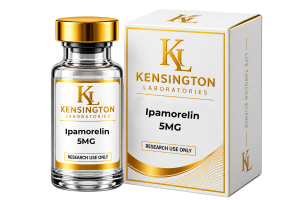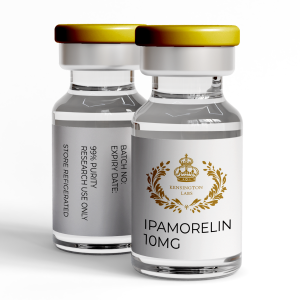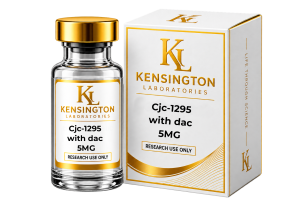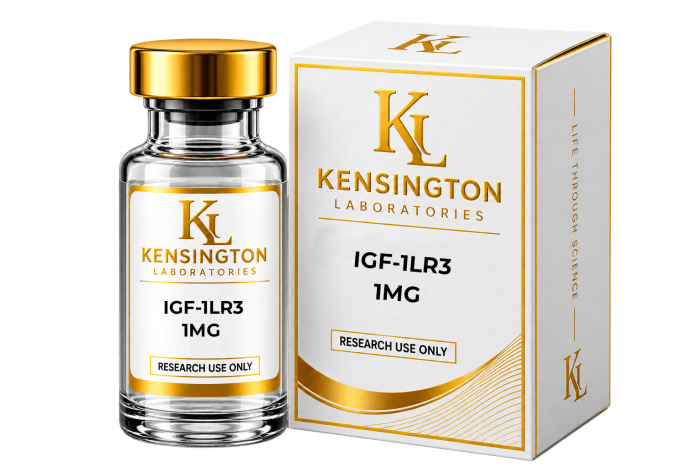
Other products in this category are here Growth Factor Research
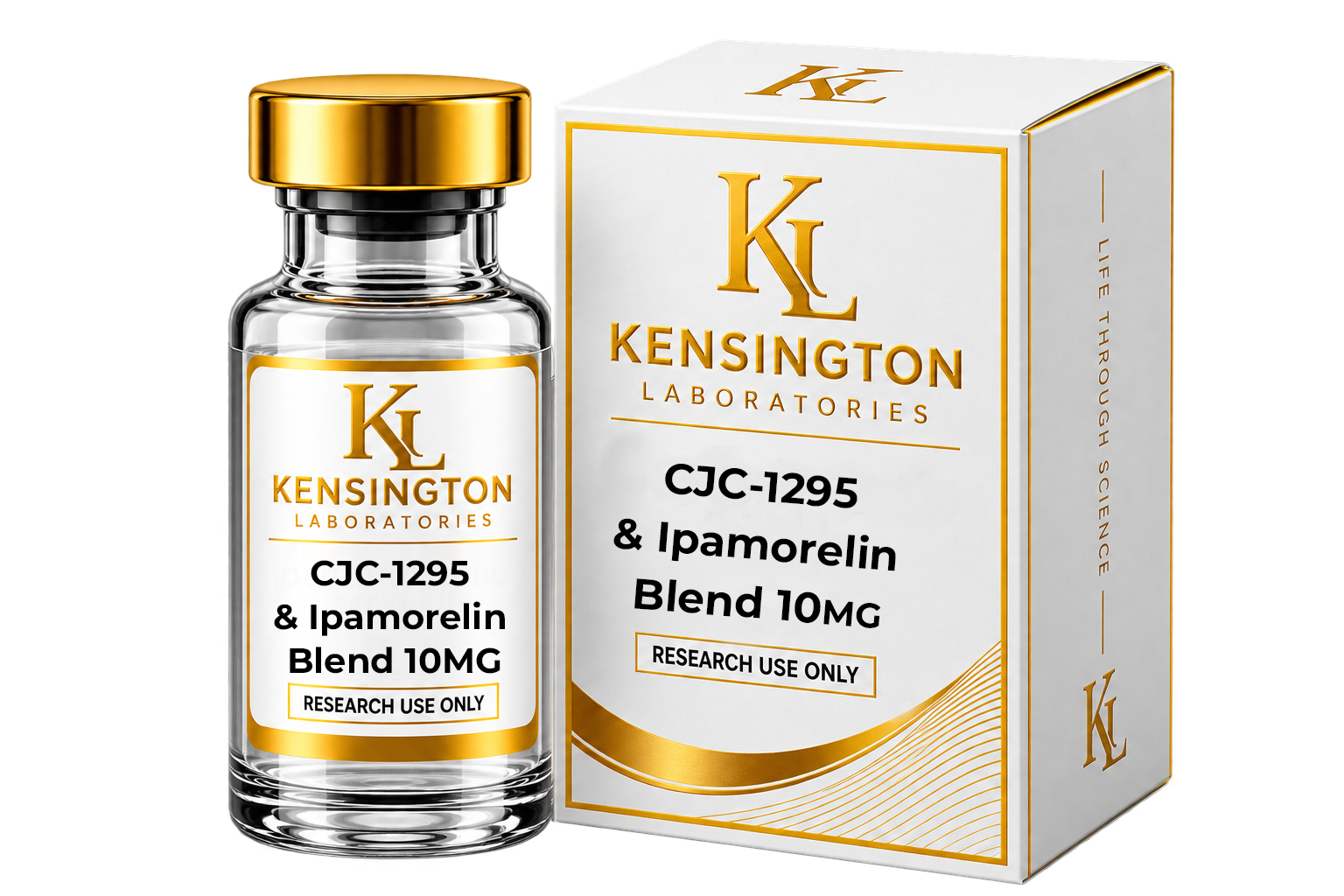
CJC-1295 + Ipamorelin Blend is a dual-peptide formulation containing CJC-1295 and Ipamorelin, two compounds investigated for their interactions with growth hormone signalling pathways.
CJC-1295 is a growth hormone-releasing hormone (GHRH) analogue, while Ipamorelin is a selective growth hormone secretagogue receptor agonist. Together, these peptides are studied in laboratory research involving growth hormone secretion and receptor signalling.
CJC-1295 + Ipamorelin Blend 10mg – Research Peptide
The CJC-1295 + Ipamorelin Blend 10mg combines two synthetic research peptides investigated for their roles in growth hormone regulation and endocrine signalling. This dual-peptide formulation contains 5mg CJC-1295 (No DAC) and 5mg Ipamorelin, providing researchers with two compounds that interact with distinct biological pathways associated with growth hormone secretion.
CJC-1295 is a growth hormone-releasing hormone (GHRH) analogue, while Ipamorelin is a selective growth hormone secretagogue receptor agonist. Their different mechanisms make them relevant to experimental investigations of growth hormone signalling.
What Is CJC-1295 (No DAC)?
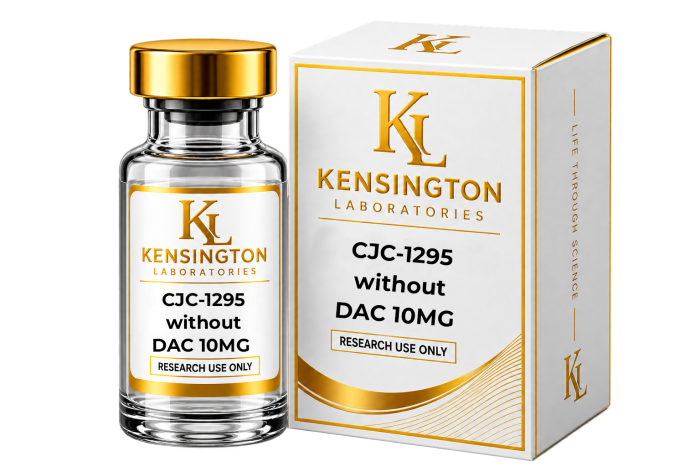
CJC-1295 (No DAC) is commonly used in the research peptide market to describe a modified growth hormone-releasing hormone analogue without a drug affinity complex. GHRH analogues are investigated for their ability to interact with receptors involved in growth hormone release from the anterior pituitary gland.
Research areas include:
- Growth hormone-releasing hormone receptor activity
- Pituitary signalling pathways
- Endocrine feedback mechanisms
- Growth hormone secretion dynamics
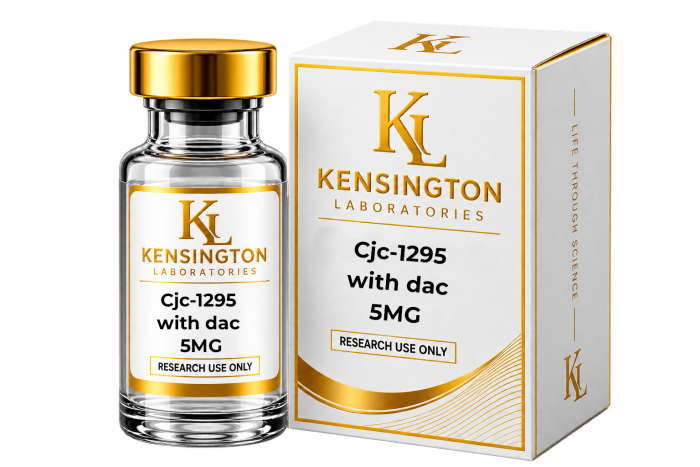
The No DAC designation distinguishes this formulation from long-acting CJC-1295 preparations containing a drug affinity complex.
What Is Ipamorelin?
Ipamorelin is a synthetic pentapeptide investigated for its activity at the growth hormone secretagogue receptor (GHSR-1a). Unlike CJC-1295, which acts through the GHRH receptor pathway, Ipamorelin interacts with a receptor associated with ghrelin signalling.
Laboratory investigations have explored:
-
- Growth hormone secretagogue receptor activation
- Pituitary growth hormone release
- Receptor selectivity
- Interactions between ghrelin-related and GHRH signalling pathways
CJC-1295 vs Ipamorelin: Research Comparison
CJC-1295 without DAC and Ipamorelin are two distinct research peptides associated with different receptor pathways involved in growth hormone regulation. The table below compares their characteristics, signalling mechanisms and composition within the 10mg research blend.
| Feature | CJC-1295 (No DAC) | Ipamorelin |
|---|---|---|
| Peptide Class | Modified GHRH analogue | Growth hormone secretagogue |
| Primary Receptor | GHRH receptor | GHS-R1a (ghrelin receptor) |
| Signalling Pathway | cAMP / PKA | GHS-R1a-associated signalling |
| Research Focus | Pituitary GHRH signalling | Secretagogue receptor activity |
| Content Per Vial | 5mg | 5mg |
| DAC Modification | Absent | Not applicable |
CJC-1295 vs Ipamorelin: Understanding the Differences
Although both compounds are studied in connection with growth hormone secretion, they operate through different receptor systems. The comparison below highlights their structural characteristics, receptor activity and research mechanisms.
These distinctions are important when investigating different mechanisms involved in endocrine regulation.
Why Are CJC-1295 and Ipamorelin Studied Together?
The combination is of research interest because GHRH receptor signalling and growth hormone secretagogue receptor signalling represent separate mechanisms involved in regulating growth hormone release.
Investigating both pathways may help researchers examine receptor interactions, intracellular signalling and endocrine responses under controlled experimental conditions.
However, the presence of both compounds in a formulation does not itself establish superior efficacy, safety or synergistic effects. Such conclusions require appropriately designed studies.
Research and Quality Assurance
Batch-specific Certificates of Analysis provide analytical information relating to the tested material. Researchers should consult the applicable batch documentation for analytical results and product specifications.
CJC-1295 + Ipamorelin Blend 10mg – Product Specifications
| Specification | Details |
|---|---|
| Product Name | CJC-1295 + Ipamorelin Blend |
| Total Peptide Content | 10mg |
| CJC-1295 Content | 5mg (No DAC) |
| Ipamorelin Content | 5mg |
| Peptide Classification | GHRH Analogue + Growth Hormone Secretagogue |
| Physical Form | Lyophilised Powder |
| Research Category | Growth Factor Research |
| Research Applications | Endocrine Signalling, GHRH Receptor Activity, GHS-R1a Research |
| Quality Documentation | Batch-specific Certificate of Analysis (COA), where available |
| Intended Use | Laboratory Research Only |
CJC-1295 + Ipamorelin Blend 10mg – Certificate of Analysis
At Kensington Labs, analytical documentation is an important part of our research peptide quality assurance process.
Our CJC-1295 + Ipamorelin Blend 10mg is supported by batch-specific Certificate of Analysis (COA) documentation, where available, allowing researchers to review the analytical results associated with the tested batch.
What Does the Certificate of Analysis Verify?
Depending on the analytical methods used, the batch report may provide information about:
- Peptide identity: Analytical evidence supporting the identification of CJC-1295 and Ipamorelin.
- Peptide purity: The reported purity of the analysed sample, typically determined using HPLC or a comparable analytical method.
- Peptide content: Quantitative results for each component, where content testing has been performed.
- Batch identification: The batch or sample reference associated with the analytical results.
- Testing methodology: The laboratory methods used to assess the sample, such as HPLC or mass spectrometry.
Important: A purity result alone does not verify the quantity of each peptide, sterility, or suitability for human administration. Only the tests explicitly documented in the report should be considered verified.
View Batch Certificate of Analysis
Review the analytical documentation for the relevant CJC-1295 + Ipamorelin Blend 10mg batch.
CJC-1295 + Ipamorelin Blend – Scientific Research Overview
CJC-1295 and Ipamorelin are synthetic peptides investigated for their interactions with biological pathways involved in growth hormone (GH) regulation. Although both compounds are associated with growth hormone signalling, they act through different receptor systems.
The combination is of scientific interest because growth hormone-releasing hormone (GHRH) receptors and growth hormone secretagogue receptors contribute to the regulation of pituitary growth hormone secretion through distinct signalling mechanisms.
CJC-1295: Mechanism and Research Background
CJC-1295 is a synthetic analogue of growth hormone-releasing hormone (GHRH). GHRH receptor activation stimulates intracellular signalling pathways associated with growth hormone secretion from the anterior pituitary gland.
Published human research involving DAC-containing CJC-1295 has investigated its effects on circulating growth hormone and insulin-like growth factor 1 (IGF-1) concentrations.
Research limitation: Findings involving CJC-1295 with DAC cannot automatically be applied to formulations marketed as CJC-1295 without DAC. These preparations differ in their pharmacokinetic characteristics, and the naming conventions used commercially are not always consistent.
Ipamorelin: Mechanism and Research Background
Ipamorelin is a synthetic pentapeptide that acts as an agonist of the growth hormone secretagogue receptor, GHSR-1a. Experimental investigations have examined its effects on growth hormone release and its receptor selectivity relative to other growth hormone secretagogues.
Much of the available mechanistic evidence comes from preclinical studies, and the published human evidence is insufficient to establish long-term clinical safety or effectiveness for general therapeutic applications.
Scientific Rationale for Investigating Both Peptides
The GHRH receptor and GHSR-1a are involved in different regulatory pathways associated with growth hormone secretion.
Studying these pathways together may provide insight into receptor-mediated signalling, pituitary responses and interactions between endocrine regulatory mechanisms.
However, evidence of interactions between these biological pathways does not establish that a particular CJC-1295 and Ipamorelin blend produces synergistic effects or improved outcomes.
Current Research Limitations
- Limited combination-specific evidence: High-quality published human studies evaluating this exact 10mg blend are limited.
- Formulation differences: Results from DAC-containing CJC-1295 cannot be directly generalised to No DAC preparations.
- Preclinical findings: Results from laboratory and animal models may not translate into equivalent effects in humans.
- Long-term safety: Long-term safety profiles and clinical outcomes for this combination have not been adequately established.
- Analytical quality: A Certificate of Analysis can document specific analytical findings but does not demonstrate clinical safety or effectiveness.
Research Summary
CJC-1295 and Ipamorelin represent two distinct approaches to investigating growth hormone-related signalling. Their different receptor interactions make them relevant to research into endocrine regulation and pituitary physiology. Further well-controlled studies are required to characterise the combined formulation, establish its pharmacological properties and determine the relevance of experimental findings to human physiology.
Research Use Disclaimer: This product is supplied exclusively for laboratory research purposes. It is not approved for human consumption, clinical treatment or administration.
CJC-1295 + Ipamorelin Blend 10mg – Frequently Asked Questions
What does the CJC-1295 + Ipamorelin 10mg blend contain?
The blend contains two synthetic research peptides: CJC-1295 and Ipamorelin. The 10mg designation refers to the total stated peptide content of the formulation. Researchers should consult the product specifications and batch documentation to confirm the quantity of each component.
What is the difference between CJC-1295 and Ipamorelin?
CJC-1295 is a growth hormone-releasing hormone (GHRH) analogue that interacts with the GHRH receptor. Ipamorelin is a synthetic pentapeptide that acts on the growth hormone secretagogue receptor (GHSR-1a). The two peptides are investigated for their involvement in different signalling pathways associated with growth hormone secretion.
Does this blend contain CJC-1295 with DAC or without DAC?
This product is described as containing CJC-1295 without DAC. The No DAC designation distinguishes it from formulations incorporating a drug affinity complex. Researchers should verify the exact peptide identity against the relevant product and batch documentation.
What form is the CJC-1295 + Ipamorelin blend supplied in?
The product is supplied as a lyophilised (freeze-dried) powder. Lyophilisation is a manufacturing process used to remove water under controlled conditions. The appearance and volume of the resulting powder do not independently establish its peptide content or purity.
Is a Certificate of Analysis available for this product?
Batch-specific Certificates of Analysis (COAs) are provided where available. A COA may contain analytical results relating to peptide identity, purity and content, depending on the testing performed. Researchers should review the report associated with their batch to determine which characteristics have been verified.
Does a high peptide purity percentage confirm the amount of peptide in the vial?
No. Analytical purity and peptide quantity are different measurements. A high HPLC purity percentage does not independently confirm the total peptide mass or the amount of each component in a blend. Quantitative testing is required to establish peptide content.
Are CJC-1295 and Ipamorelin the same as growth hormone?
No. Neither peptide is human growth hormone (HGH). CJC-1295 and Ipamorelin are investigated for their interactions with receptor pathways involved in growth hormone regulation, whereas HGH is the hormone itself.
Has the CJC-1295 + Ipamorelin combination been clinically validated?
Although the individual compounds and related signalling pathways have been investigated, robust clinical evidence establishing the safety and effectiveness of this specific combination remains limited. Results from studies of individual peptides should not automatically be attributed to the combined formulation.
Is this product intended for human use?
No. Kensington Labs supplies this product strictly for laboratory research purposes. It is not intended for human consumption, clinical treatment or administration.