£29.95 – £39.95Price range: £29.95 through £39.95

£29.95 – £39.95Price range: £29.95 through £39.95

BUY 2, SAVE 5%
£29.95 £28.45 / ITEM

BUY 3, SAVE 10%
£29.95 £26.96 / ITEM

BUY 4, SAVE 15%
£29.95 £25.46 / ITEM
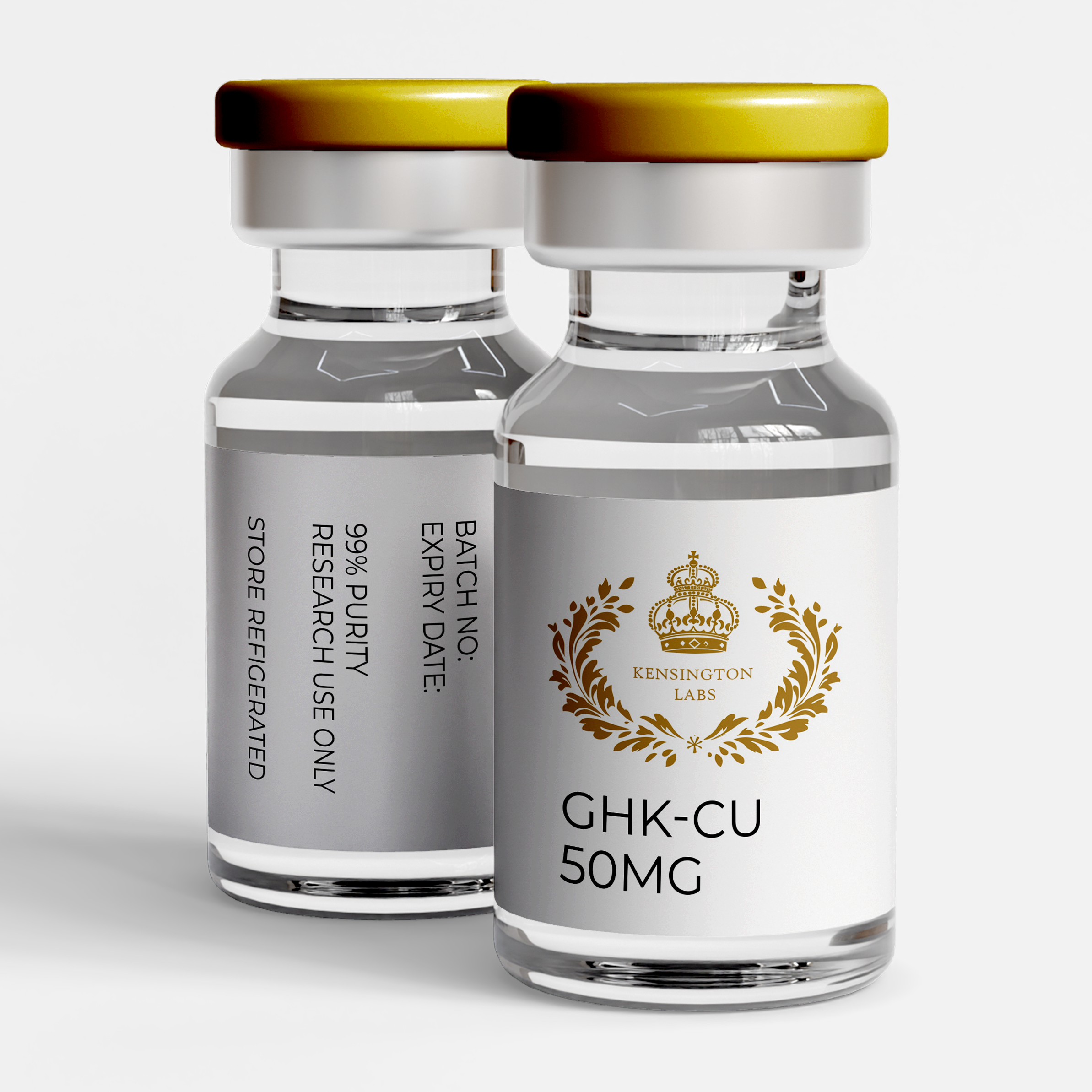
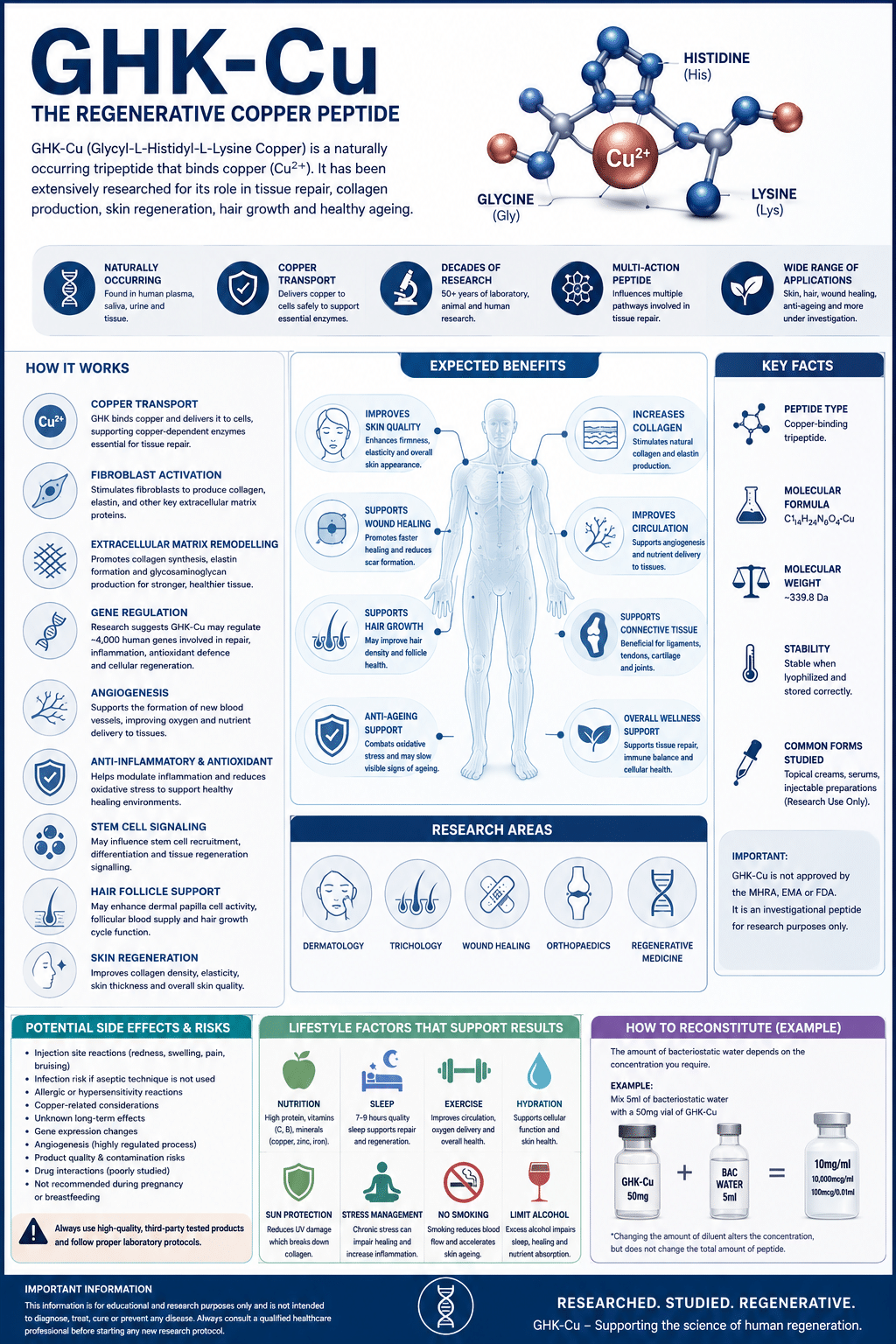
GHK-Cu (Glycyl-L-Histidyl-L-Lysine Copper) is a naturally occurring copper-binding tripeptide first discovered in 1970’s in human plasma. It is comprised of three amino acids, glycine, histidine and lysine, with a high affinity for binding a single copper (II) ion to form the biologically active GHK-Cu complex.
GHK-Cu is found throughout the body, but its levels decrease naturally with age. Researchers have suggested that this reduction may contribute to age-related changes to skin quality, wound healing and tissue regeneration, making the peptide of considerable interest to regenerative medicine, dermatology and healthy ageing research.
Unlike many synthetic peptides that are created for pharmaceutical applications, GHK-Cu is an endogenous peptide, meaning it is naturally occurring in humans. It has been identified in:
The scientific interest in GHK-Cu spans over half a century and includes thousands of published studies investigating its effect on tissue repair, collagen synthesis, inflammation, oxidative stress, stem-cell signalling and gene expression.
Today, GHK-Cu is one of the most studied regenerative peptides and has been investigated for potential applications in:
Unlike growth factors which activate only one signalling pathway, GHK-Cu seems to have a broader effect on several biological systems. Analyses of gene expression suggest it may regulate thousands of human genes involved in tissue repair, extracellular matrix remodelling, anti-oxidant defence and inflammatory signalling. These findings have helped to increase interest in GHK-Cu as a broad regenerative signalling molecule although the clinical relevance of many of these genetic effects remains to be explored.
One of the most studied properties of GHK-Cu is its ability to stimulate collagen synthesis. Laboratory studies have shown that GHK-Cu increases the synthesis of collagen, elastin and glycosaminoglycans by cultured skin fibroblasts. These proteins are fundamental components of healthy skin and connective tissue and are essential for elasticity, tensile strength and normal wound healing.
GHK-Cu has also been investigated for its ability to influence:
Hair biology is another important area of research interest. GHK-Cu is one of a handful of peptides being studied for hair growth applications; experimental data suggest it may influence dermal papilla cells, vascular endothelial growth factor (VEGF) signalling and follicular activity. But the researchers need high quality human clinical trials before they can draw any definitive conclusions on effectiveness.
Interest has also been sparked by genomic research from Dr. Loren Pickart, one of the original discoverers of GHK. Microarray analyses indicated that GHK-Cu may regulate the expression of large number of genes involved in tissue repair, inflammation and cellular regeneration. While these findings are scientifically interesting, researchers are actively studying the question of whether changes in gene expression translate into clinical benefit.
There is a vast amount of laboratory research but it is important to understand that GHK-Cu is not approved as a medicine by the MHRA, EMA or FDA. Much of the evidence is based on in vitro experiments, animal models and early phase clinical studies rather than large-scale randomised human trials.
Hence, many of the proposed benefits are investigational and more research is needed to determine optimal dosing, long term safety, and evidence-based clinical applications.
This product is for laboratory research use only and is not for use in diagnostic or therapeutic procedures in humans.
Published studies have investigated GHK-Cu using a variety of experimental models, including cultured cells, animal studies, and human clinical trials with topical formulations.
Concentration, formulation, route of administration and duration vary considerably between studies. There is no universally accepted research protocol. Below is what is considered to be a basic GHK-Cu protocol based on community research.
| Tier | Dosage | Frequency | Notes |
|---|---|---|---|
| Weeks 1-4 | 1mg | once daily - 5 Days per week | - |
| Weeks 5-8 | 1.5mg | once daily - 5 Days per week | - |
| Weeks 9-12 | 2mg | once daily - 5 Days per week | - |
GHK-Cu is one of the most extensively studied regenerative peptides, with research extending over 50 years in cell culture, animal models and human clinical studies. While many investigational peptides are directed towards a single biological pathway, GHK-Cu seems to influence many cellular processes involved in tissue repair, extracellular matrix remodelling and healthy ageing.
While many of the findings are promising, it is important to bear in mind that GHK-Cu is not an approved medicine and many of the proposed uses are still being investigated.
Current research has examined the potential role of GHK-Cu in:
The best-known area of GHK-Cu research is probably skin ageing.
Laboratory and clinical studies suggest that GHK-Cu may increase production of important structural proteins, including:
These proteins contribute to the strength, elasticity and overall look of the health of the skin.
Some cosmetic studies have demonstrated improvements in:
It is thought that such effects are due to enhanced remodelling of the extracellular matrix and not merely transient hydration.
Collagen Synthesis
Collagen is the most abundant structural protein in the body and is essential for:
One of the most consistent biological effects reported for GHK-Cu is stimulation of collagen synthesis by dermal fibroblasts .
Experimental studies suggest that GHK-Cu can:
These findings have sparked a great interest in regenerative medicine and aesthetic dermatology.
Healing Wounds
In wound-healing research, GHK-Cu has been studied extensively.
Experimental studies show that it may be involved in several phases of the repair process, such as:
Faster wound closure has been reported in a number of laboratory models.
Instead of affecting one pathway, GHK-Cu seems to coordinate several biological systems responsible for tissue repair.
Hair growth study
Another important area of GHK-Cu research has been hair restoration.
The possible effects studied are:
Lab research suggests GHK-Cu may modulate vascular endothelial growth factor (VEGF), improve follicular cell activity and promote an environment conducive to healthy hair growth.
Early results are promising, but more human clinical studies are needed before any conclusions can be drawn.
Anti-Ageing Studies
One of the reasons that GHK-Cu has received such significant attention from the scientific community is its apparent ability to impact age-related biological changes.
Studies of gene expression have suggested GHK-Cu may regulate thousands of genes that are involved in:
Some researchers have proposed that GHK-Cu may encourage the re-establishment of some features of a more youthful gene activity pattern, but the clinical relevance of these findings is yet to be elucidated.
The findings have made GHK-Cu one of the most studied peptides in longevity and regenerative medicine research.
Anti-Inflammatory Activity
Inflammation is part of the healing process, but excessive or prolonged inflammation may slow recovery.
Laboratory studies suggest GHK-Cu may help regulate inflammatory signalling by influencing:
Instead of stopping inflammation altogether, researchers think GHK-Cu may help create a more balanced environment for repair.
More research in humans is necessary to confirm these findings.
Antioxidant Defence
Metabolism produces reactive oxygen species (ROS) physiologically, but in excess they can damage proteins, lipids and DNA.
Studies show GHK-Cu may:
These antioxidant properties are one of the reasons why GHK-Cu has become a topic of interest in ageing research.
Connective Tissue Repair
Collagen is an important component of connective tissue, and researchers have studied GHK-Cu for potential applications involving:
Experimental studies suggest that GHK-Cu may influence the behaviour of fibroblasts, remodelling of the extracellular matrix and organisation of collagen, all of which are involved in tissue repair.
However, data in humans are sparse compared to research on skin.
Scar Remodelling
Scar formation is a natural part of wound healing, although excessive collagen deposition can lead to abnormal scar tissue.
Several studies have suggested that GHK-Cu may help regulate collagen organisation during tissue repair and may result in better scar appearance and tissue quality.
Research has looked at its role in:
This is an area of active investigation.
Regeneration of the Nerve
Preclinical studies have investigated whether GHK-Cu could help regenerate damaged nervous tissue.
Scientists have investigated possible effects on:
Animal studies have shown promising results but there is still a lack of strong clinical evidence in humans.
Gene Control
One of the most intriguing aspects of research is the effect of GHK-Cu on gene expression.
Studies using micro-arrays have suggested that GHK-Cu may modulate the activity of some 4,000 human genes, impacting pathways related to:
This broad biological activity distinguishes GHK-Cu from many other peptides that mainly act through a single receptor or signalling pathway.
However, changes in gene expression do not necessarily result in detectable clinical improvements, and further research is required to understand how these molecular changes translate into benefits for human health.
Summary of Research Overall
The evidence accumulated so far suggests that GHK-Cu is one of the most biologically active regenerative peptides so far identified.
Studies show signs of activity in several systems, including:
The findings are scientifically promising, but much of the evidence comes from laboratory studies, animal models and relatively small human clinical trials. Larger well-controlled studies are needed to determine optimal dosing, long-term safety and evidence-based clinical applications.
Therefore, GHK-Cu should be regarded as an investigational research peptide at this time, not as an approved therapeutic drug.
In contrast to many peptides that operate through a single receptor or signalling pathway, GHK-Cu appears to impact a wide range of biological processes involved in tissue maintenance, repair, and regeneration. Researchers believe that its effects are due to the combined regulation of cellular signalling, extracellular matrix remodelling, copper transport and gene expression, and not one single mechanism of action.
While the exact biological pathways remain to be fully elucidated, decades of research have identified multiple possible mechanisms through which GHK-Cu may affect cellular function.
Transport of Copper
One of the major biological functions of GHK-Cu is to deliver copper to locations where it is needed.
Copper is a trace mineral that is necessary for many enzymatic reactions in the body, including those involved in:
GHK binds with copper (Cu²⁺) to form the biologically active GHK-Cu complex. This complex helps transport copper into cells and maintains its availability, allowing enzymes that need copper to work properly.
Unlike free copper ions, which can induce oxidative damage at high concentrations, GHK-Cu seems to provide copper in a controlled biological form.
Activation of Fibroblasts
Fibroblasts are one of the most important cell types in tissue repair.
They are responsible for making many of the structural proteins that make up connective tissue, including:
Laboratory studies suggest that GHK-Cu may stimulate fibroblast activity, resulting in increased production of extracellular matrix proteins and promoting healthy tissue remodelling.
Increased fibroblast activity likely enhances skin quality and wound healing, as shown in several experimental studies.
Remodelling of collagen and extracellular matrix
There is a steady turnover of damaged structural proteins, which helps keep tissue healthy.
GHK-Cu increases collagen production and seems to improve the balance of collagen synthesis and collagen breakdown.
Researchers have noted effects on
Such a balanced regulation may be one of the reasons why GHK-Cu has been the focus of much research in skin ageing and regenerative medicine.
Gene Control
GHK-Cu is particularly unique in its influence on gene expression.
Dr Loren Pickart and his colleagues researched GHK-Cu and found that it can regulate the activity of about 4,000 human genes, with one-third up-regulating and two-thirds down-regulating them.
These genes are involved in various biological processes, including:
Instead of being a mere growth stimulant, GHK-Cu appears to orchestrate an extensive biological repair programme that coordinates many aspects of tissue maintenance.
Importantly, changes in gene expression do not always translate into measurable clinical benefits, and the functional relevance of many of the genetic effects is still being investigated.
blood vessel formation (angiogenesis)
A sufficient blood supply is critical to deliver oxygen, nutrients and immune cells to healing tissues.
Studies suggest GHK-Cu may promote angiogenesis, the formation of new blood vessels from pre-existing vessels.
Experimental studies have shown an increased expression of vascular endothelial growth factor (VEGF) and other proteins involved in vascular development.
Better vascularisation might help:
However, angiogenesis is a tightly regulated biological process, and further studies are needed to understand how these laboratory findings can be translated into clinical practice.
Anti-Inflammatory Signalling
Inflammation is an important part of normal healing, but excessive or prolonged inflammatory activity can delay tissue repair.
Research indicates that GHK-Cu may help regulate inflammatory responses by modulating different signalling molecules related to tissue injury.
Laboratory studies have looked for potential effects on:
Instead of completely suppressing inflammation, GHK-Cu appears to create a balanced environment that allows damaged tissue to transition from the inflammatory phase to regeneration and remodelling.
Antioxidant Properties
Reactive oxygen species (ROS) are produced by normal metabolism and can damage cells if generated in excess.
Research suggests that GHK-Cu may help to aid antioxidant defence by:
Reducing oxidative stress may help to maintain healthier tissues and slow down age-related degeneration, but the mechanisms are still under investigation.
Stem cell signalling
More recent research suggests that GHK-Cu may also affect stem-cell activity in tissue repair.
Possible effects studied in experimental studies have included:
Recruiting stem cells
Cell differentiation
Tissue regeneration
Repair signalling
Cell-to-cell communication
Rather than creating new stem cells, GHK-Cu may help to regulate signalling pathways that influence the response of existing repair cells after tissue injury.
This is still an active area of regenerative-medicine research.
Biology of the Hair Follicle
Hair follicles need a sufficient blood supply, the support of connective tissue and normal cell signalling to keep growing.
Research has investigated whether GHK-Cu can influence:
These mechanisms have increased interest for cosmetic and dermatological uses of hair growth, but larger human clinical studies are still needed.
Skin Regeneration
Among the most consistently reported effects of GHK-Cu are those related to skin repair and remodelling.
Researchers see potential improvements, including:
Rather than being a temporary cosmetic treatment, GHK-Cu seems to influence the biological processes responsible for maintaining healthy skin structure.
That regenerative action is why GHK-Cu is so widely used in cosmetic research.
Summary Process
Present evidence indicates GHK-Cu operates through multiple biological pathways.
Rather, it appears to act as a multi-functional regenerative signalling peptide that affects:
This combination of mechanisms makes GHK-Cu different from many other peptides that researchers are studying.
Allergic and Hypersensitivity Reactions
Allergic or hypersensitivity reactions may occur with any peptide, although rare.
Possible symptoms include:
Also, people can respond to:
If you have a severe allergic reaction, call your doctor right away.
Copper-Related Problems
GHK-Cu contains copper in its biologically active form.
Copper is an important trace mineral required by many enzymes involved in connective tissue, antioxidant defence and energy metabolism.
Under normal physiological conditions the delivered copper amount by GHK-Cu is very low. But researchers should keep in mind that theoretically an overexposure to copper may affect:
There is currently no convincing evidence that properly manufactured GHK-Cu causes clinically significant copper toxicity. Long-term systemic exposure has not been studied well.
Effects are unknown long-term.
One major limitation of the current research on GHK-Cu is the lack of long-term safety studies with injectable administration.
Some important questions remain unanswered:
The long-term safety profile therefore remains unclear.
Gene Expression
One reason for the great scientific interest in GHK-Cu is that it is able to affect the expression of thousands of human genes.
While many of these changes seem to be advantageous in laboratory studies, the widespread changes in gene activity also show why careful research is still needed.
Gene expression changes are complex and can depend on:
More research is needed to explain these genomic effects.
blood vessel formation (angiogenesis)
Research shows GHK-Cu may affect angiogenesis, the formation of new blood vessels.
Enhanced vascular development may help tissue repair and wound healing.
However, angiogenesis is a highly regulated biological process and also involves:
The evidence so far does not suggest that GHK-Cu induces oncogenesis, but the relationship between regenerative signalling and aberrant tissue growth is still being explored.
Quality of the product
Peptide safety very much depends on the quality of the manufacturing.
Risks when using low-quality products:
Researchers should prioritise products that have:
These measures add transparency but do not replace regulatory approval.
Drug Interactions
Currently, few studies have been published assessing interactions between GHK-Cu and prescription drugs.
Potential interactions are not well understood.
Researchers should thoroughly document co-exposure to:
This aids in the interpretation of study results.
Pregnancy & Breastfeeding
There is not enough information to know if GHK-Cu is safe to use when pregnant or breast-feeding.
No conclusions can be drawn at this time on foetal development, infant exposure or reproductive safety.
The populations have not been studied enough.
Doping Considerations
Athletes under anti-doping rules should be aware that peptide products can contain undeclared substances or manufacturing contaminants.
GHK-Cu is not specifically listed; however, there is a risk of contamination with prohibited substances on the peptide market.
Persons subject to anti-doping regulations should consult the current World Anti-Doping Agency (WADA) Prohibited List before the use of any peptide product.
Present Safety Evidence
There are many investigational peptides, but GHK-Cu has a relatively large body of published research, especially on the topic of topical cosmetic applications.
Topical GHK-Cu has generally been well tolerated in clinical studies, with relatively few adverse events reported.
However, this safety profile should not be automatically extrapolated to the injectable route, for which there is substantially less evidence in humans.
Further large scale clinical trials are needed to determine:
Lifestyle and environmental factors play an important role in skin health, tissue repair and healthy ageing. Because GHK-Cu is primarily being investigated for its potential effects on collagen production, wound healing and tissue regeneration, researchers should carefully consider variables that may independently influence these outcomes.
Controlling these factors can improve the reliability of research findings and help distinguish genuine biological effects from changes caused by diet, exercise or other lifestyle modifications.
Nutrition
Healthy tissue maintenance requires an adequate intake of energy, protein, vitamins and minerals.
Poor nutrition may impair collagen production, slow wound healing and reduce the body’s ability to repair damaged tissues.
A balanced diet should provide sufficient:
Vitamin C deserves particular attention because it is essential for normal collagen synthesis and works alongside several copper-dependent enzymes involved in connective tissue formation.
Deficiencies in these nutrients may influence study outcomes regardless of GHK-Cu exposure.
Skin Protection
Ultraviolet (UV) radiation is one of the major causes of premature skin ageing.
Excessive sun exposure increases:
Researchers investigating GHK-Cu for cosmetic or dermatological applications should document UV exposure throughout a study.
Good skin-care practices may include:
Reducing environmental damage helps create more consistent study conditions.
Sleep
Sleep supports numerous biological processes involved in tissue maintenance and repair.
During normal sleep the body undergoes:
Poor sleep quality has been associated with slower wound healing, increased inflammation and accelerated skin ageing.
Maintaining a consistent sleep schedule may therefore improve the reliability of regenerative research.
Exercise
Regular physical activity supports overall health by improving:
Improved circulation may enhance the delivery of oxygen and nutrients to tissues involved in repair.
However, excessive training without adequate recovery may increase inflammation, oxidative stress and tissue breakdown.
Researchers should record:
These variables may influence tissue repair independently of GHK-Cu.
Smoking
Smoking is strongly associated with impaired wound healing and accelerated skin ageing.
Cigarette smoke can:
Smoking status should therefore be considered when evaluating any regenerative intervention.
Alcohol Consumption
Heavy alcohol intake may negatively affect:
Moderating alcohol consumption may help maintain more consistent physiological conditions during research.
Hydration
Adequate hydration supports normal skin function and cellular metabolism.
Water contributes to:
Although hydration alone will not increase collagen production, dehydration may temporarily affect skin appearance and influence cosmetic assessments.
Stress Management
Chronic psychological stress can influence multiple biological systems relevant to tissue repair.
Long-term elevations in stress hormones may contribute to:
Researchers should recognise that prolonged stress may influence many of the biological endpoints investigated during regenerative studies.
Healthy Ageing
Natural ageing is associated with progressive reductions in:
Because endogenous GHK-Cu declines with age, researchers should account for participant age when evaluating study outcomes.
Age-related changes in tissue biology may significantly influence responsiveness in regenerative research.
Hair Health
Where GHK-Cu is being investigated for hair biology, several additional factors may influence results.
These include:
Controlling these variables improves interpretation of changes in hair density or growth.
General Health
Underlying medical conditions may alter tissue repair independently of any peptide intervention.
Examples include:
These conditions should be documented within any research protocol.
Realistic Expectations
GHK-Cu has demonstrated promising biological activity in laboratory research and several human cosmetic studies, particularly involving skin quality and wound healing.
However, no peptide can compensate for poor lifestyle habits.
Optimal tissue repair and healthy ageing continue to depend on:
Looking for Weight Loss Peptides?
Explore Weight Loss Peptides with our trusted partner
If you can't find the product you're looking for here, visit Biovanta Research a premium range of weight loss research peptides.