£24.95 – £29.95Price range: £24.95 through £29.95

£24.95 – £29.95Price range: £24.95 through £29.95

BUY 2, SAVE 5%
£24.95 £23.70 / ITEM

BUY 3, SAVE 10%
£24.95 £22.46 / ITEM

BUY 4, SAVE 15%
£24.95 £21.21 / ITEM
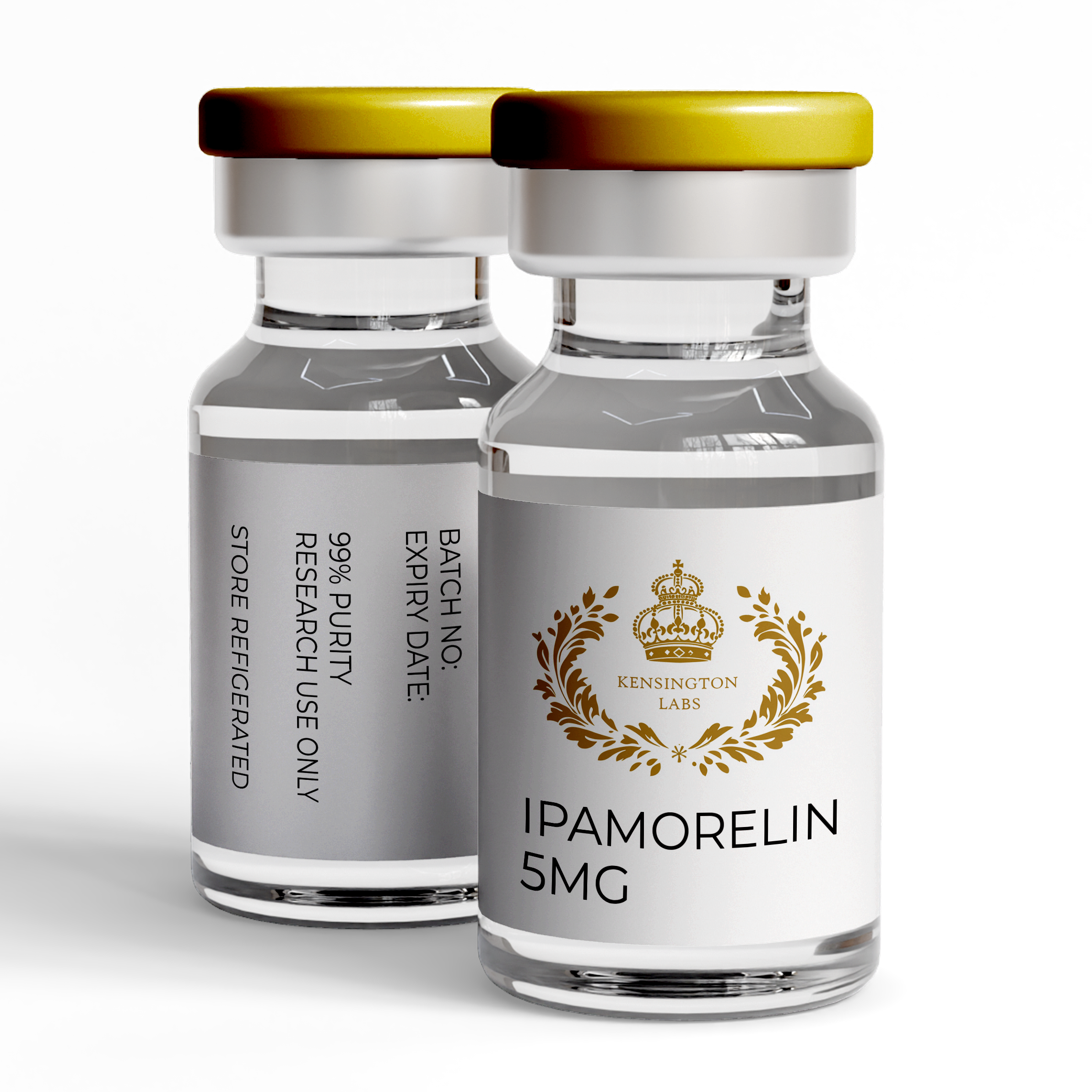
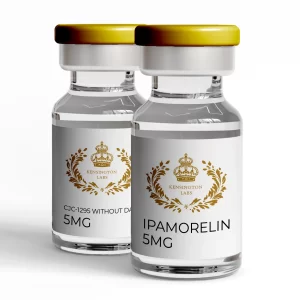
Ipamorelin is a synthetic growth hormone secretagogue (GHS) that has been developed for research into growth hormone regulation and pituitary function. Unlike growth hormone itself, Ipamorelin does not directly supply growth hormone to the body. Instead, it is designed to stimulate the pituitary gland to release the body’s own endogenous growth hormone by activating the ghrelin (growth hormone secretagogue) receptor, also known as the GHS-R1a receptor.
First developed during research into selective growth hormone-releasing compounds, Ipamorelin has attracted considerable scientific interest because of its high receptor selectivity. Compared with earlier growth hormone secretagogues such as GHRP-2 and GHRP-6, laboratory studies suggest that Ipamorelin produces a more selective release of growth hormone while having relatively little effect on other pituitary hormones such as cortisol and prolactin.
Researchers have investigated Ipamorelin in a variety of areas including:
Unlike Growth Hormone Releasing Hormone (GHRH) analogues such as CJC-1295, which stimulate the pituitary through the GHRH receptor, Ipamorelin works through the ghrelin receptor pathway. Because these two pathways are complementary, researchers frequently investigate Ipamorelin alongside compounds such as CJC-1295 (No DAC) to study whether simultaneous activation of both signalling pathways produces a larger physiological growth hormone pulse than either compound alone.
One of the reasons Ipamorelin has become one of the most widely researched growth hormone secretagogues is its relatively selective mechanism of action. Earlier compounds in this class were often associated with greater stimulation of cortisol, prolactin and appetite. Experimental evidence suggests Ipamorelin produces considerably less activation of these pathways while maintaining robust stimulation of pulsatile growth hormone release.
Growth hormone released following Ipamorelin administration subsequently stimulates the production of Insulin-like Growth Factor-1 (IGF-1), primarily within the liver. Growth hormone and IGF-1 work together to regulate numerous physiological processes including:
Because Ipamorelin stimulates the body’s own pulsatile release of growth hormone rather than continuously elevating circulating hormone levels, researchers believe its physiological profile may more closely resemble natural growth hormone secretion.
Current research is exploring Ipamorelin’s potential role in:
Despite encouraging laboratory findings, Ipamorelin is not approved as a medicine by the MHRA, EMA or FDA. Most published evidence consists of preclinical research together with a limited number of early human studies. Larger clinical trials are required to establish its long-term safety, optimal dosing strategies and evidence-based therapeutic applications.
Published research investigating Ipamorelin has used a variety of experimental protocols, with administration frequency, treatment duration and exposure levels differing between studies. As a result, there is currently no universally accepted or regulator-approved research protocol.
Some laboratory protocols utilise a gradual titration approach, beginning with lower exposure levels before progressively increasing to a maintenance phase. This strategy is commonly used in research to assess tolerability and allow physiological adaptation before higher exposure levels are introduced.
An example laboratory protocol may follow the schedule below:
| Tier | Dosage | Frequency | Notes |
|---|---|---|---|
| Weeks 1-2 | 100mcg | Once Daily | ideally 30–60 minutes before bedtime on an empty stomach to synergise with natural nocturnal GH secretion |
| Weeks 3-4 | 150mcg | Once Daily | ideally 30–60 minutes before bedtime on an empty stomach to synergise with natural nocturnal GH secretion |
| Weeks 5-8 | 200mcg | Once Daily | ideally 30–60 minutes before bedtime on an empty stomach to synergise with natural nocturnal GH secretion |
| Weeks 9-12 | 250mcg | Once Daily | ideally 30–60 minutes before bedtime on an empty stomach to synergise with natural nocturnal GH secretion |
Ipamorelin is one of the most extensively researched growth hormone secretagogues (GHSs). Unlike recombinant growth hormone, which directly increases circulating growth hormone levels, Ipamorelin stimulates the body’s own pituitary gland to release endogenous growth hormone through activation of the ghrelin (GHS-R1a) receptor.
Its high receptor selectivity has made it an important area of investigation within endocrinology, exercise physiology and healthy ageing research. Compared with earlier growth hormone secretagogues, Ipamorelin has demonstrated a more selective growth hormone response with relatively little stimulation of cortisol or prolactin in experimental studies.
Although the available evidence is encouraging, Ipamorelin remains an investigational peptide. Most published research consists of laboratory studies, animal models and early human trials, and further clinical research is required to establish its long-term safety and therapeutic applications.
Current areas of scientific investigation include:
Ipamorelin’s primary mechanism is the stimulation of pulsatile growth hormone release from the anterior pituitary gland.
Unlike synthetic growth hormone, Ipamorelin encourages the body to produce its own endogenous growth hormone, allowing researchers to investigate a physiological pattern of hormone release.
Experimental studies have demonstrated significant increases in circulating growth hormone following administration, making this one of the peptide’s best-established biological effects.
Growth hormone released following Ipamorelin administration stimulates the liver and other tissues to produce Insulin-like Growth Factor-1 (IGF-1).
IGF-1 plays an important role in numerous biological processes including:
Researchers often measure IGF-1 concentrations as a secondary endpoint when investigating growth hormone secretagogues.
Growth hormone and IGF-1 are closely involved in maintaining lean body mass.
Research has investigated whether Ipamorelin-induced increases in endogenous growth hormone may support:
Although these mechanisms are biologically plausible, improvements in muscle mass remain dependent on factors such as resistance training, adequate nutrition and total protein intake.
Growth hormone plays an important role in regulating fat metabolism.
Experimental research has explored whether Ipamorelin may influence:
Researchers believe these effects are mediated through physiological increases in endogenous growth hormone rather than a direct fat-burning action of the peptide itself.
One of the most common areas of Ipamorelin research involves recovery following physical training.
Growth hormone is involved in normal tissue maintenance and repair, leading researchers to investigate whether increased endogenous growth hormone release may support:
Current evidence remains limited, and further human clinical trials are required.
The majority of natural growth hormone secretion occurs during deep sleep.
Researchers have therefore investigated whether stimulating physiological growth hormone release through Ipamorelin may influence normal sleep-related endocrine activity.
Sleep quality continues to be explored as an outcome measure in growth hormone secretagogue research, although evidence remains limited.
Natural growth hormone secretion gradually declines with age.
This reduction has been associated with changes in:
Researchers have investigated whether selective stimulation of endogenous growth hormone may help maintain healthier endocrine function during ageing.
However, Ipamorelin has not been proven to slow or reverse human ageing, and should not be regarded as an approved anti-ageing therapy.
Growth hormone and IGF-1 contribute to normal bone remodelling throughout life.
Experimental research has explored potential effects on:
These remain active areas of investigation, particularly in relation to age-related bone loss.
Growth hormone and IGF-1 participate in normal tissue maintenance.
Researchers have investigated whether Ipamorelin-induced increases in endogenous growth hormone may influence:
Current evidence is largely preclinical, and additional human studies are required before definitive conclusions can be drawn.
One of the major advantages of Ipamorelin compared with earlier growth hormone secretagogues is its receptor selectivity.
Experimental studies suggest Ipamorelin stimulates growth hormone release with minimal effects on cortisol, prolactin and appetite compared with compounds such as GHRP-2 and GHRP-6.
This selective pharmacological profile has made Ipamorelin one of the most widely researched peptides within the growth hormone secretagogue class.
Current evidence suggests Ipamorelin may support numerous biological processes associated with physiological growth hormone release, including:
Ipamorelin works by stimulating the body’s natural release of growth hormone rather than supplying growth hormone directly. It belongs to a class of compounds known as growth hormone secretagogues (GHSs) and acts by selectively activating the growth hormone secretagogue receptor (GHS-R1a), commonly referred to as the ghrelin receptor.
Once this receptor is activated, the anterior pituitary gland releases a physiological pulse of endogenous growth hormone. This growth hormone then stimulates the production of Insulin-like Growth Factor-1 (IGF-1), which is responsible for many of the downstream biological effects associated with growth hormone signalling.
Unlike recombinant human growth hormone (HGH), Ipamorelin relies on the body’s own endocrine system and therefore produces a more natural pattern of hormone release.
The primary mechanism of Ipamorelin begins with activation of the GHS-R1a receptor.
This receptor is found predominantly within the:
It is the same receptor activated by ghrelin, often referred to as the body’s “hunger hormone.”
However, while ghrelin stimulates both appetite and growth hormone release, laboratory studies suggest Ipamorelin has been designed to selectively stimulate growth hormone secretion with minimal effects on appetite compared with earlier growth hormone secretagogues.
Activation of this receptor signals the pituitary gland to release endogenous growth hormone into circulation.
Growth hormone is naturally released in short pulses throughout the day, with the largest pulses typically occurring during deep sleep.
Rather than maintaining continuously elevated hormone levels, Ipamorelin stimulates the pituitary to produce one of these physiological growth hormone pulses.
Researchers believe this more closely mimics normal endocrine physiology than continuously administering exogenous growth hormone.
Because the pituitary remains under normal hypothalamic feedback control, growth hormone release continues to respond to the body’s own regulatory mechanisms.
Once growth hormone enters the bloodstream, it stimulates the liver and other tissues to produce Insulin-like Growth Factor-1 (IGF-1).
IGF-1 is responsible for many of the biological effects associated with growth hormone and plays important roles in:
Researchers commonly measure circulating IGF-1 concentrations when evaluating the biological activity of Ipamorelin.
One characteristic that distinguishes Ipamorelin from earlier growth hormone secretagogues is its high receptor selectivity.
Compounds such as GHRP-2 and GHRP-6 may stimulate additional pituitary hormones including:
and, in some cases, produce a more noticeable increase in appetite.
Experimental studies suggest Ipamorelin stimulates growth hormone release while having relatively little effect on these other hormonal pathways.
This selective pharmacological profile is one of the primary reasons Ipamorelin has become one of the most widely researched peptides in its class.
Growth hormone secretion is regulated through two complementary pathways.
The first involves Growth Hormone Releasing Hormone (GHRH) acting on the pituitary gland.
The second involves activation of the ghrelin receptor by compounds such as Ipamorelin.
Because these pathways work together physiologically, researchers frequently investigate Ipamorelin alongside GHRH analogues such as CJC-1295 (No DAC).
Simultaneous activation of both pathways has been shown in experimental studies to produce a larger growth hormone pulse than either pathway alone.
This complementary mechanism explains why the CJC-1295 and Ipamorelin combination has become one of the most commonly studied growth hormone peptide protocols.
Unlike exogenous growth hormone administration, Ipamorelin depends upon a functioning pituitary gland.
Growth hormone secretion remains regulated by the body’s normal feedback systems, including:
As IGF-1 concentrations rise, negative feedback helps reduce further growth hormone release, preventing continuous stimulation of the endocrine system.
This physiological regulation is one reason researchers have investigated growth hormone secretagogues as an alternative approach to directly administering growth hormone.
Growth hormone and IGF-1 influence several biological processes involved in tissue maintenance.
Experimental research has investigated effects on:
These downstream effects occur primarily through growth hormone-induced increases in IGF-1 rather than through direct actions of Ipamorelin itself.
Growth hormone plays an important role in regulating energy metabolism.
Increased endogenous growth hormone release has been associated with:
Researchers believe these effects result from normal growth hormone physiology rather than any direct fat-burning action of Ipamorelin.
A significant proportion of natural growth hormone secretion occurs shortly after falling asleep during deep slow-wave sleep.
Researchers have investigated whether stimulating physiological growth hormone release with Ipamorelin may complement the body’s normal nocturnal hormone rhythm.
Although sleep quality itself remains an area of ongoing investigation, understanding this natural endocrine rhythm has influenced many experimental research protocols involving growth hormone secretagogues.
Current evidence suggests Ipamorelin functions by selectively stimulating the body’s natural growth hormone axis rather than replacing growth hormone directly.
Its proposed biological actions include:
Although Ipamorelin has demonstrated a favourable safety profile in early research, it remains an investigational peptide, and long-term safety has not yet been established through large-scale human clinical trials.
Compared with earlier growth hormone secretagogues, Ipamorelin appears to produce a more selective release of growth hormone with relatively little stimulation of cortisol, prolactin or appetite. Nevertheless, any compound that influences the growth hormone/IGF-1 axis has the potential to produce physiological effects that require careful investigation.
Where Ipamorelin is administered by injection, local reactions may occur.
Potential reactions include:
These effects are commonly associated with injectable peptides and are often related to injection technique rather than the peptide itself.
Some individuals participating in research have reported mild headaches following growth hormone secretagogue administration.
Potential contributing factors include:
These symptoms are generally temporary and self-limiting.
Growth hormone influences fluid regulation throughout the body.
As endogenous growth hormone and IGF-1 levels increase, some individuals may experience temporary:
These effects are generally more common at higher levels of growth hormone activity.
Some researchers have reported temporary tiredness or lethargy following administration.
Although the exact mechanism remains unclear, it may reflect short-term endocrine adaptation as growth hormone secretion increases.
Symptoms, where reported, are generally mild and transient.
Occasional dizziness has been reported during studies involving growth hormone secretagogues.
Possible contributing factors include:
Researchers should monitor any unexpected symptoms during experimental protocols.
Growth hormone plays an important role in glucose metabolism.
As a result, compounds that stimulate endogenous growth hormone release may influence:
Current evidence suggests Ipamorelin produces smaller metabolic effects than direct growth hormone administration, but further clinical research is required.
Researchers investigating metabolic outcomes should routinely monitor blood glucose where appropriate.
Ipamorelin stimulates endogenous growth hormone release, which subsequently increases circulating Insulin-like Growth Factor-1 (IGF-1).
Although this forms part of its intended biological mechanism, prolonged elevations in IGF-1 remain an important area of ongoing research.
Researchers commonly monitor IGF-1 concentrations throughout studies to evaluate endocrine responses and maintain consistent experimental conditions.
Although uncommon, allergic reactions remain possible with any peptide.
Potential symptoms include:
Researchers should also consider the possibility of reactions to manufacturing impurities, preservatives or reconstitution diluents rather than the peptide itself.
Any injectable compound carries a risk of infection if appropriate sterile technique is not followed.
Potential causes include:
Symptoms requiring prompt medical assessment may include:
Maintaining strict laboratory handling procedures is essential.
The safety of any research peptide depends heavily on manufacturing quality.
Potential risks associated with poor-quality products include:
Researchers should prioritise products that include:
These measures improve confidence in product quality but do not replace regulatory approval.
There are currently no adequate human studies evaluating the safety of Ipamorelin during pregnancy or breastfeeding.
Its effects on:
remain unknown.
These populations have not been adequately studied.
Although early studies suggest Ipamorelin is generally well tolerated, long-term human safety data remain limited.
Further clinical research is needed to establish:
Lifestyle plays an important role in the function of the growth hormone (GH) and insulin-like growth factor-1 (IGF-1) axis, which Ipamorelin is designed to stimulate. Factors such as sleep, exercise, nutrition and body composition can all influence natural growth hormone secretion and may significantly affect research outcomes.
Researchers investigating Ipamorelin should carefully control these variables to improve study consistency and accurately interpret biological responses.
Sleep is one of the strongest natural stimulators of growth hormone release.
The majority of endogenous growth hormone is secreted during the first period of deep slow-wave sleep, making adequate sleep duration and quality essential for maintaining normal endocrine function.
Poor sleep has been associated with:
Maintaining a consistent sleep routine is therefore an important consideration in studies investigating growth hormone secretagogues.
Exercise naturally stimulates growth hormone release, particularly:
Regular physical activity also supports:
Researchers should standardise training frequency and intensity wherever possible, as exercise alone can significantly influence growth hormone and IGF-1 levels.
Adequate nutrition is essential for maintaining a healthy endocrine environment.
Particular attention should be given to:
Protein provides the amino acids required for normal tissue maintenance and recovery, while prolonged calorie restriction may suppress natural growth hormone and IGF-1 activity.
A balanced diet supports normal metabolic function and should form the foundation of any research protocol.
Body composition has a significant influence on growth hormone physiology.
Higher levels of body fat, particularly visceral fat, have been associated with:
Maintaining a healthy body composition through regular exercise and balanced nutrition may support healthier endocrine function independently of any peptide intervention.
Recovery is an essential component of muscle adaptation and hormonal regulation.
Researchers should consider factors including:
Insufficient recovery may impair natural growth hormone secretion and reduce the body’s ability to adapt to exercise.
Chronic psychological stress can negatively affect hormone balance.
Persistently elevated cortisol levels may interfere with:
Managing stress through healthy lifestyle habits may help maintain normal endocrine function and improve consistency in research outcomes.
Adequate hydration supports numerous physiological processes including:
Although hydration does not directly increase growth hormone secretion, dehydration may reduce physical performance and negatively affect recovery.
Excessive alcohol intake has been shown to impair normal growth hormone secretion and recovery.
Heavy alcohol consumption may contribute to:
Limiting alcohol intake supports healthier endocrine function and more consistent research outcomes.
Smoking has been associated with increased oxidative stress and impaired recovery.
Long-term smoking may negatively affect:
Avoiding smoking supports overall health and may reduce confounding factors in endocrine research.
Normal hormone production and tissue repair rely on adequate intake of essential vitamins and minerals.
Researchers should ensure sufficient intake of nutrients involved in endocrine and metabolic function, including:
Deficiencies in these nutrients may influence recovery, muscle function and overall physiological health.
While Ipamorelin has shown promise as a selective growth hormone secretagogue, it cannot replace the lifestyle factors that naturally support healthy growth hormone production.
Optimal endocrine function continues to depend on:

 Sale
Sale
Looking for Weight Loss Peptides?
Explore Weight Loss Peptides with our trusted partner
If you can't find the product you're looking for here, visit Biovanta Research a premium range of weight loss research peptides.