£19.95 – £24.95Price range: £19.95 through £24.95
BUY 2, SAVE 5%
£19.95 £18.95 / ITEM
BUY 3, SAVE 10%
£19.95 £17.96 / ITEM
BUY 4, SAVE 15%
£19.95 £16.96 / ITEM
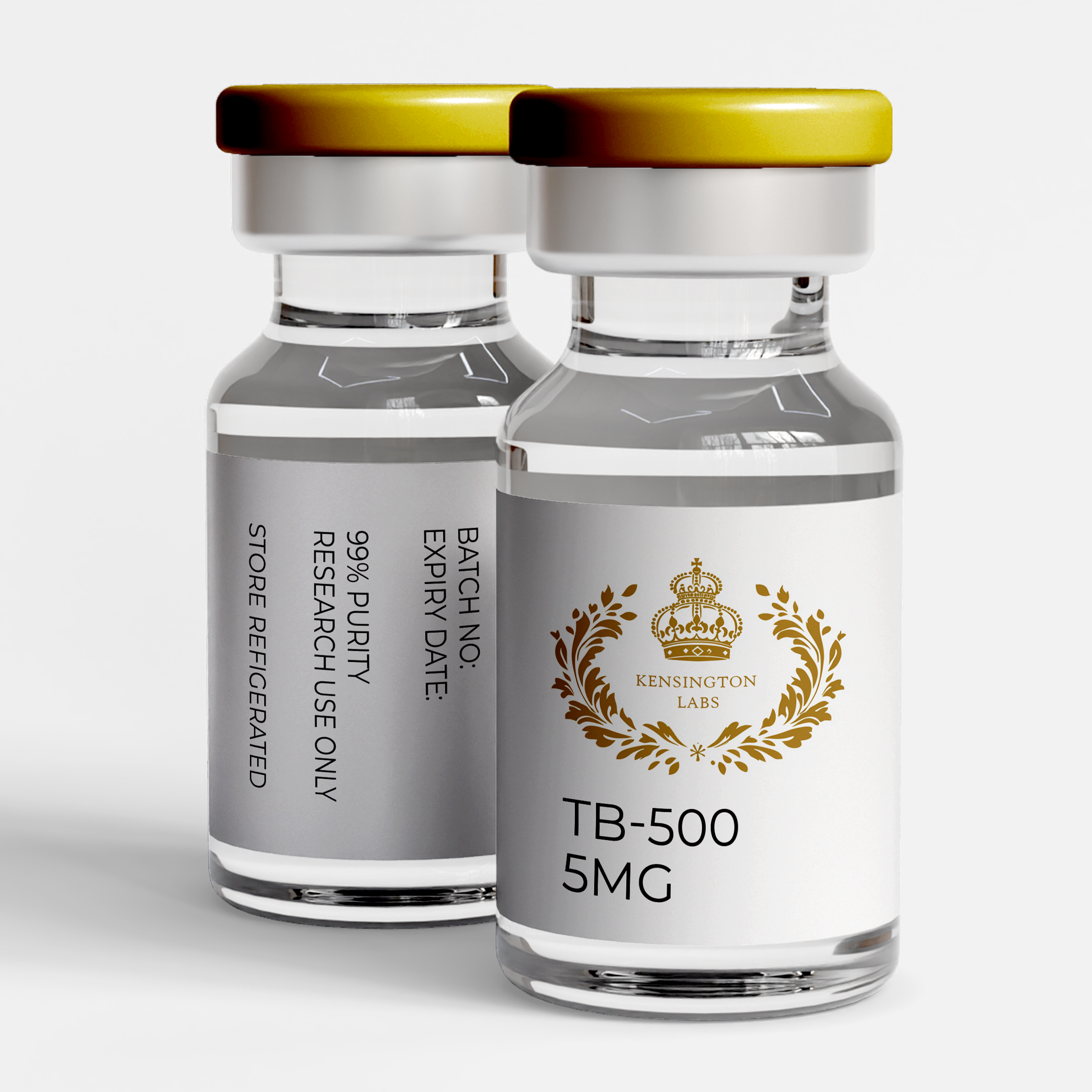
TB-500 is a common name for a synthetic peptide fragment of thymosin beta-4, a naturally occurring protein that consists of 43 amino acids. Thymosin beta-4 is present in many tissues and cell types throughout the body.
Thymosin beta-4 is a small peptide that plays a role in several cellular processes related to tissue maintenance, cell movement, blood-vessel formation and wound repair. It is especially known for its binding to G-actin, a free form of actin that cells use to build and reorganise their internal structural framework.
TB-500 products are typically marketed as containing the short amino-acid sequence LKKTETQ, which is a sequence from the actin-binding region of thymosin beta-4. This indicates that TB-500 should not be directly equated to full-length thymosin beta-4, and results with the full-length naturally occurring protein may not directly translate to the shorter fragment.
Studies of thymosin beta-4 have looked at its potential roles in:
TB-500 is not an approved medication, and there is currently insufficient reliable data from human studies to establish a recognised clinical indication, an effective dosage, or a long-term safety profile.
This product is for laboratory research use only and is not for use in diagnostic or therapeutic procedures in humans.
Whilst there is currently no regulator-approved human dosing protocol for TB-500.
Published research involving thymosin beta-4 uses different experimental models, formulations, routes and concentrations. Many studies investigate daily administration.
In a research environment, TB-500 is dosed at 500 mcg–1 mg daily via subcutaneous injection in educational protocols. A 5 mg vial reconstituted with bacteriostatic water yields about 1.67 mg/mL. This information is for research and educational use only.
| Tier | Dosage | Frequency | Notes |
|---|---|---|---|
| weeks 1-2 | 500mcg | Daily | - |
| Weeks 3-4 | 600mcg | Daily | - |
| Weeks 5-8 | 750mcg | Daily | - |
| Weeks 9-12 | 1000mcg | Daily | - |
Thymosin beta-4 and related peptide fragments are under investigation for potential effects that include the following:
Thymosin beta-4 has been shown to play roles in vascular development, angiogenesis, extracellular-matrix remodelling and tissue-repair models. However, much of this evidence is for full-length thymosin beta-4, laboratory systems or animal models and not the commercial fragment TB-500.
These should therefore be called potential research effects rather than proven human benefits.
Most proposed mechanisms of action for TB-500 are based on research into thymosin beta-4.
Actin-Driven Cell Motility
Thymosin beta-4 binds monomeric G-actin and modulates the availability of actin in cells.
Actin is a major structural protein involved in:
Thymosin beta-4 may affect actin dynamics, which may influence cell reorganisation and migration during tissue repair.
Thymosin beta-4 has been studied for its effects on angiogenesis, the formation of new blood vessels from existing blood vessels.
The formation of new blood vessels could assist tissue repair by enhancing the supply of oxygen, nutrients and repair cells. In addition, reviews have described roles for thymosin beta-4 in vascular development, capillary formation, vessel stability and recruitment of supporting vascular cells.
But angiogenesis is a complex process and not always helpful. Such uncontrolled vascular signalling may also be relevant to abnormal tissue growth and tumour biology, so this pathway requires careful study.
The migration of endothelial cells, keratinocytes, immune cells and connective-tissue cells to sites of injury is crucial for tissue repair.
Thymosin beta-4 has been associated with increased cell migration in experimental systems and may therefore contribute to wound healing and tissue remodelling.
Thymosin beta-4 has been suggested to affect immune cell migration and inflammatory mediators.
It may upset the balance between the early phase of inflammation and the later phase of repair, rather than simply “turning off” inflammation. This remains a research hypothesis, not a proven therapeutic mechanism of TB-500 in humans.
The extracellular matrix is the framework surrounding the cells, providing structural support. It contains proteins such as collagen.
Researchers have investigated the possible effects of thymosin beta-4 on matrix organisation and remodelling, which may influence the formation and maturation of repaired tissue.
Thymosin beta-4 (TB-500) and full-length thymosin beta-4 are not always pharmacologically equivalent.
The fragment may be activating the parent protein, but it is not safe to assume that every finding on thymosin beta-4 translates directly to commercially supplied TB-500.
The safety profile of TB-500 in humans has not been adequately established.
Reported online experiences cannot substitute for controlled clinical safety data, and the absence of widely documented side effects does not prove that the compound is safe.
Potential risks may include:
The FDA identifies the TB-500 fragment, thymosin beta-4 LKKTETQ, as a substance that may present risks involving immunogenicity, aggregation, peptide impurities and active-ingredient characterisation. The agency states that it has not identified human exposure data for drug products containing this fragment and lacks sufficient information to determine whether it may cause harm in humans.
The risk may be greater where a product is intended for injection but has not undergone validated sterility, endotoxin and particulate testing.
Lifestyle, rehabilitation and general health can be very important in the recovery of tissue. These variables are recorded and controlled in research, as they may affect outcomes independent of the peptide under study.
Rehabilitation and Load Progression
The most important factor in recovery from tendon, ligament and muscle injuries is appropriate rehabilitation.
Total inactivity can lead to loss of strength and tissue capacity, whereas overloading can aggravate damaged tissue. A structured recovery programme might include:
TB-500 should not be marketed as a substitute for proper diagnosis or rehabilitation.
Tissue repair demands adequate energy and protein.
Very low calorie intake, not enough protein or generally poor nutrition can hinder recovery and make it harder to interpret experimental results.
A balanced diet should provide enough:
Sleep supports immune regulation, normal hormonal signalling and physical recovery.
Poor sleep can make you more sensitive to pain, affect your performance when you train, and interfere with the normal repair processes in your body. Hence, it is important to keep consistent sleep and recovery routines during research.
Changes in exercise intensity, training frequency or physical workload can have a strong impact on pain, inflammation and functional recovery.
Researchers should standardise or report:
Advances may be misattributed to the research compound without this information.
Smoking may interfere with normal circulation and healing processes in tissue.
Heavy alcohol use may have negative effects on sleep, nutrition, inflammation and rehabilitation compliance. Studies of tissue-repair outcomes need to control for these factors.
Diabetes, vascular disease, poor circulation, chronic inflammation and some nutritional deficiencies may delay recovery.
Any of the repair endpoints should be considered in light of pre-existing health conditions.
Realisticly Speaking
tendons, ligaments, and other connective tissue often take weeks or months to heal.
A peptide is not the answer to the current overuse, poor nutrition, bad sleep or misdiagnosis.
Looking for Weight Loss Peptides?
Explore Weight Loss Peptides with our trusted partner
If you can't find the product you're looking for here, visit Biovanta Research a premium range of weight loss research peptides.