Table of Contents
TB500 - All you need to know
What is TB500?
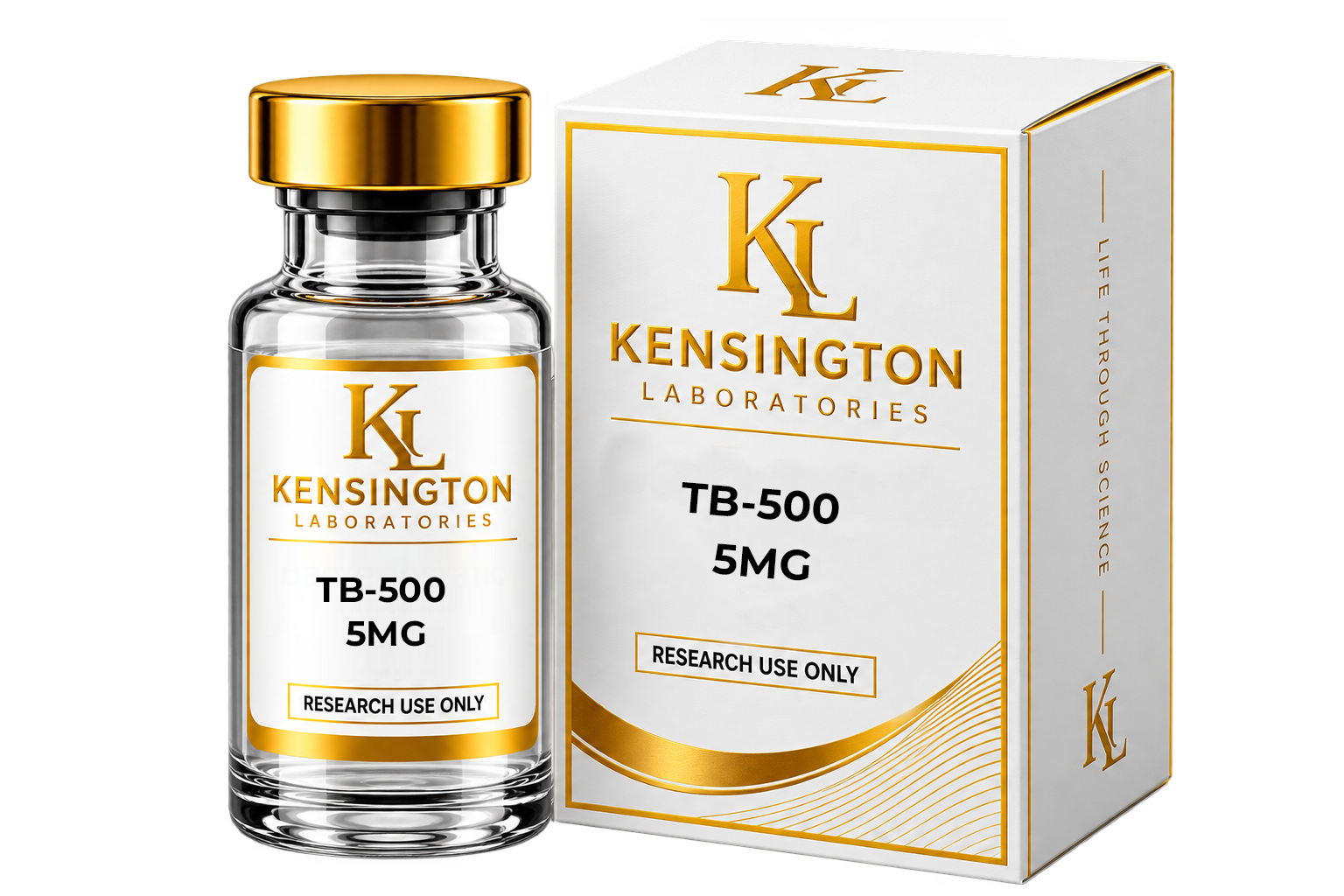
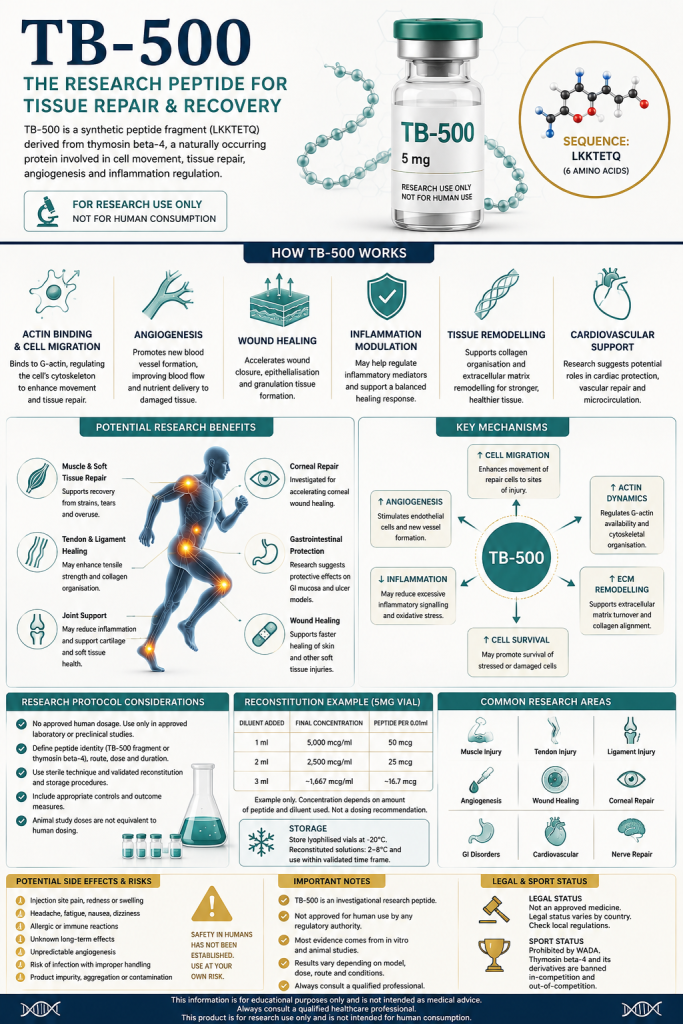
TB-500 is a common name for a synthetic peptide fragment of thymosin beta-4, a naturally occurring protein that consists of 43 amino acids. Thymosin beta-4 is present in many tissues and cell types throughout the body.
Thymosin beta-4 is a small peptide that plays a role in several cellular processes related to tissue maintenance, cell movement, blood-vessel formation and wound repair. It is especially known for its binding to G-actin, a free form of actin that cells use to build and reorganise their internal structural framework.
TB-500 products are typically marketed as containing the short amino-acid sequence LKKTETQ, which is a sequence from the actin-binding region of thymosin beta-4. This indicates that TB-500 should not be directly equated to full-length thymosin beta-4, and results with the full-length naturally occurring protein may not directly translate to the shorter fragment.
Studies of thymosin beta-4 have looked at its potential roles in:
- Cell motility
- Blood vessel formation and angiogenesis
- Wound healing
- Inflammatory signalling
- Tissue remodelling
- Cardiovascular protection
- Cornea repair
- Recovery of muscle and connective tissue
TB-500 is not an approved medication, and there is currently insufficient reliable data from human studies to establish a recognised clinical indication, an effective dosage, or a long-term safety profile.
This product is for laboratory research use only and is not for use in diagnostic or therapeutic procedures in humans.
How much TB500 to take?
Whilst there is currently no regulator-approved human dosing protocol for TB-500.
Published research involving thymosin beta-4 uses different experimental models, formulations, routes and concentrations. Many studies investigate daily administration.
In a research environment, TB-500 is dosed at 500 mcg–1 mg daily via subcutaneous injection in educational protocols. A 5 mg vial reconstituted with bacteriostatic water yields about 1.67 mg/mL. This information is for research and educational use only.
Dosage Chart
| Tier | Dosage | Frequency | Notes |
|---|---|---|---|
| weeks 1-2 | 500mcg | Daily | |
| Weeks 3-4 | 600mcg | Daily | |
| Weeks 5-8 | 750mcg | Daily | |
| Weeks 9-12 | 1000mcg | Daily |
What are the benefits of TB500?
Thymosin beta-4 and related peptide fragments are under investigation for potential effects that include the following:
- Tissue organisation and cell migration
- Closure of wound
- Growth of new blood vessels
- Endothelial cell function
- Muscle and connective tissue repair
- Cornea repair
- Decreased inflammatory signalling
- extracellular matrix remodelling
- Repair after experimental tissue damage
- Cardiovascular protection
Thymosin beta-4 has been shown to play roles in vascular development, angiogenesis, extracellular-matrix remodelling and tissue-repair models. However, much of this evidence is for full-length thymosin beta-4, laboratory systems or animal models and not the commercial fragment TB-500.
These should therefore be called potential research effects rather than proven human benefits.
What does TB500 do?
Most proposed mechanisms of action for TB-500 are based on research into thymosin beta-4.
Actin-Driven Cell Motility
Thymosin beta-4 binds monomeric G-actin and modulates the availability of actin in cells.
Actin is a major structural protein involved in:
- Cell morphology
- Cell motility
- Mitosis (cell division)
- Cell Adhesion
- Tissue Architecture
- Migration of repair cells to injured areas
Thymosin beta-4 may affect actin dynamics, which may influence cell reorganisation and migration during tissue repair.
blood vessel formation (angiogenesis)
Thymosin beta-4 has been studied for its effects on angiogenesis, the formation of new blood vessels from existing blood vessels.
The formation of new blood vessels could assist tissue repair by enhancing the supply of oxygen, nutrients and repair cells. In addition, reviews have described roles for thymosin beta-4 in vascular development, capillary formation, vessel stability and recruitment of supporting vascular cells.
But angiogenesis is a complex process and not always helpful. Such uncontrolled vascular signalling may also be relevant to abnormal tissue growth and tumour biology, so this pathway requires careful study.
Migration of cells
The migration of endothelial cells, keratinocytes, immune cells and connective-tissue cells to sites of injury is crucial for tissue repair.
Thymosin beta-4 has been associated with increased cell migration in experimental systems and may therefore contribute to wound healing and tissue remodelling.
Inflammatory Signalling
Thymosin beta-4 has been suggested to affect immune cell migration and inflammatory mediators.
It may upset the balance between the early phase of inflammation and the later phase of repair, rather than simply “turning off” inflammation. This remains a research hypothesis, not a proven therapeutic mechanism of TB-500 in humans.
Extracellular-Matrix Remodelling
The extracellular matrix is the framework surrounding the cells, providing structural support. It contains proteins such as collagen.
Researchers have investigated the possible effects of thymosin beta-4 on matrix organisation and remodelling, which may influence the formation and maturation of repaired tissue.
The Core Difference
Thymosin beta-4 (TB-500) and full-length thymosin beta-4 are not always pharmacologically equivalent.
The fragment may be activating the parent protein, but it is not safe to assume that every finding on thymosin beta-4 translates directly to commercially supplied TB-500.
TB500 Side Effects
The safety profile of TB-500 in humans has not been adequately established.
Reported online experiences cannot substitute for controlled clinical safety data, and the absence of widely documented side effects does not prove that the compound is safe.
Potential risks may include:
- Injection-site pain, redness or swelling
- Infection caused by non-sterile handling
- Allergic or immune reactions
- Headache
- Fatigue
- Nausea
- Dizziness
- Fluid retention
- Unpredictable effects on blood-vessel formation
- Unknown effects on abnormal or malignant tissue
- Interactions with medicines or other peptides
- Incorrect concentration
- Peptide aggregation
- Degradation products
- Endotoxin or microbial contamination
- Unknown long-term effects
The FDA identifies the TB-500 fragment, thymosin beta-4 LKKTETQ, as a substance that may present risks involving immunogenicity, aggregation, peptide impurities and active-ingredient characterisation. The agency states that it has not identified human exposure data for drug products containing this fragment and lacks sufficient information to determine whether it may cause harm in humans.
The risk may be greater where a product is intended for injection but has not undergone validated sterility, endotoxin and particulate testing.
TB500 Lifestyle factors
Lifestyle, rehabilitation and general health can be very important in the recovery of tissue. These variables are recorded and controlled in research, as they may affect outcomes independent of the peptide under study.
Rehabilitation and Load Progression
The most important factor in recovery from tendon, ligament and muscle injuries is appropriate rehabilitation.
Total inactivity can lead to loss of strength and tissue capacity, whereas overloading can aggravate damaged tissue. A structured recovery programme might include:
- Gradual load increases
- range-of-motion activities
- Progressive resistance exercise
- Balance and stabilisation training
- Sport specific rehab.
- Pain and function monitoring
TB-500 should not be marketed as a substitute for proper diagnosis or rehabilitation.
Energy and protein intake
Tissue repair demands adequate energy and protein.
Very low calorie intake, not enough protein or generally poor nutrition can hinder recovery and make it harder to interpret experimental results.
A balanced diet should provide enough:
- Protein Fibre
- Vitamin C (ascorbic acid)
- Zinc.
- Copper.
- Iron
- EFAs essential fatty acids
- Carbohydrates for Training and Rehabilitation
- Sleep and Recuperation
Sleep supports immune regulation, normal hormonal signalling and physical recovery.
Poor sleep can make you more sensitive to pain, affect your performance when you train, and interfere with the normal repair processes in your body. Hence, it is important to keep consistent sleep and recovery routines during research.
Training Volume
Changes in exercise intensity, training frequency or physical workload can have a strong impact on pain, inflammation and functional recovery.
Researchers should standardise or report:
- Weekly training load
- Selection of exercise
- Intensity:
- Days of rest
- Physical activity
- Physical demands of the job
Advances may be misattributed to the research compound without this information.
Alcohol and Tobacco
Smoking may interfere with normal circulation and healing processes in tissue.
Heavy alcohol use may have negative effects on sleep, nutrition, inflammation and rehabilitation compliance. Studies of tissue-repair outcomes need to control for these factors.
Metabolic & Vascular Health
Diabetes, vascular disease, poor circulation, chronic inflammation and some nutritional deficiencies may delay recovery.
Any of the repair endpoints should be considered in light of pre-existing health conditions.
Realisticly Speaking
tendons, ligaments, and other connective tissue often take weeks or months to heal.
A peptide is not the answer to the current overuse, poor nutrition, bad sleep or misdiagnosis.
Scientific References
- Smart N, Rossdeutsch A, Riley PR — Angiogenesis
Thymosin beta4 and angiogenesis: modes of action and therapeutic potential. Angiogenesis. 2007;10(4):229–241. This review discusses the mechanisms through which thymosin beta-4 influences angiogenesis, wound repair, vascular biology and cardiovascular research.
View the study on PubMed - Rossdeutsch A, Smart N, Riley PR — Vascular Development and Repair
Thymosin β4 and the vasculature: multiple roles in development, repair and protection against disease. This review examines thymosin beta-4 activity in vasculogenesis, angiogenesis, vessel stability, extracellular-matrix remodelling and injury models.
View the study on PubMed - Malinda KM, et al. — Wound Healing and Angiogenesis
Thymosin beta4 accelerates wound healing. Journal of Investigative Dermatology. 1999. This experimental study investigated wound closure, new blood-vessel development and repair-related cellular activity.
Search for the study on PubMed - Sosne G, et al. — Corneal Repair
Thymosin beta 4 promotes corneal wound healing and modulates inflammation. Research involving ocular and corneal models has investigated the peptide's potential effects on epithelial migration, inflammation and tissue repair.
Search thymosin beta-4 corneal studies on PubMed - Bock-Marquette I, et al. — Cardiac Repair
Thymosin beta4 activates integrin-linked kinase and promotes cardiac cell migration, survival and cardiac repair. Nature. 2004. The study investigated thymosin beta-4 in cardiac injury models and reported effects involving cell migration, survival and repair-related signalling.
Search for the study on PubMed - Crockford D, et al. — Thymosin Beta-4 Biology
Thymosin beta4: structure, function and biological properties supporting current and future clinical applications. This review discusses the biological functions of thymosin beta-4, including actin binding, cell migration, angiogenesis, inflammation and tissue repair.
Search for the review on PubMed - US Food and Drug Administration — TB-500 Safety Concerns
Certain bulk drug substances for use in compounding that may present significant safety risks. The FDA identifies thymosin beta-4 fragment LKKTETQ, also known as TB-500, as presenting possible concerns involving aggregation, immunogenicity, peptide impurities and active-ingredient characterisation. It also states that human exposure data are lacking.
View the FDA safety information - World Anti-Doping Agency — Prohibited Status
2026 Prohibited List. Thymosin beta-4 and its derivatives are prohibited for athletes subject to World Anti-Doping Agency rules. The 2026 Prohibited List came into force on 1 January 2026.
View the current WADA Prohibited List
FAQ's
How Much TB-500 Should You Take?
There is no approved or clinically established human dose for TB-500. However the research community suggest a protocol similar to the below:
Weeks 1–2 = 500 mcg
Weeks 3–4 = 600 mcg
Weeks 5–8 = 750 mcg
Weeks 9–12 = 1000 mcg
How Often Is TB-500 Taken?
There is no medically approved dosing frequency for TB-500. However research protocols find that daily administration is effective
How Do You Inject TB-500?
TB-500 is typically administered via subcutaneous or intramuscular injection, with careful reconstitution, dosing, and site rotation to ensure safety and effectiveness.
Where Do You Inject TB-500?
TB-500 can be injected subcutaneously just under the skin or intramuscularly near the injury site, depending on your goals and comfort level.
How Do You Reconstitute TB-500?
TB-500 should be reconstituted by gently adding sterile bacteriostatic water to the lyophilized powder, swirling until fully dissolved, and storing the solution refrigerated.
he diluent should generally be introduced slowly against the inside wall of the vial. Vigorous shaking should be avoided because mechanical stress may contribute to peptide aggregation or degradation.
The final concentration depends on the amount of peptide and diluent used.
For example, adding 2ml of diluent to a 5mg vial produces a concentration of:
2.5mg per ml
2,500mcg per ml
25mcg per 0.01ml
How Much Bacteriostatic Water Should Be Mixed With TB-500?
There is no single required amount.
The volume depends on:
The quantity of peptide in the vial
The desired research concentration
The vial's physical capacity
The accuracy of the measuring equipment
The validated study protocol
Adding more diluent makes the solution less concentrated but does not alter the total peptide content.
Researchers should calculate the final concentration before preparation and record the batch, diluent, date, concentration and storage conditions.
How Long Does TB-500 Take to Work?
TB-500 (thymosin beta-4) typically takes 2 to 6 weeks to show noticeable effects, with most patients reporting initial improvements within the 2 to 4 week range. The timeline for structural repair varies by injury type:
Acute muscle strains show improvement within 10–14 days.
Tendon injuries require 4–6 weeks for detectable improvement.
Chronic systemic inflammation can shift within 5–10 days.
The peptide begins upregulating actin expression and initiating chemotaxis within 48–72 hours, but observable tissue repair timelines differ significantly based on the injured tissue type
How Long Can You Run TB-500?
an average protocol of TB500 is for 10-12 weeks
Is TB-500 Legal in the UK?
TB-500 is legal in the UK only for research purposes and is not approved for human or consumer use.
Is TB-500 Banned in Sport?
Yes. Thymosin beta-4 and its derivatives are prohibited for athletes governed by World Anti-Doping Agency rules.
The 2026 WADA Prohibited List has been in force since 1 January 2026.
Athletes should also be aware that supplements and research products may be contaminated or inaccurately labelled.
Is TB-500 the Same as Thymosin Beta-4?
Not necessarily.
Thymosin beta-4 is a naturally occurring 43-amino-acid protein. TB-500 is generally described as the shorter LKKTETQ fragment associated with its actin-binding region.
Because they differ in size and structure, evidence involving full-length thymosin beta-4 should not automatically be assumed to apply to the fragment.
What Is TB-500 Used For?
In research, thymosin beta-4 and related fragments are investigated for possible effects involving:
Wound repair
Cell migration
Angiogenesis
Vascular development
Tissue remodelling
Muscle recovery
Connective-tissue injury
Corneal repair
Inflammatory signalling
Cardiac protection
These are experimental research areas and not approved medical uses.